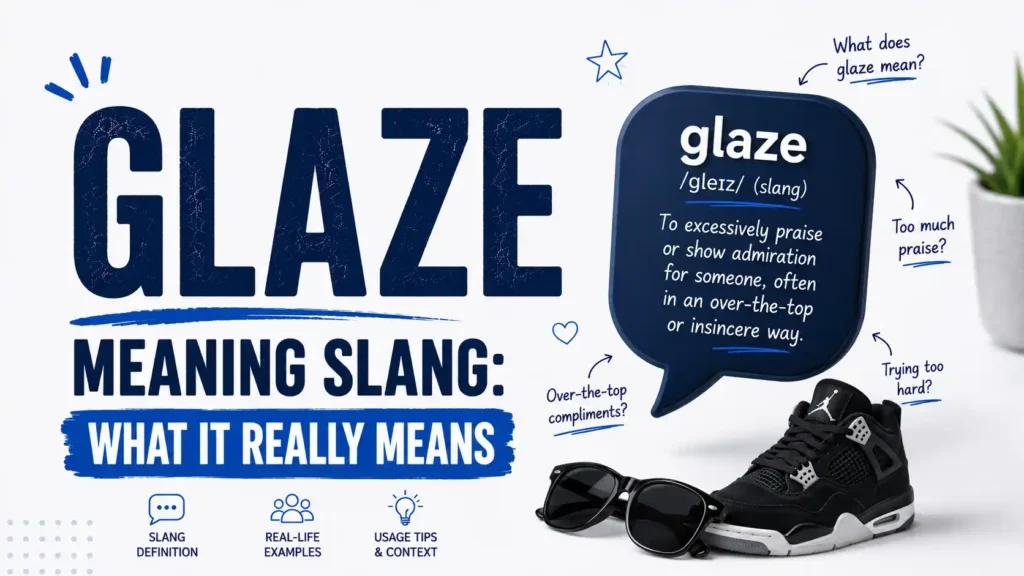
“Glaze” means to excessively praise or worship someone online — you’ll see it most on TikTok and Twitter/X when someone blindly defends a celebrity, creator, or public figure with zero criticism.
TL;DR
- Glazing = over-the-top, uncritical praise — often embarrassing in its intensity
- The tone is almost always mocking; calling someone a “glazer” is an insult
- It spread from Black Twitter and gaming communities around 2021–2022
- Gen Z and young millennials use it most, especially on TikTok and Discord
- Don’t confuse it with genuine support — glazing implies blind loyalty, not honest admiration
What Does Glaze Mean in Slang?
Picture a TikTok comment section. Someone drops a video of their favorite rapper making a genuinely mid take. The top comment? “This man could release a blank album and I’d still stream it 10,000 times.”
Someone replies: “bro is GLAZING rn 💀”
That’s glazing in action. At its core, glaze means to praise someone so excessively that it becomes embarrassing or irrational. It’s not just a compliment — it’s a compliment that lost the plot.
The word carries a sharp edge. Calling out glazing signals that the speaker sees through the hype. It’s a way of saying: “You have no critical distance from this person.”
glaze = blindly and excessively worshipping someone, usually online
The primary keyword here is glaze slang, and it fits perfectly into the vocabulary of stan culture — where simping sits right next to it as a close cousin. Glazing is simping, but louder and more publicly embarrassing.
Where Did the Slang “Glaze” Come From?

The word “glaze” — as in coating something with a shiny, thick layer — got picked up metaphorically. You’re coating someone in so much praise it drips off them.
The slang form spread primarily through Black Twitter and NBA Twitter around 2021, where fans would roast each other for over-defending players. Gaming communities on Twitter and Discord picked it up fast. By 2022, TikTok had fully absorbed it.
Why Is “Glaze” Spelled Different Ways?
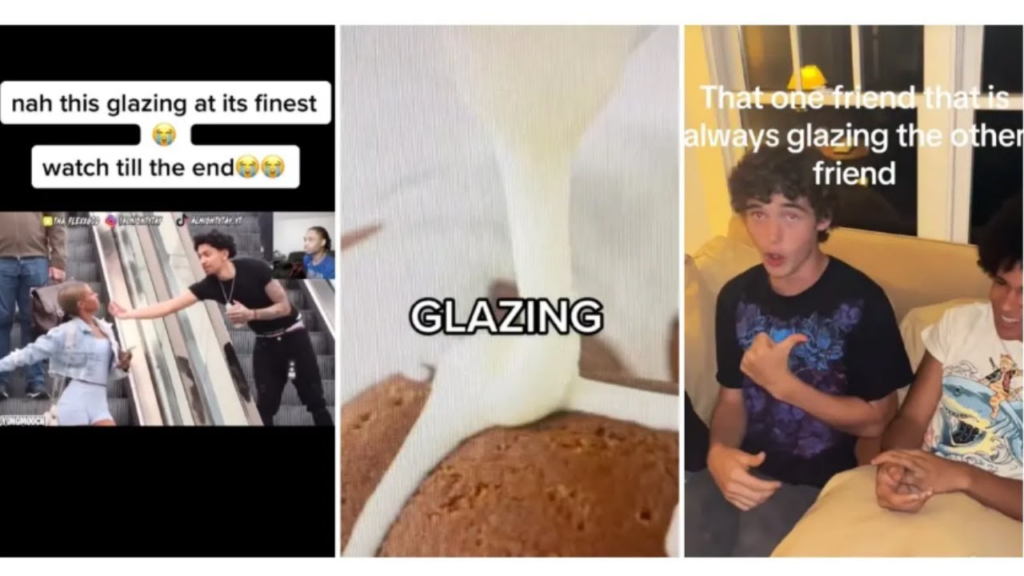
You might see glazin’, glazing, or just glaze used interchangeably. The present participle glazing is the most common form. Glazin’ is the casual, dropped-G version that shows up in voice messages and quick texts. The base form glaze is used as a verb: “you glaze him so hard.”
Timeline:
- 2021: Emerges on NBA Twitter and Black Twitter to mock fans who defend players beyond reason
- 2022: Gaming Twitter and TikTok pick it up; it spreads to celebrity and music fandoms
- 2023–2026: Fully mainstream — used in classrooms, group chats, and comment sections across the US and UK
What Does Glaze Mean in Text?

In private texts, “glazing” often gets used playfully between friends. You’ll roast your friend for glazing their favorite streamer or musician. It’s lighter in tone — more teasing than accusatory.
In group chats, the meaning gets sharper. Calling someone out for glazing in public is more of a burn. It signals that the whole group finds the behavior cringe-worthy.
Common emojis paired with glaze: 💀 😭 🙏 (ironic prayer hands)
Example text exchange:
Tyler: bro Travis Scott can do no wrong, his music is literally perfect
Marcus: you are GLAZING so hard rn 💀
Tyler: I’m just saying what’s true
Marcus: you said his parking lot album was a masterpiece. it was 4 songs and a skit.
Place drip culture right beside glazing culture — both are about how you present admiration, just in very different ways.
| Phrase | Meaning | Vibe |
|---|---|---|
| “Stop glazing him” | Stop blindly defending that person | Direct callout |
| “Full glaze mode” | Completely lost in fanboy territory | Mocking/exaggerated |
| “glazer behavior” | Acting like an uncritical superfan | Sarcastic label |
What Does Glaze Mean on TikTok?
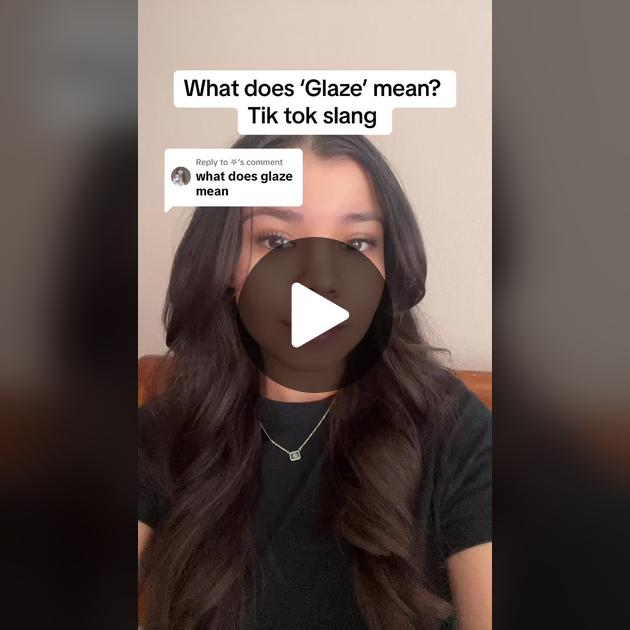
On TikTok, “glaze” shows up most in comment sections and reaction videos. It’s almost always used as a callout — someone glazing a creator gets ratioed with replies calling it out.
Creators also use it self-referentially in captions: “glazing this album and I’m not sorry.” That version flips the word into something playful and self-aware.
The TikTok meaning is consistent with the texting meaning — but the stakes feel higher online. Public glazing gets screenshots taken and turned into meme content. US TikTok uses it slightly more than UK TikTok, though British users have fully adopted it. On UK TikTok, you’ll sometimes see it mixed with roadman slang in comment threads.
Glaze in Real Conversations: 5 Examples
Example 1 — NBA Twitter callout
Tyler: KD is the most skilled player to ever play the game, no debate
Marcus: Bruh you are glazing this man into another dimension 💀
“Glazing” signals Marcus thinks Tyler has completely lost objectivity.
Example 2 — Ironic self-glaze
Ashley: I will defend Sabrina Carpenter with my entire life
Jess: omg ur so glazed rn lmaooo
Ashley: I know and I accept it
Here, Ashley owns the glaze — reclaiming the insult with self-awareness.
Example 3 — Discord gaming chat
Cody: this streamer literally never makes mistakes, best gameplay I’ve ever seen
Tyler: you’ve been glazing him for three weeks straight dude
Cody: it’s called APPRECIATION
The word “glazing” here signals Cody’s admiration has crossed into fan obsession.
Example 4 — Sarcastic group chat
Marcus: my professor is actually a genius
Ashley: 💀 glazer spotted
Marcus: he gave me an A I’m allowed
A quick, cutting use of “glazer” — no explanation needed in friend group context.
Example 5 — Casual reaction to a post
Jess: [shares celebrity’s tweet] this person is literally always right
Cody: full glaze mode. zero critical thinking. I love it for you
“Full glaze mode” adds comedic exaggeration — affectionate but still a roast.
Glaze vs. Similar Slang
| Word | Core Meaning | Tone | Best Used When |
|---|---|---|---|
| Glaze | Blind, excessive online praise | Mocking/calling out | Someone defends a public figure beyond reason |
| Simp | Doing too much for someone you’re attracted to | Derogatory/teasing | Romantic or parasocial over-investment |
| Stan | Intense, dedicated fan (can be positive) | Neutral to positive | Describing passionate fandom without the cringe angle |
| Ride or die | Unconditional loyalty to a person | Sincere/respectful | Genuine, mutual loyalty — not one-sided worship |
The biggest confusion is between glaze and stan. Stanning can be positive — it’s just intense fandom. Glazing is always a step further: it implies you’ve lost your critical faculties entirely. A stan might acknowledge their fave has flaws. A glazer never will.
The Emotional Vibe Behind “Glaze”
Glazing exists because parasocial culture created a real problem. People form emotional bonds with creators, athletes, and celebrities — and those bonds stop them from thinking clearly.
The word fills a gap that “fan” and “stan” couldn’t cover. A stan might be intense but self-aware. A glazer is gone. There’s no coming back.
When someone calls out glazing, they’re doing something subtle. They’re protecting the group’s credibility. Nobody wants to be associated with someone who’s completely lost objectivity. The callout is social self-regulation.
For the person being described as a glazer, the implication is embarrassing: you have no standards, you’ve been captured by a celebrity, you can’t be trusted as a source of opinion.
That’s why it spread so fast. It named something real — the specific cringe of watching someone sacrifice all critical thought for a celebrity. The internet recognized it instantly, because everyone had seen it happen.
Is “Glaze” Offensive?
“Glaze” is not a slur and doesn’t target any specific group. It’s a social callout — directed at behavior, not identity. That said, it can sting.
Being called a glazer is an insult to your judgment and independence. In the wrong context, it can come across as dismissive of genuine passion or cultural fandom. Used against someone’s enthusiasm for Black artists or athletes, for instance, it can feel like it’s policing who fans are “allowed” to support.
In the USA and UK, it’s generally safe to use among peers. Avoid using it in professional or academic settings — it’s distinctly internet slang with no formal register equivalent. The formal alternative would be: “uncritical praise” or “sycophantic admiration.”
Who should avoid it: Adults using it to dismiss younger fans may come across as condescending. Teachers or parents using it sarcastically risks sounding like they’re trying too hard.
📌 Quick note for parents and teachers: “Glazing” is slang for excessive, uncritical praise of a celebrity or public figure online. It’s not a harmful term — it’s used mostly as a joke between peers. It appears in TikTok comments, Discord chats, and group texts, almost always in a teasing context.
Glaze Slang — FAQ
Q: What does glaze mean on TikTok? A: On TikTok, “glaze” means to excessively praise or defend a creator or celebrity without any criticism. It shows up in comment sections and reaction videos. Calling someone a glazer on TikTok is a quick, pointed insult to their objectivity.
Q: Is glaze a bad word? A: It’s not profane or a slur. But it is an insult — being called a glazer implies you’ve lost your critical thinking over a celebrity. In casual friend groups, it’s often used playfully. In public, it’s more of a burn.
Q: What’s the difference between glaze and simp? A: Simping typically involves romantic or attracted-based over-investment in someone — doing too much for a crush or someone you find attractive. Glazing is broader — it’s about anyone you worship, including athletes, rappers, streamers, or influencers. You can glaze someone you’re not attracted to at all.
Q: Do Americans and British people use glaze the same way? A: Mostly yes. The meaning is consistent across US and UK Gen Z audiences. UK users sometimes mix it with British slang in the same sentence — “he’s glazing man so hard it’s peak” — but the core meaning stays the same. It’s slightly more prevalent in American internet culture where it originated.
The Bottom Line
“Glaze” is the internet’s word for a specific kind of embarrassing fandom — the kind where someone has stopped thinking and started worshipping. It’s a quick, sharp callout that signals the speaker still has their critical faculties intact. Understanding it means you can read the dynamics of any fan community more clearly. Next time you see a comment section going wild over a celebrity, you’ll know exactly what’s happening — and who’s glazing.
Have you seen “glaze” used in a way that surprised you? Drop it in the comments.
Article reviewed for cultural accuracy. Slang meanings shift fast — this reflects usage as of 2026.

Maggie Wiersma is a USA-based writer with 2 years of experience covering slang meanings, internet culture, and modern language trends. With a background in communication studies, she creates simple and engaging content that helps readers understand today’s most popular slang terms.