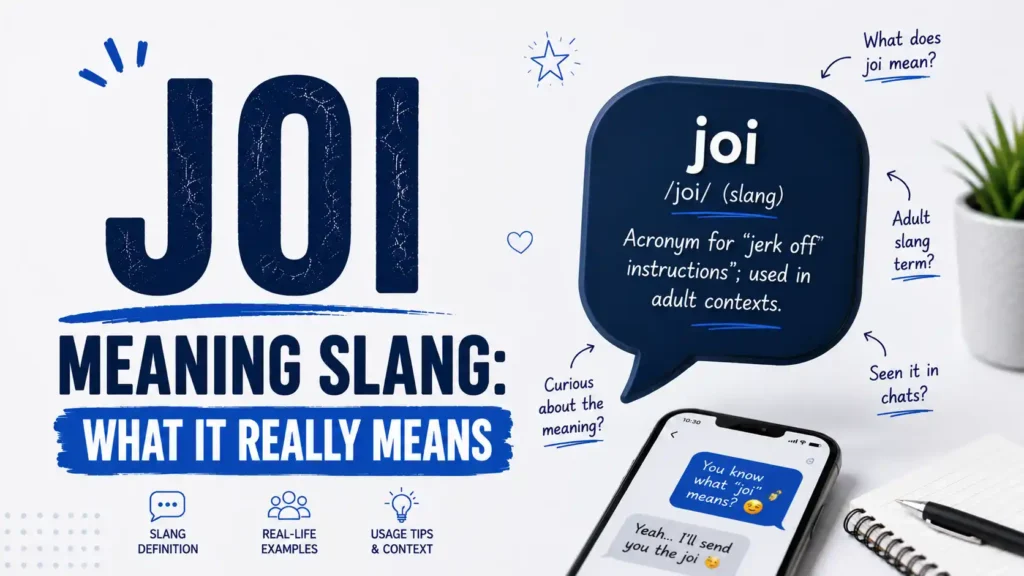
“Joi” means joy or genuine happiness — you’ll see it most on TikTok and Instagram when someone is expressing unfiltered excitement, hype, or a positive emotional reaction to something.
TL;DR
- Joi is a playful, phonetic spelling of “joy” used in Gen Z digital spaces
- Tone is almost always warm, enthusiastic, and sincere — rarely ironic
- It emerged from Black Twitter and TikTok comment culture around 2021–2022
- Used by teens and young adults across the US and UK, especially on social platforms
- Usage warning: Using “joi” sarcastically can come off as dismissive — context matters
What Does Joi Mean in Slang?
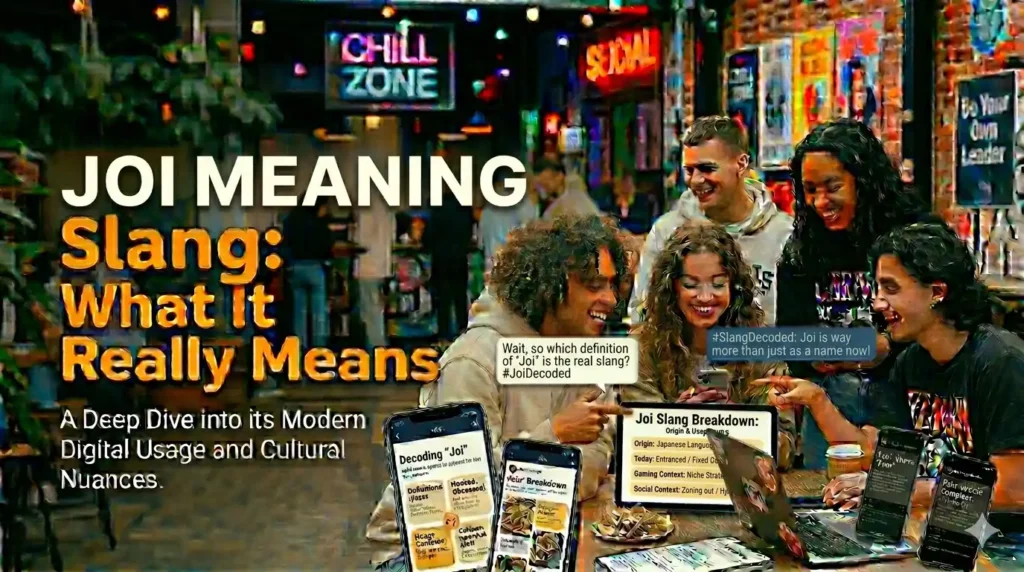
You’re scrolling through TikTok at 1 a.m. Someone posts a video of their dog sprinting in circles after getting a bath. The top comment reads: “this is joi, actual joi.” No typo. No irony. Pure delight.
“Joi” is the internet’s way of spelling “joy” — stripped of formality, made to feel more alive. It’s not just a misspelling. The phonetic swap signals enthusiasm you can feel through the screen.
When someone types “joi,” they’re not just reporting a positive emotion. They’re performing it. The alternate spelling adds a layer of warmth and self-awareness.
Joi = an unfiltered expression of happiness or delight, usually in reaction to something wholesome or relatable
The primary keyword — joi slang meaning — lives in comment sections more than anywhere else. You’ll spot it under feel-good videos, reunion clips, or anything labeled “core” content. It often sits alongside glazing, where someone heaps over-the-top praise on something they love — joi is the emotional core, glazing is the verbal expression of it.
Where Did the Slang “Joi” Come From?
“Joi” as a slang variant grew out of Black Twitter and early TikTok culture. It’s part of a broader trend where intentional misspellings carry emotional weight — think “luv,” “kno,” or “tew” (too).
The shift from “joy” to “joi” started gaining traction around 2021, when TikTok comment culture exploded and users began developing their own visual dialect. Typing “joi” instead of “joy” signals you’re fluent in the platform’s unspoken rules.
By 2022–2023, the term spread beyond Black Twitter into mainstream Gen Z TikTok and Instagram comments. It became particularly common under “comfort content” — cozy cooking videos, pet clips, and nostalgic throwbacks.
In 2025–2026, “joi” is widely used across both US and UK platforms. It’s no longer niche — it’s standard digital emotion vocabulary.
Why Is “Joi” Spelled Different Ways?
Some users write “joi,” others write “joy” phonetically in extended forms like “joiii” or “joooy.” The stretched vowels signal more emotion — the longer the word, the bigger the feeling. “Joi” (without stretching) is the clean, standard variant most common in comments and texts.
Timeline:
- 2021: “Joi” surfaces in Black Twitter threads and early TikTok comments as playful emotional shorthand
- 2022: Spreads to mainstream Gen Z TikTok, Instagram Reels, and Discord servers
- 2026: Normalized in everyday digital speech across US and UK youth culture
What Does Joi Mean in Text?
In texts and DMs, “joi” works as a quick emotional signal. It’s usually a reaction — sent right after someone shares good news, a cute photo, or a funny moment.
In private chats, it feels warm and personal. In group chats, it’s more of a collective cheer — a way to match the room’s energy without overthinking it.
It often pairs with emojis like 🥺, 🫶, ✨, or 😭 (used to mean “I’m crying from happiness”). The combo of “joi” + 🥺 is especially popular.
Sample text exchange:
Jess: okay my dog just did the thing where he waits by the door for me omg Tyler: STOP that’s so much joi 🥺 Jess: he literally knew Tyler: actual joi I can’t
In texts, “joi” can also show up alongside drip — someone might text “your fit is drip and it gave me joi” without missing a beat.
| Phrase | Meaning | Common Context |
|---|---|---|
| “That’s joi” | This made me genuinely happy | Reacting to a cute or wholesome moment |
| “So much joi” | Intensified happiness | Responding to good news or a heartwarming post |
| “Joi unlocked” | This triggered a specific kind of happiness | Nostalgia, childhood memories, comfort content |
What Does Joi Mean on TikTok?

On TikTok, “joi” lives almost entirely in the comment section. It’s a reaction word — short, punchy, and easy to drop under a video without needing a full sentence.
It appears most under:
- Pet and animal content (“this is joi in video form”)
- Wholesome reunions or surprises
- “Comfort” or “cozy” content (baking videos, cottage-core aesthetics, slow mornings)
- Nostalgic throwbacks that hit emotionally
The TikTok meaning is essentially the same as the texting meaning, but the delivery is more performative. On TikTok, “joi” is a public declaration — you’re showing other commenters what the video meant to you.
US and UK TikTok both use it, though it skews slightly more common on US TikTok. UK users sometimes pair it with British slang (“that’s proper joi”) in a hybrid style.
Joi in Real Conversations: 5 Examples
Example 1 — Wholesome pet moment
Marcus: my cat just walked up and sat on my laptop mid-meeting Ashley: that’s PURE joi honestly 😭
“Joi” signals Marcus’s cat acted like comfort, not a disruption — Ashley frames it as a gift.
Example 2 — Ironic group chat hype
Cody: guys I found a gas station that still sells the old Flamin Hot Cheetos bags Tyler: STOP. joi is literally restored Jess: sending prayers to your arteries
“Joi is restored” is mock-dramatic — Cody’s find is treated like a major life event.
Example 3 — Sincere reaction to good news
Ashley: I got the internship 🥹 Marcus: WAIT. actual joi. I’m so proud of you Ashley: crying rn
Here “actual joi” distinguishes genuine emotion from ironic or casual use — Marcus wants Ashley to feel the sincerity.
Example 4 — Sarcastic undercut
Tyler: they’re making another Minions movie Cody: joy. joi. the joi is unmeasurable. [image of the office meme] Jess: I hate you
The repetition of joy → joi is clearly deadpan — Cody is doing the opposite of celebrating.
Example 5 — Casual group reaction
[Group chat: Squad 🫶] Jess: [sends video of tiny frog eating a blueberry] Marcus: joi unlocked immediately Tyler: he’s so small I’m ill Ashley: this is the content I’m here for
“Joi unlocked” is a casual, almost automatic reaction — no explanation needed in a group that already speaks the language.
Joi vs. Similar Slang
| Word | Core Meaning | Tone | Best Used When |
|---|---|---|---|
| Joi | Phonetic “joy” — genuine happiness | Warm, sincere, sometimes playful | Reacting to wholesome, cute, or relatable content |
| Wholesome | Something pure and feel-good | Soft, affirming | Describing content or a moment, not a feeling |
| Serotonin | Mental/emotional boost from something positive | Casual, relatable | Explaining why something makes you feel better |
| Blessed | Feeling lucky or grateful | Sincere or ironic depending on context | Reacting to good fortune, mild or major |
The easiest word to confuse “joi” with is “serotonin” — both express a positive emotional boost. The difference is specificity: “serotonin” describes a chemical reaction you can label and explain. “Joi” is more immediate and emotional — it’s the feeling itself, not the reason behind it. You’d say “this gave me serotonin” when you want to be a little analytical. You say “joi” when you just want to feel it.
The Emotional Vibe Behind “Joi”
“Joi” exists because “joy” stopped feeling like enough. Typed in a standard comment box, “joy” reads formal. Cold, almost. It doesn’t carry the same charge as something you’d say out loud.
The alternate spelling is a signal. It says: I’m aware this is the internet. I’m choosing to be sincere anyway.
That’s why it spread. Gen Z digital culture is often accused of being ironic by default. “Joi” pushes back. It’s a way of expressing genuine warmth without the armor of sarcasm.
When someone uses “joi,” they’re showing emotional fluency. They know the language of online spaces well enough to know when sincerity lands. When a word like drip signals confidence and style, “joi” signals the opposite kind of emotional intelligence — openness, softness, and real feeling.
It also says something about what’s being described. If something earns “joi,” it passed a filter. It was actually good. Not just trendy or meme-worthy — genuinely heartwarming.
Is “Joi” Offensive?
“Joi” is not offensive. It has no connection to slurs, hate speech, or any marginalized group.
It’s safe to use in the US and UK across most casual settings. Context rarely makes it harmful.
The one area to be careful: sarcastic use. Typing “joi” under something frustrating or bad can read as dismissive or condescending — especially if the person who posted is already feeling sensitive about it.
Who should avoid it: Anyone in a professional or academic setting should swap it for standard English. “Joy” or “delight” works perfectly in formal writing.
Formal English alternatives: joy, delight, excitement, happiness
📌 Quick note for parents and teachers: “Joi” is simply a phonetic respelling of “joy” used in online youth culture. It’s not harmful, coded, or connected to anything inappropriate. It typically appears in positive comment threads and casual text conversations as a way of expressing genuine happiness.
Joi Slang — FAQ
Q: What does joi mean on TikTok? A: On TikTok, “joi” is a comment-section reaction meaning genuine happiness or delight. It’s the phonetic respelling of “joy,” used to express unfiltered excitement under wholesome, funny, or relatable videos. The joi slang meaning on TikTok is always positive.
Q: Is joi a bad word? A: No, “joi” is not a bad word. It carries no offensive, harmful, or derogatory meaning. It’s a playful respelling of “joy” used to express happiness online. The only risk is using it sarcastically, which can occasionally come across as dismissive.
Q: What’s the difference between joi and serotonin? A: Both express a positive emotional boost, but “serotonin” frames the feeling as a chemical response — more analytical and self-aware. “Joi” is the raw emotion itself, more immediate and less explained. You’d use “serotonin” to describe something that helps your mood; you’d use “joi” as a pure reaction.
Q: Do Americans and British people use joi the same way? A: Mostly yes — both use “joi” in comment sections and texts to express happiness. US TikTok uses it slightly more frequently. UK users sometimes blend it with British slang (e.g., “proper joi”) but the core meaning is the same across both cultures.
The Bottom Line
“Joi” is more than a typo. It’s a deliberate emotional signal that cuts through the internet’s default irony. When someone writes “joi,” they’re choosing to be real about how something made them feel. The alternate spelling is the point — it flags sincerity in a space that often rewards detachment.
Next time you see it under a TikTok comment or in a group chat, you’ll know exactly what’s being communicated: something genuinely hit. Have you seen “joi” used in a way that surprised you? Drop it in the comments.
Article reviewed for cultural accuracy and Gen Z language use. US and UK usage patterns verified through platform observation.

Maggie Wiersma is a USA-based writer with 2 years of experience covering slang meanings, internet culture, and modern language trends. With a background in communication studies, she creates simple and engaging content that helps readers understand today’s most popular slang terms.