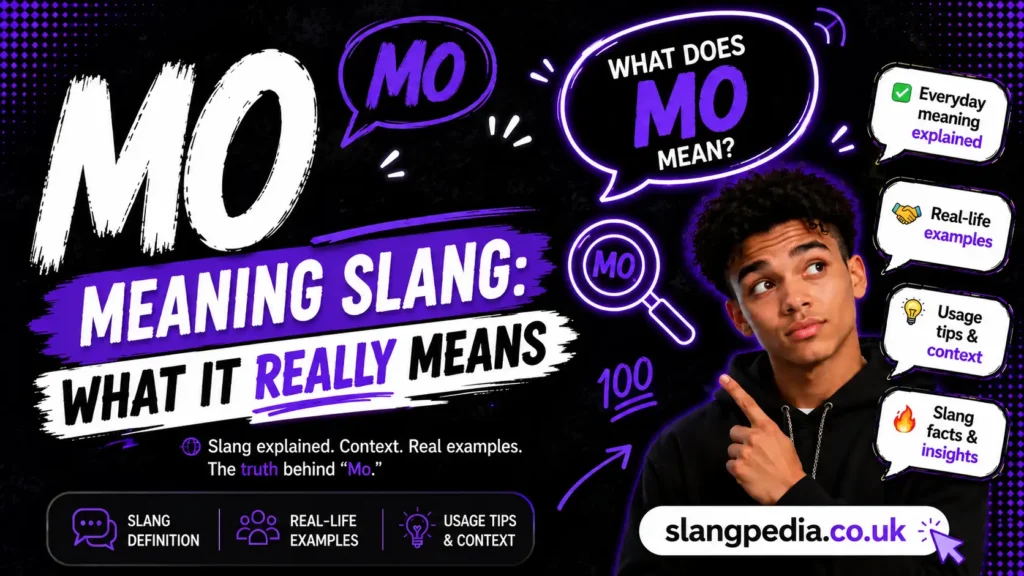
“Mo” means a moment or brief period of time — you’ll see it most on TikTok, Instagram, and Discord when someone wants to signal they need space or are waiting for something short.
TL;DR
- Definition: Short for “moment” — a quick break, pause, or wait
- Tone: Casual, sometimes impatient, occasionally sincere
- Origin: Gen Z vernacular that exploded on TikTok around 2022–2023
- Who uses it: Teenagers and young adults across US and UK platforms
- Warning: Can sound dismissive if used too often in serious conversations
What Does “Mo” Mean in Slang?
You’re texting your friend about plans, and they respond: “give me a mo, in class rn.” They’re not asking for sixty seconds of silence — they mean they need a little time before they can focus on you.
“Mo” is shorthand for “moment,” but it’s not precious or formal. It signals a quick pause, a brief wait, or needing space right now. The word carries lightness. It’s not “I’m never talking to you again” — it’s “hold that thought for five minutes.”
mo = a quick moment or short period of waiting
The tone matters. When someone says “just a mo,” they sound casual and friendly. When they say “mo,” alone in a text, it can feel slightly rushed or dismissive. Context changes everything. You’ll see it most in fast-paced group chats where speed matters more than formality.
The word became standard because texting rewards efficiency. No cap is about being honest; “mo” is about acknowledging you’re not fully here right now — and that’s okay.
Where Did the Slang “Mo” Come From?
“Mo” didn’t originate from one specific subculture. It’s British English heritage — “Have a mo, love” has existed for decades — but Gen Z didn’t dig it up from history books. The word spread through TikTok comments and Discord servers around 2022–2023, where speed and abbreviation became cultural values.
UK Gen Z picked it up first, especially in gaming and Discord communities. American TikTok users adopted it shortly after. The word fits the rhythm of online communication perfectly — it’s faster than typing “moment” and sounds more authentic than formal pauses.
| Year | Development |
|---|---|
| Pre-2020 | British casual speech (“Just a mo, mate”) |
| 2022 | TikTok comments start using it; Discord servers normalize the abbreviation |
| 2024–2026 | Mainstream Gen Z usage across US and UK platforms equally |
The meaning hasn’t shifted much. It’s always meant the same thing — a brief waiting period. What changed is adoption speed and the platforms where it appears.
What Does “Mo” Mean in Text?
In texts and DMs, “mo” feels urgent but not rude. Your friend sends: “mo, my mom’s calling” — they’re not ghosting, they’re communicating honestly.
Group chats handle it differently than one-on-one conversations. In a group, “mo” blends into the rapid-fire exchange. In a DM, it can feel slightly abrupt if overused. Most people pair it with explanations: “one mo, loading the game” or “give me a mo, dealing with something.”
Common emojis that follow “mo”: 👀, ⏳, ⚡, or just a period for urgency.
Real text exchange:
Jess: yo are we still gaming tonight
Tyler: yeah just a mo, finishing homework
Jess: np I’ll get snacks
Tyler: bless you
The “just a mo” here softens the “no, not right now” — Tyler acknowledges the wait instead of disappearing.
| Context | What “Mo” Signals | Emoji Usually Follows |
|---|---|---|
| One-on-one DM | “I’m not ignoring you, just brief delay” | 👀 or ⚡ |
| Group chat | “Staying relevant but briefly stepping back” | None, or quick reaction emoji |
| Gaming/Discord | “Quick pause in gameplay or focus” | ⏳ or 🎮 |
Feining is about intensity; “mo” is about timing. They solve different communication problems.
What Does “Mo” Mean on TikTok?
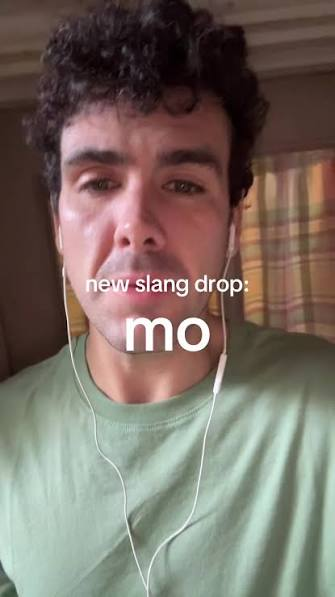
On TikTok, “mo” appears mostly in comments and captions. A video shows someone stressed about homework, and comments flood in: “literally just a mo and it’s over.” It signals empathy without needing words.
Creators use it in captions for pacing: “wait a mo” before a plot twist, or “gimme a mo to explain” before a storytime. The word works as a narrative device — it makes viewers feel like they’re in on a secret pause.
TikTok usage doesn’t shift meaning, but tone matters more. A creator saying “give me a mo” feels more intimate than a text saying the same thing. The platform rewards authenticity, and “mo” sounds real.
UK and US TikTok use it equally. There’s no regional preference — the word works across dialects because it’s linguistically neutral.
“Mo” in Real Conversations: 5 Examples
Example 1 — Casual gaming pause
Marcus: yo pass the aux
Cody: one mo, endgame scene is insane
Marcus: say less
Cody’s buying himself time without commitment. The casual tone signals friendship — he’ll get to it.
Example 2 — Sincere apology
Ashley: I need to talk about what happened
Jordan: yeah for sure, just gimme a mo to process
Ashley: take your time ❤️
Jordan’s being genuinely respectful here. The “mo” shows vulnerability — they need a second.
Example 3 — Group chat chaos
Group chat: yo where’s the food
Zara: MO. literally pulling in now
Group chat: 🙏🙏🙏
Caps make it urgent. “MO” here means seconds, not minutes. Everyone understands the rush.
Example 4 — Ironic waiting
Dev: this code has been broken for hours
Liam: just a mo, I’ll fix it
Dev: 💀💀💀
Liam’s being sarcastic. “Just a mo” signals he knows this will take forever.
Example 5 — Discord server vibes
Alex: anyone wanna run raid?
Sam: gimme a mo to grab my stuff
Jordan: same, booting up now
Fast, practical, no extra words. This is how gaming communities communicate.
“Mo” vs. Similar Slang
| Word | Core Meaning | Tone | Best Used When |
|---|---|---|---|
| Mo | A brief moment or waiting period | Casual, light | Texting friends you’ll be quick |
| Sec | Shorter than a mo — instant response needed | Rushed, urgent | “Wait a sec, I’m thinking” |
| Min | 60 seconds; more literal and defined | Precise, neutral | “Give me a min to respond” |
| Hold up | Asking for pause + explanation coming | Serious, stops conversation | “Hold up, I need to explain this” |
Most people confuse “mo” and “sec” — they think they’re identical. They’re not. “Sec” implies urgency and speed. “Mo” implies you might need the full moment. A sec is emergency-level fast. A mo is “I’m genuinely here, just not right now.”
The Emotional Vibe Behind “Mo”
“Mo” exists because online communication demands honesty about availability. You can’t fake presence forever. The word lets you be honest without ghosting.
It spreads fast because it matches how Gen Z actually communicates — rapid, fragmented, real. Nobody thinks they’re being rude by saying “mo.” The word is permission to not be perfect.
When someone says “mo,” they’re acknowledging you matter enough to wait for. They’re not going silent — they’re pausing. It’s the difference between disappearing and being real about your limits.
What does it say about the speaker? That they value your attention enough to explain the delay. What does it say about being described this way? Honestly? Nothing negative. If someone takes a moment for you, they’re thoughtful.
The word also fills a cultural gap. We text faster than we think, but we can’t answer instantly. No cap proved Gen Z wanted authenticity in language. “Mo” is that same impulse — just linguistic honesty.
Is “Mo” Offensive?
No. “Mo” is not offensive, not a slur, and not harmful in any context.
It’s safe to use everywhere — USA, UK, schools, workplaces, family chats. There’s no cultural baggage attached. British people have used it casually for decades (“just a mo, love”). Gen Z simply accelerated adoption.
Context doesn’t make it offensive. Even overused “mo” annoys people, but it doesn’t offend them. The word is genuinely neutral.
Who should avoid it? Nobody. There’s no demographic that claims ownership or feels erased when others use it.
For professional writing: Use “moment” or “one moment, please” instead.
📌 Quick note for parents and teachers: “Mo” means a brief wait or moment of time. It’s not harmful or rude — just casual internet shorthand. You’ll see it in text messages, TikTok comments, and Discord servers. It signals honesty about availability rather than rudeness.
“Mo” Slang — FAQ
Q: What does “mo” mean on TikTok?
A: On TikTok, “mo” means a quick moment or pause. Creators use it in comments (“just a mo before the twist”) and captions to signal pacing. The meaning stays the same as texting — a brief wait — but feels more intimate on video because viewers hear the tone.
Q: Is “mo” a bad word?
A: No. “Mo” isn’t a bad word, slur, or offensive term. It’s casual shorthand with zero baggage. You can use it anywhere without concern.
Q: What’s the difference between “mo” and “sec”?
A: “Sec” implies something faster and more urgent. “Mo” is a genuine moment of waiting without pressure. A sec is emergency-level quick. A mo is “I’m here, just not instantly.” They sound similar but signal different speeds.
Q: Do Americans and British people use “mo” differently?
A: No significant difference. UK Gen Z borrowed a phrase that already existed in British casual speech. Americans adopted it from TikTok. Both groups use it the same way today — casual, light, signaling a brief pause.
The Bottom Line
“Mo” is honesty disguised as abbreviation. It tells someone you value them enough to pause genuinely instead of disappearing.
The word became universal because it matches how we actually communicate — fast, real, incomplete. Gen Z needed a word for the micro-pause between obligations. “Mo” fills that space.
Next time you see it in a comment or chat, you’ll know exactly what’s happening. Someone’s not ignoring you. They’re just taking a moment. And that’s kind of respectful, honestly.
Have you seen “mo” used in a way that surprised you? Drop it in the comments.
Bonus: Where “Mo” Shows Up — Platform Breakdown
| Platform | Typical Usage | Frequency | Tone |
|---|---|---|---|
| TikTok | Comments, captions, voiceovers | Very High | Casual, empathetic |
| Discord | Gaming servers, DMs | Very High | Rushed, practical |
| Instagram DMs | One-on-one and group chats | High | Friendly, light |
| iMessage | Group texts especially | High | Natural, unforced |
| Twitter/X | Less common; feels too casual for replies | Low | When used, ironic |
Maggie Wiersma is a USA-based writer with 2 years of experience covering slang meanings, internet culture, and modern language trends. With a background in communication studies, she creates simple and engaging content that helps readers understand today’s most popular slang terms.