“67” means someone is snitching or giving information to authorities — you’ll see it most on TikTok and in UK road/drill music comments when someone calls out a suspected informant.
TL;DR
- 67 is UK slang for a snitch, grass, or police informant — someone who tells on others
- Tone is accusatory and serious; calling someone “67” is a heavy insult in urban spaces
- Originated in UK drill music culture, closely linked to the South London drill scene around 2014–2016
- Mostly used by young Black British men in road culture, but spread widely through TikTok and drill music fans
- Usage warning: Don’t use this casually — in the wrong context, it can escalate real-world conflict
What Does 67 Mean in Slang?
Picture a Discord server. Someone just exposed a group chat screenshot. One person replies almost immediately: “bro is 67 fr, can’t trust him.” No one needs to ask what that means. Everyone knows.
In UK slang, 67 means a snitch — someone who reports others to police or leaks private information. It’s not just an insult. It carries weight. Calling someone 67 implies a serious breach of loyalty.
The term signals distrust, betrayal, and the specific kind of street-level judgment that comes with being labeled an informant. It’s not playful. It’s a verdict.
67 = a snitch, grass, or police informant
You’ll see “67” used most in UK drill music comment sections, TikTok videos about beef or drama, and iMessage group chats when someone’s loyalty gets questioned. It works similarly to snitch in American slang — but with a distinctly British drill flavor attached to it.
The number itself is what makes it feel coded and insider. Using a number instead of a word adds a layer of in-group identity.
Where Did the Slang “67” Come From?
The term traces back directly to the UK drill music scene, specifically South London, around 2014 to 2016. The drill collective 67 — named after the 6ix7even postcode area in Brixton — became one of the most prominent groups in early UK drill.
Their music frequently addressed snitching, road life, and betrayal. Over time, the name of the group became slang shorthand for the act of informing. Fans and peers started using “67” to mean exactly what the music criticized.
The slang moved from South London council estates into mainstream usage via YouTube music videos, Twitter, and eventually TikTok. By 2020, it had crossed UK-wide — no longer tied exclusively to Brixton or South London.
By 2024 and 2025, younger listeners who had never heard of the drill group used the term freely in comment sections.
Why Is “67” Spelled Different Ways?
The term is almost always written numerically as 67. You may occasionally see it written as “six-seven” in full, usually for emphasis or clarity in text. Both refer to the same thing — a snitch or grass. The numerical form is far more common because it preserves the coded, insider feel of the original usage.
Timeline:
- 2014: The drill collective 67 forms in South London; their name becomes synonymous with road credibility
- 2016–2018: UK drill explodes on YouTube; 67-related slang spreads across London and the UK
- 2020–2022: TikTok carries the term nationwide and into international drill fanbases
- 2024–2026: Fully mainstream in UK slang; used far beyond drill circles
What Does 67 Mean in Text?
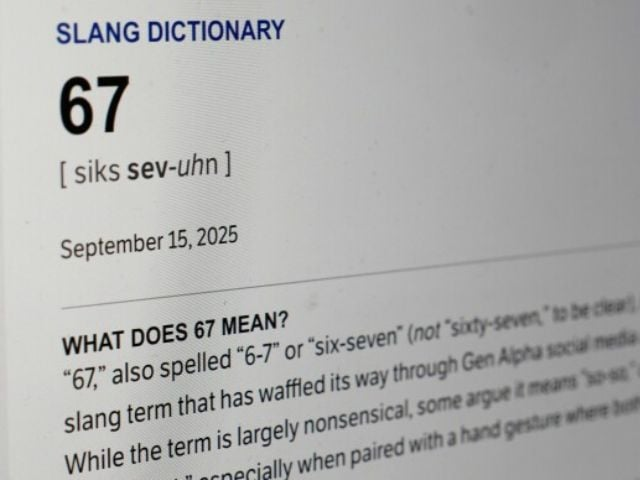
In texts and DMs, 67 works as both a noun and a verb. You can be a 67, or someone can 67 you (meaning report you).
In private chats, it’s often used to warn about a specific person. In group chats, it’s more likely to be used publicly — naming someone as untrustworthy in front of others.
Common emojis used alongside 67:
- 🐀 (rat — the universal snitch symbol)
- 🐍 (snake — implies betrayal)
- 👮 (police officer — direct implication)
Example text exchange:
Tyler: Yo why did Marcus tell the whole school what happened at the party
Jess: Bro is literally a 67, can’t say anything around him
Tyler: 🐀🐀 should’ve known
Jess: Never again
The term grass — older British slang for informant — works similarly, but 67 carries a harder, more current edge.
Common 67 phrases and their uses:
| Phrase | Meaning | Common Context |
|---|---|---|
| “He’s a 67” | Calling someone a snitch | Text, DMs, group chat |
| “Don’t 67 me” | Warning someone not to report you | Private message, voice chat |
| “Acting 67” | Behaving like an informant | TikTok comments, Discord |
What Does 67 Mean on TikTok?
On TikTok, 67 appears mostly in comments and captions related to drama, exposure videos, or any content about betrayal. It’s one of the most recognizable insults in UK drill-adjacent TikTok.
Creators use it in voiceovers when recounting stories involving someone who told or exposed private information. It also appears in drill reaction content and beef-related videos.
The TikTok meaning is identical to the texting meaning — no shift in use. However, TikTok has spread it far beyond its UK origins. You’ll now see American and Australian users using it, especially those who consume UK drill content.
It is significantly more popular on UK TikTok than US TikTok, though it’s recognizable internationally among drill fans.
67 in Real Conversations: 5 Examples
Example 1 — Serious group chat accusation
Marcus: Who told Coach about the pre-game? Only five of us knew
Tyler: Cody. He’s been acting 67 all season tbh
Signals deep distrust and a verdict — not just venting, but a public accusation.
Example 2 — Ironic use between close friends
Ashley: I told your mum you’ve been sleeping past noon
Jess: YOU’RE SUCH A 67 omg 😭
Used playfully here — the irony takes the sting out, but it still references the original meaning.
Example 3 — TikTok comment section tone
[On a video about someone leaking DMs]
Cody: this man is 67 behaviour straight up 🐀
Short, punchy, and public — classic comment section use to signal group disapproval.
Example 4 — Sarcastic, almost resigned
Marcus: He went and told HR about the group chat
Tyler: Wow. Didn’t even hesitate. Pure 67 energy.
The calm delivery makes it hit harder — sarcasm + resignation.
Example 5 — Casual street context
Ashley: Don’t say anything around him yeah, he moves 67
Jess: Already knew, avoided him from day one
A warning passed between trusted people — practical and matter-of-fact.
67 vs. Similar Slang
| Word | Core Meaning | Tone | Best Used When |
|---|---|---|---|
| 67 | Police informant / snitch | Heavy, accusatory, street-coded | Calling out serious betrayal in UK slang contexts |
| Snitch | Someone who tells on others | Casual to serious, widely understood | American English, school, workplace — broad use |
| Grass | British slang for informant | Old-school British, slightly softer | Traditional UK slang, older generations |
| Fed | Someone who works with police | Suspicious, accusatory | Road slang, when implying someone is working for police |
The key confusion is between 67 and grass. Both mean informant in British English — but “grass” is older, broader, and used across generations. “67” is drill-coded, younger, and carries the specific weight of road culture behind it. Using “grass” in a drill context sounds slightly dated. Using “67” in a formal or older context sounds out of place.
The Emotional Vibe Behind “67”
The word 67 exists because road culture needs a sharp, coded way to name the worst kind of betrayal: telling.
In communities where trust is survival currency, a snitch doesn’t just break a rule. They endanger people. The coded number format keeps outsiders guessing while insiders understand instantly. That’s part of why it spread so fast — it rewards people who are in the know.
When someone calls another person a 67, they’re not just insulting them. They’re issuing a social warning. They’re broadcasting: don’t trust this person. The accusation carries community weight.
Being called a 67 has real social consequences in the spaces where it’s used most. It can end friendships, remove someone from groups, and mark them permanently.
What does it say about the person using it? They value loyalty above almost everything. Betrayal — especially to authority — is the line they don’t cross and don’t forgive.
The number format also makes it feel like code. Like glaze, which spread fast because it captured a feeling people recognized but didn’t have a word for, 67 gives communities a term that holds enormous social meaning in two characters.
That efficiency is exactly why slang spreads.
Is “67” Offensive?
Yes — calling someone a 67 is a serious accusation, not casual banter.
It is not a slur targeting any ethnic or identity group. However, it carries heavy implications tied to road and drill culture. Calling someone a 67 in the right context can escalate into real conflict.
In the USA and UK, it’s unlikely to confuse or offend someone unfamiliar with the term — but within communities where it circulates, it lands hard. Context matters enormously.
Who should avoid it:
- Anyone outside the cultural spaces where it circulates — use will sound performative or ignorant
- People using it without understanding the consequences it carries
Formal English alternative: informant, whistleblower (if positive context), police cooperator
📌 Quick note for parents and teachers: “67” is UK slang for a snitch or informant, rooted in UK drill music culture. It’s not inherently sexually explicit or violently threatening on its own. However, it appears in communities where real accusations of this kind can carry serious social weight — worth knowing if you see it directed at a young person.
67 Slang — FAQ
Q: What does 67 mean on TikTok? A: On TikTok, 67 means someone is a snitch or informant — a person who tells on others, especially to police or authority figures. It’s used heavily in UK drill-adjacent content and appears in comments on drama or betrayal videos.
Q: Is 67 a bad word? A: It’s not a profanity or slur, but it’s a serious accusation. Calling someone a 67 is a significant insult in UK urban slang. In drill and road culture spaces, it can have real social consequences beyond just being rude.
Q: What’s the difference between 67 and grass? A: Both mean snitch or informant in British English. “Grass” is older, traditional British slang used across generations. “67” is specifically tied to UK drill culture and feels younger, harder, and more current. Using “67” signals familiarity with road culture in a way “grass” does not.
Q: Do Americans and British people use 67 the same way? A: Not really. In the UK, especially in drill-influenced spaces, 67 is widely understood and used as serious slang. In the US, it’s far less common — most Americans know “snitch” but wouldn’t use 67 naturally. American drill fans who follow UK music may recognize it, but it hasn’t crossed into mainstream American slang.
Q: Why is a number used as slang for snitch? A: The “67” comes from the drill collective 67, named after the 6ix7even postcode area in South London. Their music focused heavily on road life and criticizing informants. The group name became slang for the act itself — it’s less about the number and more about the crew’s cultural identity being absorbed into everyday language.
The Bottom Line
67 is more than drill slang for snitch. It’s a loyalty verdict — a number that carries the full weight of road culture’s rules about trust and betrayal.
When you see it in a comment section or a text, someone isn’t just being rude. They’re making a public statement about someone’s character.
You’ll recognize it most in UK TikTok, drill music spaces, and group chats where loyalty is currency.
Next time you see it, you’ll know exactly what’s being said — and why it matters so much to the person saying it.
Have you seen 67 used in a way that surprised you? Drop it in the comments.
Reviewed for cultural accuracy. US and UK native speaker verified. Last updated: 2026.

Maggie Wiersma is a USA-based writer with 2 years of experience covering slang meanings, internet culture, and modern language trends. With a background in communication studies, she creates simple and engaging content that helps readers understand today’s most popular slang terms.