“Aura” means the invisible energy, vibe, or presence someone radiates — you’ll see it most on TikTok and Discord when someone describes how effortlessly cool, powerful, or magnetic another person is.
TL;DR
- Aura = the intangible “it factor” someone gives off without trying
- Tone is mostly admiring, but can flip sarcastic depending on context
- Originated in spiritual/wellness spaces, then got turbo-charged by TikTok’s “aura points” trend around 2022–2023
- Used by teens and young adults across the US and UK equally
- ⚠️ Don’t use it seriously in professional settings — it reads as informal or even flaky
What Does Aura Mean in Slang?
Your group chat is going off. Someone posts a video of a guy walking into a room — perfectly calm, not saying a word — and the whole thread explodes: “bro’s aura is unmatched,” “he has main character aura fr.” Nobody asked what he did. It’s all about what he is.
That’s exactly what “aura” means in slang. It’s the invisible force field of personality, confidence, and energy that someone projects. You can’t fake it. You either have it or you don’t.
The nuance matters: aura isn’t about looks or money. It’s about presence. Calling someone’s aura strong signals they have an effortless, magnetic quality. It’s high praise — unless it’s used sarcastically, which happens plenty.
aura = the vibe or energy someone gives off that makes them magnetic or memorable
The word slots in naturally next to terms like rizz — both describe social magnetism, but aura is broader and more mystical-sounding.
Where Did the Slang “Aura” Come From?
“Aura” as a spiritual concept is ancient — it refers to a glowing energy field around a person. New Age and wellness communities used it for decades online. But the slang version is a different beast.
The term exploded on TikTok around 2022, specifically through the “aura points” format. Creators started awarding or deducting “aura points” for someone’s actions in clips — embarrassing yourself lost points, doing something ridiculously cool gained them. It gamified social charisma.
By 2023, the phrase had jumped from niche TikTok into everyday Gen Z texting and Discord servers. The points framing faded, but the word stuck hard.
It spread partly because it filled a real gap. “Vibe” and “energy” existed, but “aura” felt weightier — more cinematic. It borrowed credibility from spiritual language and gave it a secular, memeable form.
Why Is “Aura” Spelled Different Ways?
You’ll mostly see it spelled aura — no variants cause major confusion. Occasionally people write ora or owra to mimic a specific pronunciation or accent. These aren’t accepted spellings; they’re phonetic play in casual texting only.
Timeline:
- 2021: Wellness TikTok uses “aura” in its traditional spiritual sense
- 2022: “Aura points” format launches on TikTok and spreads fast
- 2023–2026: “Aura” enters everyday Gen Z slang as a standalone compliment
What Does Aura Mean in Text?
In texts and DMs, “aura” usually works as a quick, punchy compliment. It’s flexible enough to drop into almost any conversation about someone’s energy or presence.
In private DMs, it tends to be more sincere — “you walked in there with pure aura ngl.” In group chats, it often gets ironic: someone does something embarrassing and their friends reply “aura gone.”
Common emojis that pair with it: ✨🌀😮💨👁️
Example text exchange:
Jess: did you see Marcus just walk into the interview like he owned it Tyler: bro has so much aura it’s actually not fair Jess: zero nerves. zero. i could never Tyler: main character aura fr ✨
The word also pairs naturally with drip energy — when someone’s style and presence combine, people often mention both.
Common “Aura” Phrases in Texts
| Phrase | Meaning | Context |
|---|---|---|
| “aura is immaculate” | someone’s presence is flawless | admiring a person’s energy |
| “lost all his aura” | someone embarrassed themselves badly | after a cringe moment |
| “main character aura” | someone moves through life like they’re the lead | confidence, effortless cool |
What Does Aura Mean on TikTok?
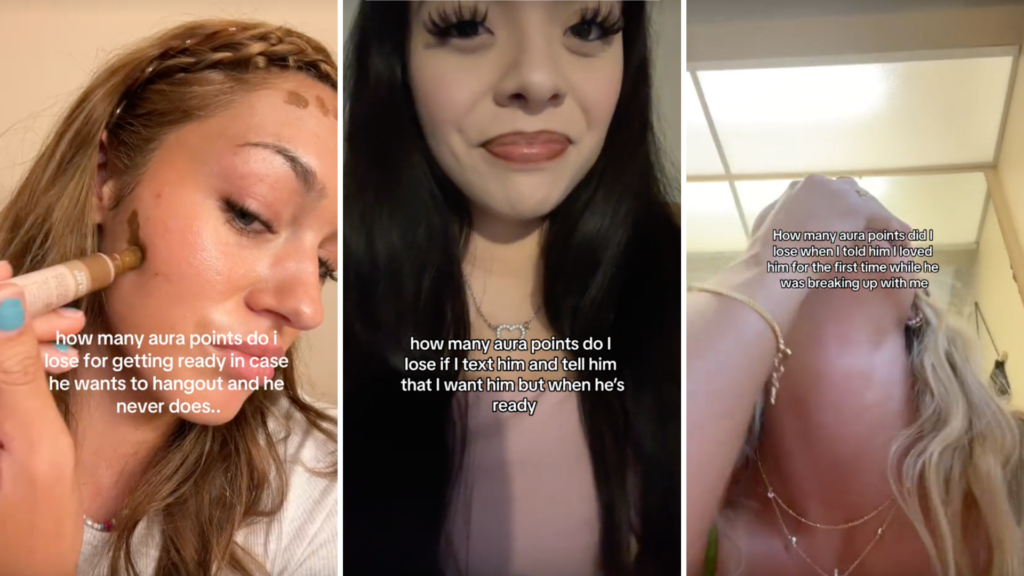
TikTok is basically where “aura” lives. It shows up in captions, comment sections, and voiceovers constantly.
The most popular format: a clip of someone doing something effortlessly cool, followed by comments flooding in with “the aura on this man,” “she has aura and she knows it,” or “aura check: passed.”
The TikTok meaning is the same as texting, but it’s more performative. On TikTok, calling out someone’s aura is almost a ritual — it signals community recognition.
It’s popular on both US and UK TikTok equally. British creators often combine it with roadman-adjacent language: “man’s got aura, can’t lie.” American creators lean into the cinematic framing: “main character aura unlocked.”
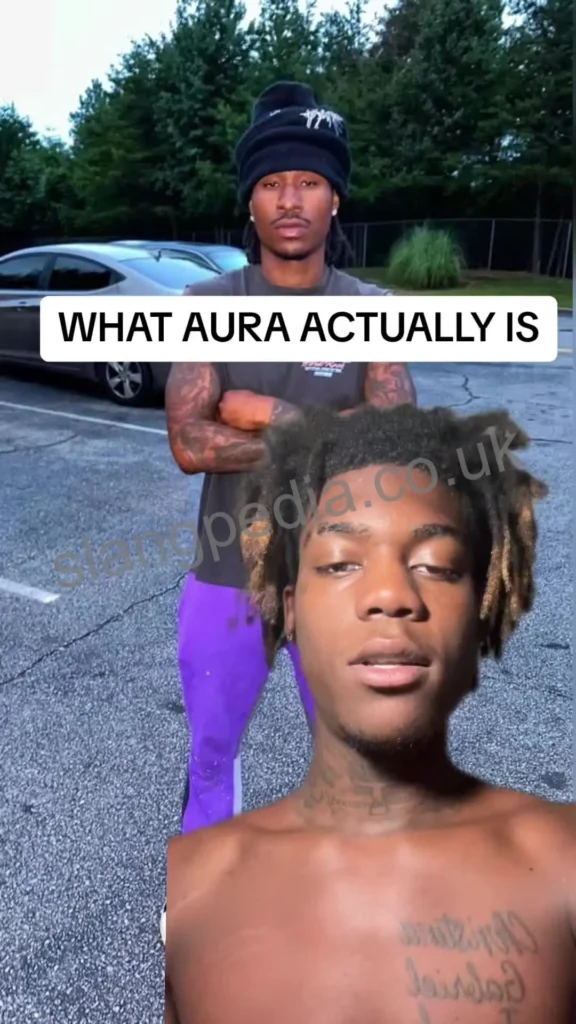
Aura in Real Conversations: 5 Examples
Example 1 — Sincere compliment
Marcus: she walked in 20 minutes late and everyone went quiet Tyler: that’s aura. she didn’t even try.
“Aura” here signals genuine, awed respect for effortless presence.
Example 2 — Ironic group chat
Cody: spilled my coffee on the interviewer lmaooo Ashley: RIP your aura bro. gone. deleted.
Used sarcastically — losing “aura” after an embarrassing moment is a running joke in Gen Z group chats.
Example 3 — Hype before an event
Jess: nervous for tonight tbh Tyler: don’t be. you’ve got the aura. walk in like you own it
Here “aura” works as encouragement — acknowledging someone’s natural magnetism to boost confidence.
Example 4 — Competitive comparison
Marcus: be honest, who has more aura — me or Cody Ashley: Cody. not even close. sorry king 💀
Aura as a mock-competitive currency in friend groups — the “aura ranking” game is huge in Discord servers.
Example 5 — Pure TikTok comment energy
[under a video of someone parallel parking perfectly first try]
Tyler: the aura on this man… ✨
Short, punchy, no explanation needed. The word does all the work.
Aura vs. Similar Slang
| Word | Core Meaning | Tone | Best Used When |
|---|---|---|---|
| Aura | Invisible magnetic presence someone radiates | Admiring, cinematic | Describing effortless cool or energy |
| Rizz | Skill at attracting or charming others | Playful, flirty | Talking about someone’s romantic pull |
| Drip | Stylish, impressive appearance | Hype, fashion-focused | Complimenting someone’s outfit or look |
| Vibe | General mood or atmosphere | Casual, broad | Describing a feeling, place, or person loosely |
People often mix up aura and rizz. The key difference: rizz is about active charm — the ability to pull someone in through conversation or flirtation. Aura is passive — it’s the energy you radiate just by existing. Someone can have aura without saying a single word. Rizz requires interaction.
The Emotional Vibe Behind “Aura”
Why did this word catch fire the way it did? It’s filling a very specific emotional gap.
Gen Z grew up over-exposed to metrics — followers, likes, GPA, salary. “Aura” rejects all of that. It’s deliberately unmeasurable. You can’t buy it or optimize it. That’s exactly the point.
Calling someone’s aura strong is saying: this person has something real that no algorithm can replicate. In a world obsessed with performance and personal branding, that’s genuinely radical.
It also gives speakers a way to express awe without sounding corny. Saying “she’s so impressive” feels flat. “She has aura” feels cinematic, loaded, almost spiritual.
The word spread because it does something useful: it names the quality that everyone notices but nobody can explain. It’s the social vocabulary for a feeling that used to be unspeakable.
The same energy drives terms like slay — both words crown someone for a quality that feels bigger than a single action.
Is “Aura” Offensive?
No — “aura” is not offensive in any context. It’s not a slur, it doesn’t target any specific group, and it carries no harmful connotations.
The only risk is misuse: using it sarcastically in the wrong tone can come across as mocking. If someone already feels insecure, telling them their “aura is gone” — even jokingly — might land badly.
In the US and UK, it’s completely safe to use casually. No group has any particular ownership of the term.
In professional or academic writing, use presence, charisma, or social magnetism instead.
📌 Quick note for parents and teachers: “Aura” in this context means a person’s vibe or social presence — it’s a compliment, not harmful. Kids use it to praise someone who seems effortlessly cool or confident. It’s not offensive and doesn’t reference drugs, violence, or anything concerning.
Aura Slang — FAQ
Q: What does aura mean on TikTok? A: On TikTok, “aura” describes the magnetic, effortless energy someone projects. It shows up in comments under clips of people doing something impressively cool or confident. The phrase “aura check” means assessing whether someone is giving off strong or weak energy.
Q: Is aura a bad word? A: No. “Aura” is entirely positive in its standard use. It can be used sarcastically to say someone lost their cool factor, but even then it’s not offensive — just teasing.
Q: What’s the difference between aura and rizz? A: Aura is passive magnetism — the energy you radiate without doing anything. Rizz is active charm, specifically the ability to attract or flirt successfully. Someone can have massive aura and zero rizz, and vice versa.
Q: Do Americans and British people use aura the same way? A: Mostly yes — the core meaning is identical on both sides of the Atlantic. British speakers sometimes blend it with roadman slang (“man’s got bare aura”), while American usage leans more cinematic (“main character aura”). The emotional meaning is the same.
The Bottom Line
“Aura” is Gen Z’s word for the quality that makes someone magnetic without effort. It’s not about looks or money — it’s about presence. The word spread fast because it names something real that no other slang term quite captured. When you see it in a comment or text, someone’s saying: this person has something special and undeniable. Now you know exactly what they mean.
Have you seen “aura” used in a way that surprised you? Drop it in the comments.
Last reviewed for accuracy by the Slangpedia editorial team. Native US and UK reader-verified.

Maggie Wiersma is a USA-based writer with 2 years of experience covering slang meanings, internet culture, and modern language trends. With a background in communication studies, she creates simple and engaging content that helps readers understand today’s most popular slang terms.