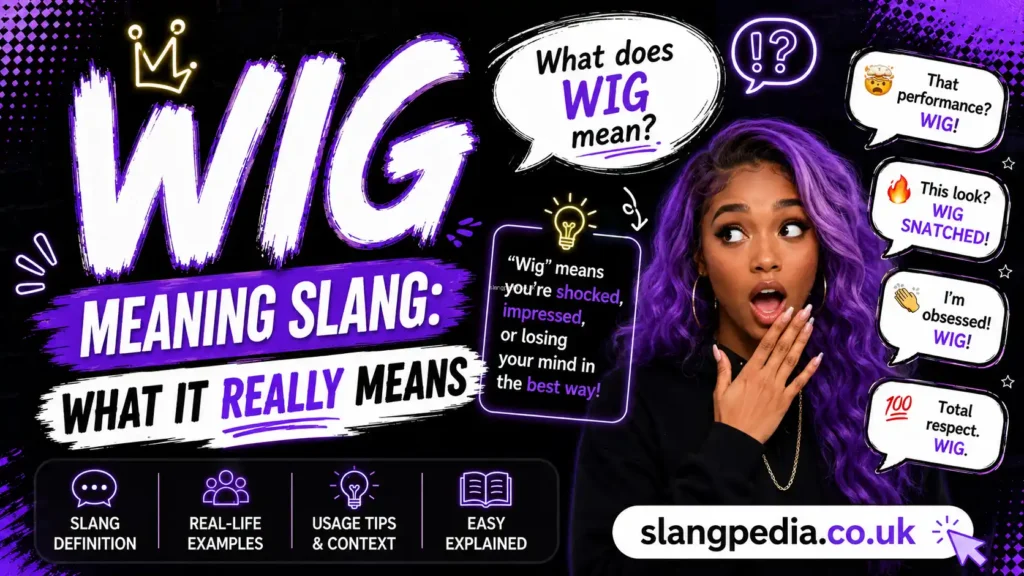
“Wig” means something shocked you so hard it felt like your wig flew off — you’ll see it most on TikTok and Twitter/X when someone reacts to a jaw-dropping performance, outfit, or plot twist.
TL;DR
- “Wig” signals extreme shock, excitement, or being blown away by something.
- The tone is loud, dramatic, and usually positive or celebratory.
- It comes from Black and Latino LGBTQ+ ballroom culture, later spread through drag fandoms.
- Gen Z and millennial fans, K-pop stans, and drag fans use it most.
- Warning: overusing it outside fandom spaces can sound try-hard or dated fast.
What Does Wig Mean in Slang?
Picture a Twitter reply under a surprise album drop: someone types “MY WIG” in all caps with three exclamation points. That’s the energy.
At its core, wig means something so shocking or impressive that it knocked you off balance — like your wig physically flew off your head. It’s exaggerated on purpose.
The nuance matters here. Saying “wig” isn’t casual praise. It signals you were genuinely stunned, not just mildly pleased. People use it for big reveals, flawless performances, or plot twists nobody saw coming.
wig = a reaction word for being completely shocked or blown away
The phrase often shows up as “my wig flew” or “wig snatched,” both meaning the same thing with extra flair. You’ll notice it paired with words like tuff when someone wants to stack praise on top of shock. The word carries real cultural weight, and knowing where it started helps explain why people use it the way they do.
Where Did the Slang “Wig” Come From?
Wig started in Black and Latino LGBTQ+ ballroom culture, a scene built around drag performance and vogue competitions. Drag performers often wear elaborate wigs as part of their look, so a shocking or flawless performance was said to “snatch” or “fly” someone’s wig off.
The phrase spread through drag culture in New York ballroom houses long before mainstream media picked it up. RuPaul’s Drag Race helped push it toward wider audiences starting around 2012.
From there, stan Twitter adopted it hard. K-pop fans, Beyoncé fans, and pop culture commentators turned “wig” into shorthand for any shocking reveal, whether it was a surprise song or an unexpected celebrity moment.
Why Is “Wig” Spelled Different Ways?
Most people write it as “wig,” but you’ll also see “wigg” used ironically for extra emphasis. Some writers stretch it to “wiiiig” to mimic the drawn-out shock of saying it out loud.
None of these spellings change the meaning. They just adjust the drama level depending on how shocked the person wants to sound.
Timeline:
- Early 2000s: Ballroom and drag culture uses “wig” and “wig snatched” for shocking performances.
- 2012–2016: RuPaul’s Drag Race and Twitter fandoms push the phrase into wider LGBTQ+ and pop culture spaces.
- 2020s–2026: TikTok and stan Twitter normalize “wig” as a universal reaction word for shock or excitement.
What Does Wig Mean in Text?
In texts and DMs, wig works as a one-word reaction. It usually stands alone, often in all caps, right after someone shares news or a link.
The meaning barely shifts between private texts and group chats. Group chats just amplify it — one person says “wig” and three more pile on.
Common emoji pairings include 💇, 😭, and 🚨. These add urgency without needing extra words.
Text exchange example:
- Jess: did you see the finale???
- Tyler: WIG. i’m still shaking
- Jess: SAME i had to sit down
- Tyler: no bc that twist was insane
| Phrase | Meaning | Vibe It Adds |
|---|---|---|
| Wig snatched | Completely shocked by something | Dramatic, playful |
| My wig flew | Reacting to a specific shocking moment | Personal, immediate |
| Wig-less | So shocked there’s nothing left to react with | Extra, over-the-top |
Sometimes the reaction spirals into related phrases people already know, like slime used for close friend groups, showing how fandom slang tends to cluster together.
What Does Wig Mean on TikTok?
On TikTok, wig shows up mostly in comments and captions under shocking clips — surprise reveals, insane vocal runs, or dramatic sports plays.
It’s common on reaction videos and duet content, where creators film themselves watching something wild in real time. The word does the heavy lifting so they don’t need to explain their shock.
The meaning stays consistent with texting — pure shock, usually positive. It’s roughly equally popular on US and UK TikTok, though US fandom and drag content pushes it slightly harder.
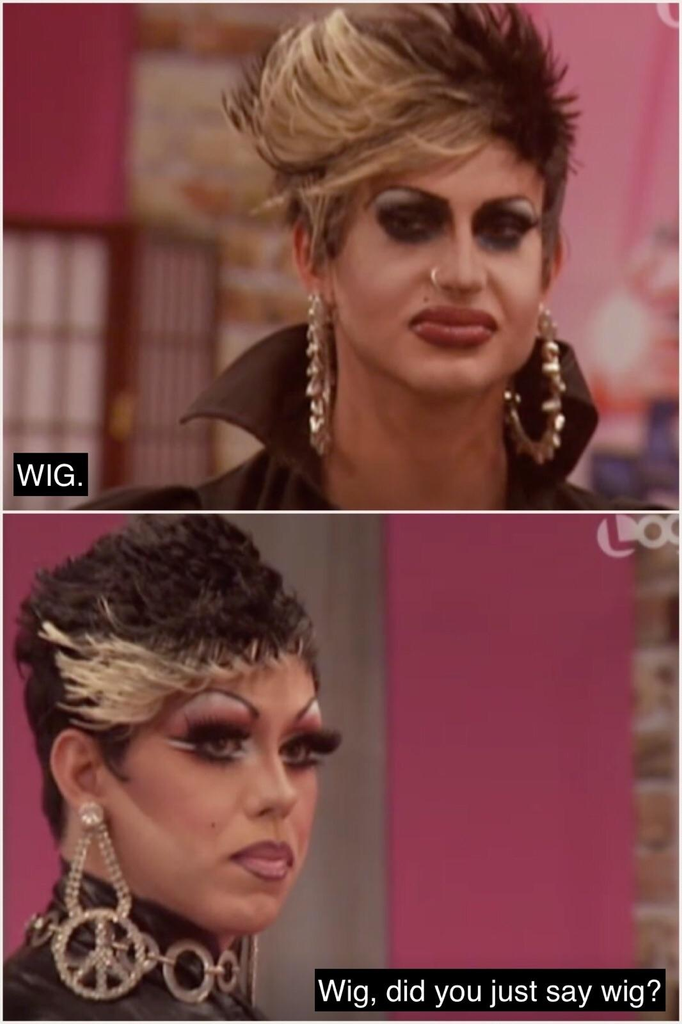
Wig in Real Conversations: 5 Examples
Example 1 — Surprise album drop
Marcus: bro just dropped a surprise album at midnight
Ashley: WIG i’m not ready for this
Signals genuine shock at unexpected news.
Example 2 — Sarcastic reaction to mess
Cody: my ex just texted me “hey stranger”
Jess: wig… not the audacity
Uses shock ironically to mock someone’s behavior.
Example 3 — Sincere compliment
Tyler: she hit that high note live, no autotune
Marcus: my wig genuinely flew off
Expresses real admiration for a skill or talent.
Example 4 — Group chat chaos
Ashley: guys the show got cancelled
Cody: WIG SNATCHED i need answers
Amplifies collective shock inside a fast-moving group chat.
Example 5 — Funny self-deprecating use
Jess: I just tripped in front of my crush
Tyler: your wig flew for real this time 💀
Turns embarrassment into a joke using the shock imagery.
Wig vs. Similar Slang
| Word | Core Meaning | Tone | Best Used When |
|---|---|---|---|
| Wig | Extreme shock or being blown away | Dramatic, celebratory | Reacting to a huge reveal or performance |
| Shook | General surprise or nervousness | Casual, mild | Reacting to something unexpected but smaller |
| Snatched | Looking flawless or put-together | Complimentary | Praising someone’s appearance |
| Gagged | Speechless from shock | Playful, breathless | Reacting when words fail you |
The biggest mix-up happens between wig and snatched. Snatched usually praises how someone looks, while wig reacts to an event or moment. People confuse them because both come from drag culture and both signal something impressive.
The Emotional Vibe Behind “Wig”
Wig exists because plain words like “wow” don’t carry enough weight anymore. Online culture moves fast, and reactions need to match that speed and intensity.
The word fills a gap between mild surprise and total disbelief. It lets someone say “this genuinely shook me” without sounding flat or generic.
Using wig signals you’re plugged into fandom culture and comfortable being dramatic on purpose. It’s self-aware exaggeration, not literal panic.
For the person being described, it’s a compliment. Whatever they did was memorable enough to break through the noise. That’s rare online, where most content gets scrolled past in seconds. The same emotional need drives other reaction words like tuff, which fills a similar gap for approval rather than shock.
Is “Wig” Offensive?
No, wig is not offensive or a slur. It carries no harmful meaning toward any specific group.
Context rarely changes that. The word stays positive or playfully dramatic in almost every situation it’s used.
It’s safe to use in the USA and UK without causing offense. There’s no group it targets or mocks.
The only people who should avoid it are those in formal or professional settings, since it reads as casual internet slang. The formal alternative is simply “shocked” or “impressed.”
📌 Quick note for parents and teachers: “Wig” means someone was shocked or impressed by something, usually in a fun, exaggerated way. It has no offensive meaning and appears often in drag, K-pop, and reaction content on TikTok and Twitter/X. There’s no cause for concern if a young person uses it.
Wig Slang — FAQ
Q: What does wig mean on TikTok? A: It means someone was shocked or blown away by a video, usually a reveal, performance, or plot twist. It’s typically used in comments or captions.
Q: Is wig a bad word? A: No. It’s not offensive and doesn’t target any group. It’s just dramatic slang for shock or excitement.
Q: What’s the difference between wig and snatched? A: Wig reacts to an event or moment, while snatched usually compliments someone’s appearance or styling. They come from the same drag culture roots but serve different purposes.
Q: Do Americans and British people use wig the same way? A: Mostly, yes. Both use it for shock or excitement, though it appears slightly more often in US fandom and drag-related content than UK slang overall.
Q: Why do people say “my wig flew” instead of just “wig”? A: “My wig flew” adds a personal, visual image to the reaction, making it feel more dramatic and specific than the single word alone.
The Bottom Line
Wig works as internet shorthand for a feeling plain words can’t quite capture — total, dramatic shock. It comes from real ballroom and drag culture, not a random internet invention.
Knowing its roots helps you use it right, without flattening the community it came from. Next time you see it in a comment section, you’ll know exactly what it’s doing.
Have you seen wig used in a way that surprised you? Drop it in the comments.
This article is reviewed regularly for accuracy and cultural context by native English speakers.

Maggie Wiersma is a USA-based writer with 2 years of experience covering slang meanings, internet culture, and modern language trends. With a background in communication studies, she creates simple and engaging content that helps readers understand today’s most popular slang terms.