“Wasp” means someone is acting aggressively annoyed or pointlessly hostile — you’ll see it most on TikTok comments and Discord when someone calls out a person for being unnecessarily sharp or bitter without cause.
TL;DR
- Wasp = acting snappy, prickly, or pointlessly mean without a real reason
- Tone is usually teasing or mildly critical — rarely serious or cruel
- Spread mainly through UK roadman slang and Black British youth culture before hitting TikTok
- Used by teens and young adults (16–28) across the US and UK
- Don’t use it to describe someone’s actual anger — it implies the reaction is over-the-top or petty
What Does Wasp Mean in Slang?
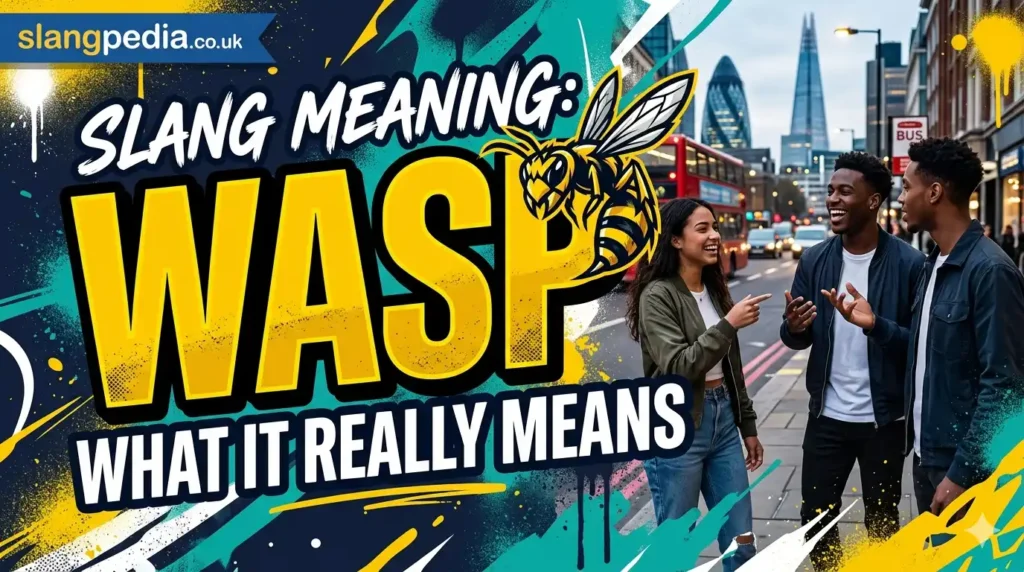
Picture a Discord server. Someone asks a simple question about a game, and another user snaps back with something unnecessary and cutting. Someone else types: “bro why are you being so wasp rn.”
That’s the word in action.
In slang, wasp describes someone being irritable, snippy, or hostile without a proportionate reason. It’s not about serious anger. It’s about petty sharpness — the kind of attitude that stings for no good reason.
The tone is usually light but pointed. Calling someone “wasp” signals that their reaction is too much. It frames their attitude as disproportionate and a little embarrassing.
wasp = acting unnecessarily snappy, hostile, or bitter
The word gets used most in group chats and comment sections. It’s often aimed at someone publicly being difficult. You might also see it paired with basic to double down on how unwarranted the vibe is.
Where Did the Slang “Wasp” Come From?
The slang use of wasp draws directly from the insect — something small that stings you unexpectedly and for no real reason. That image translated naturally into describing people with unnecessary attitude.
The term gained traction in UK Black youth culture and roadman slang around 2019–2021. It spread through grime and drill communities, where calling out people for petty behavior was already common. The word felt intuitive — everyone knows wasps sting for no reason.
By 2022, it crossed into TikTok, especially through UK-based creators. American TikTok picked it up slightly later, folding it into commentary and reaction content.
Why Is “Wasp” Spelled Different Ways?
You’ll mostly see it as wasp, but some people write waspy (adjective form) or waspish (slightly more formal, older British English). Waspish actually predates the slang — it existed in formal English for centuries meaning “irritably snappish.” The modern slang version strips it back to just wasp as a noun or descriptor.
Timeline:
- 2019: The term circulates in UK drill and grime communities as shorthand for unnecessary attitude
- 2021: UK TikTok creators popularize it in commentary videos and comment sections
- 2024–2026: US Gen Z adopts it widely; now common across TikTok, Discord, and iMessage threads
What Does Wasp Mean in Text?
In texts and DMs, wasp almost always reads as light teasing. You’re calling someone out — but not seriously. It’s the word you use when someone is being difficult over something trivial.
In group chats, it often gets a laugh. In private DMs, it can land slightly harder depending on the relationship. It usually travels with the 🐝 or 😤 emoji, or sometimes just a dry 💀.
Real text exchange:
Jordan: why didn’t you save me a seat
Tyler: I literally told you we were moving
Jordan: you’re so wasp for that lol
Tyler: 😭 my bad bro
If you’ve ever seen someone add a ps at the end of a message just to sneak in a dig, that’s wasp energy in text form.
Common “Wasp” Phrases and Local Variations
| Phrase | Meaning | Common Region |
|---|---|---|
| “Being wasp” | Acting unnecessarily hostile or irritable | UK & US TikTok |
| “Wasp energy” | The general vibe of someone being prickly without cause | UK Discord & group chats |
| “Stop being wasp” | A direct call-out, usually teasing | US iMessage, UK Snapchat |
What Does Wasp Mean on TikTok?
On TikTok, wasp shows up mostly in comment sections and captions reacting to someone’s attitude. It appears on drama videos, storytime content, and callout clips. Creators use it in voiceovers to describe a person being petty or difficult — usually someone they’re venting about.
The TikTok meaning stays close to the texting meaning. There’s no major shift. But TikTok adds volume — calling someone wasp in a comment gets agreed with fast.
UK TikTok uses it more frequently and with more precision. US TikTok uses it more casually, sometimes mixing it with similar terms like salty or pressed.
Wasp in Real Conversations: 5 Examples
Example 1 — Group chat call-out
Marcus: you literally didn’t have to say it like that
Ashley: she was being wasp for no reason
“Wasp” here flags that the behavior was disproportionate — a judgment call, not a major accusation.
Example 2 — Ironic/funny
Cody: bro the barista gave me oat milk
Tyler: and?
Cody: I’m wasp about it okay
Self-describing as wasp adds humor — owning the petty reaction rather than defending it.
Example 3 — Sincere call-out
Jess: you didn’t have to ignore my message for three days
Marcus: I was busy
Jess: don’t be wasp when I’m being real with you
Used sincerely here — Jess is asking Marcus not to respond with attitude to a vulnerable moment.
Example 4 — Sarcastic Discord exchange
Tyler: sorry I asked lmao
Cody: why is everyone in this server so wasp today
Ashley: it’s a Monday thing
In group settings, “wasp” becomes a light diagnosis of the whole room’s energy — slightly sarcastic, mostly funny.
Example 5 — Casual reaction
Marcus: she said she doesn’t care
Jess: classic wasp behavior
Marcus: 💀 exactly
Short, punchy, and dismissive — “wasp behavior” does a lot of work in two words.
Wasp vs. Similar Slang
| Word | Core Meaning | Tone | Best Used When |
|---|---|---|---|
| Wasp | Unnecessarily snappy or hostile | Teasing, light critical | Calling out petty or disproportionate attitude |
| Salty | Bitter or resentful, usually after a loss | Playful mockery | Someone is clearly upset about losing or being wrong |
| Pressed | Overly bothered or stressed about something minor | Dismissive | Someone making a big deal over nothing |
| Snappy | Short-tempered, cutting in replies | More neutral/descriptive | Everyday irritability, less Gen Z-coded |
The closest lookalike is salty — and people mix them up often. The key difference: salty implies resentment after something specific (losing, being rejected). Wasp is about attitude that seems to come from nowhere. If someone is salty, they have a reason. If someone is wasp, you can’t even figure out why they’re like that.
The Emotional Vibe Behind “Wasp”
Wasp exists because English needed a word for disproportionate pettiness. “Rude” is too formal. “Mean” is too serious. “Salty” implies a cause. Wasp captures something specific — attitude that stings for absolutely no good reason.
It spread fast because it’s visual. Everyone’s been stung by a wasp unprovoked. The metaphor lands instantly, no explanation needed.
When someone calls another person wasp, they’re not deeply offended. They’re lightly clocking the behavior as unnecessary and a bit embarrassing. There’s distance in the word — it’s almost amused.
When someone is called wasp, it says their reaction got noticed and judged as too much. It’s a soft social correction. Not a cancellation. Just: calm down, that wasn’t necessary.
That’s why it resonated with Gen Z. It names the behavior without escalating the situation. You can call someone wasp and keep the energy light — similar to how cord slang works online: direct, but not starting full drama.
Is “Wasp” Offensive?
Wasp is not a slur and is not offensive to any specific group. It’s a general attitude descriptor. No ethnic, gender, or identity group is targeted by the word.
Context matters slightly. Using “wasp” in a serious conflict might escalate things — it implies the person’s reaction is petty, which can feel dismissive. In casual settings, it’s harmless.
It’s safe to use in the US and UK without causing offense. Anyone can use it. There’s no cultural gatekeeping around the word.
In formal or professional writing, replace it with: unnecessarily hostile, irritable, or short-tempered.
📌 Quick note for parents and teachers: “Wasp” in this context means someone is acting snappy or hostile without cause — it comes from the insect’s reputation for stinging unprovoked. It’s not a harmful word, not a slur, and is generally used in a teasing or light-hearted way. You might see it in TikTok comments or group chats.
Wasp Slang — FAQ
Q: What does wasp mean on TikTok?
A: On TikTok, “wasp” describes someone acting unnecessarily snappy, hostile, or petty. It appears in comments, captions, and voiceovers — usually reacting to someone’s attitude in a video or story. The wasp meaning on TikTok matches its general slang use, though UK TikTok uses it more precisely than US TikTok.
Q: Is wasp a bad word?
A: No. “Wasp” is not a slur or seriously offensive term. It’s a light critical label for someone’s attitude. It can feel dismissive if used in a serious conversation, but in casual use it carries no real weight.
Q: What’s the difference between wasp and salty?
A: Salty implies bitterness after a specific event — losing, being rejected, or being wronged. Wasp is about attitude that has no clear cause. Someone who’s salty has a reason. Someone who’s wasp is just being difficult for seemingly no reason.
Q: Do Americans and British people use wasp the same way?
A: Mostly yes, but the word is more embedded in UK slang. British users — especially in Black British and roadman communities — use it with more precision. American Gen Z uses it more loosely, sometimes interchangeably with pressed or salty.
The Bottom Line
Wasp is a precision tool in Gen Z’s vocabulary. It doesn’t mean angry. It doesn’t mean upset. It means someone is being sharper than the situation calls for — stinging for no real reason, like the insect.
It fills a gap that “rude” and “mean” can’t fill. It names unnecessary attitude without making the situation heavier.
You’ll see it most on TikTok, Discord, and in group texts. Now you know exactly what it means next time you see it.
Have you seen wasp used in a way that surprised you? Drop it in the comments.
Last reviewed June 2026. Written by native UK and US slang contributors.

Maggie Wiersma is a USA-based writer with 2 years of experience covering slang meanings, internet culture, and modern language trends. With a background in communication studies, she creates simple and engaging content that helps readers understand today’s most popular slang terms.