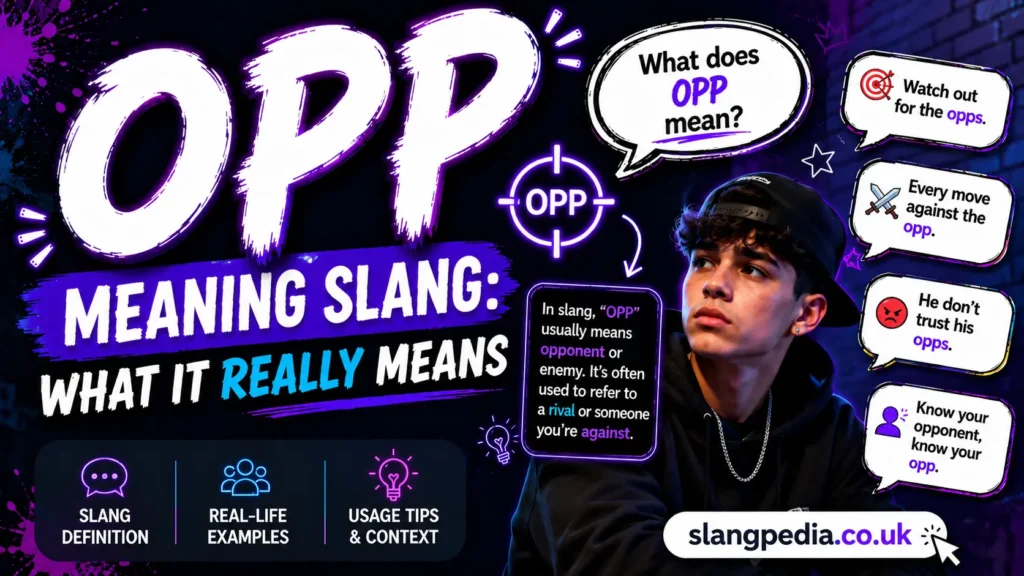
“Opp” means an enemy, rival, or someone actively against you — you’ll see it most on TikTok, in drill and rap lyrics, and in group chats when someone calls out disloyalty or beef.
TL;DR
- “Opp” is short for “opposition” — it labels a rival, enemy, or someone not on your side.
- The tone ranges from dead serious (drill culture) to fully joking (group chats, TikTok).
- It started in Chicago drill music in the early 2010s and spread through UK drill too.
- Rap fans, gamers, and Gen Z texters all use it now, often without any real conflict involved.
- Warning: using it about a real rivalry outside a joking context can sound aggressive or unsafe.
What Does Opp Mean in Slang?
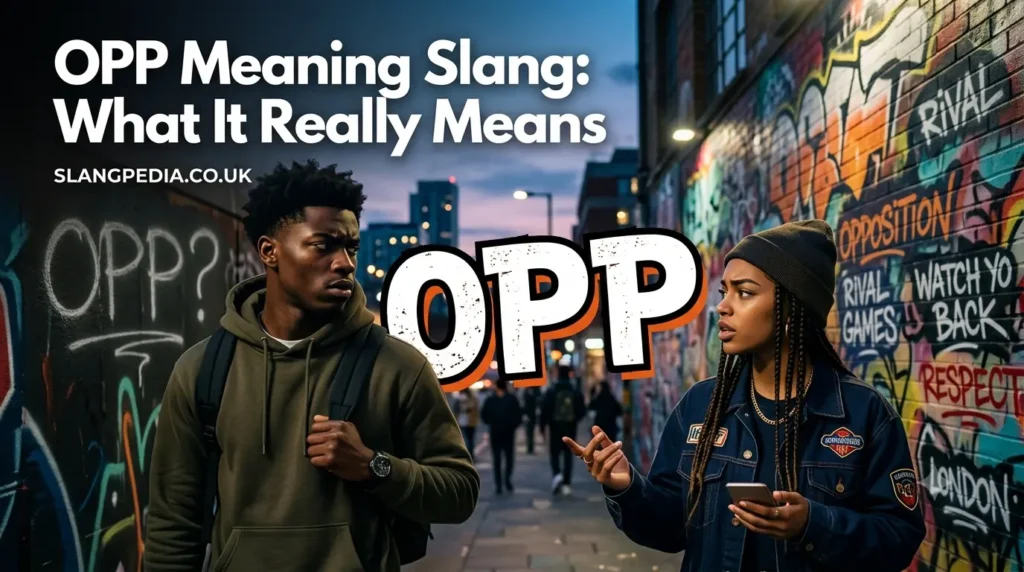
Picture a group chat blowing up because someone screenshotted a text they weren’t supposed to see. Someone drops: “bro is opp behavior fr.” Everyone knows exactly what that means.
In slang, opp meaning slang boils down to one idea: an opp is a person working against you. It’s short for “opposition” or “opponent.” Originally it meant a real rival — someone from an enemy group, gang, or block.
The nuance is what makes it interesting. “Opp” doesn’t always mean physical danger anymore. Sometimes it just flags disloyalty, sneaky behavior, or someone acting shady when they’re supposed to be on your team.
Opp = someone who’s against you, whether that’s a real rival or just a friend acting fake.
The tone shifts the meaning. Said flatly, it can sound like a real warning. Said with a laughing emoji, it’s a joke about your alarm clock betraying you. Context decides everything.
This flexibility is exactly why “opp” sits next to other rivalry slang like pog in how fast it traveled from a specific scene into everyday texting — though the two words couldn’t mean more different things.
Where Did the Slang “Opp” Come From?
“Opp” comes straight from Chicago drill music in the early 2010s. Rappers like Chief Keef and Lil Durk helped push it into mainstream hip-hop. Drill lyrics used “opps” to describe real gang rivals — people who posed an actual threat.
The word didn’t stay in Chicago for long. UK drill and grime music adopted “opp” with a similar meaning, and it became a fixture of British roadman slang too — often paired with terms like “opp block” for enemy territory.
As the word spread online, it lost some of its original weight. What began as terminology with serious implications becomes diluted and often playful as it spreads to wider audiences. A teenager calling their sibling an “opp” doesn’t mean gang involvement — it means a joke about borrowed snacks.
Why Is “Opp” Spelled Different Ways?
You’ll mostly see “opp” and the plural “opps.” Some people write “op” with one P, especially in fast typing or autocomplete fails. The single and double-P versions mean the same thing — there’s no real difference in meaning, just spelling habits.
Opp Slang Timeline
| Year | What Happened |
|---|---|
| 2012 | Chicago drill artists popularize “opp” for real gang rivals. |
| 2017 | UK drill scenes adopt the term; it merges with roadman slang. |
| 2026 | TikTok and texting culture use it mostly as a joke about petty betrayal. |
What Does Opp Mean in Text?
In texts and DMs, “opp” almost always softens. A private DM calling someone an opp can be a flirty jab between friends. In a group chat, it often turns into a running bit — someone becomes “the group opp” for breaking plans.
Emojis like 💀, 😭, and 🚩 usually ride alongside it, signaling the joke is the point, not the conflict. Without an emoji, tone can read more serious, so context still matters.
Text Exchange Example
Jess: did you eat my leftovers Tyler: …no? Jess: bro you’re such an opp 💀 Tyler: I panicked okay
This kind of exchange mirrors how the milder cousin term cap gets used — calling someone out without any real stakes attached.
Common “Opp” Phrases by Region
| Phrase | Meaning | Mostly Used In |
|---|---|---|
| Opp block | Enemy territory or rival’s neighborhood | US drill, UK roadman |
| Opp behavior | Acting disloyal or shady | US texting, TikTok |
| Free [name] | Support for someone jailed amid opp conflict | US/UK drill culture |
What Does Opp Mean on TikTok?
On TikTok, “opp” shows up constantly in captions, comments, and voiceovers — usually attached to skits, prank videos, or reaction clips. It’s common under videos where someone gets exposed or “caught lacking.”
The TikTok meaning leans lighter than the texting version. The term lost its original violent edge and became a funny way to label rivals, with hashtags built entirely around the joke.
Both US and UK TikTok use it heavily, though UK creators lean more on roadman-flavored phrasing like “opp ting” or “opp block,” while US creators stick closer to drill-rooted “opps.”
Opp in Real Conversations: 5 Examples
Example 1 — Roasting a friend
Marcus: bro why’d you tell Cody my secret
Marcus: you’re an actual opp 💀
This signals playful betrayal, not real anger — classic friend-group roasting.
Example 2 — Gaming squad
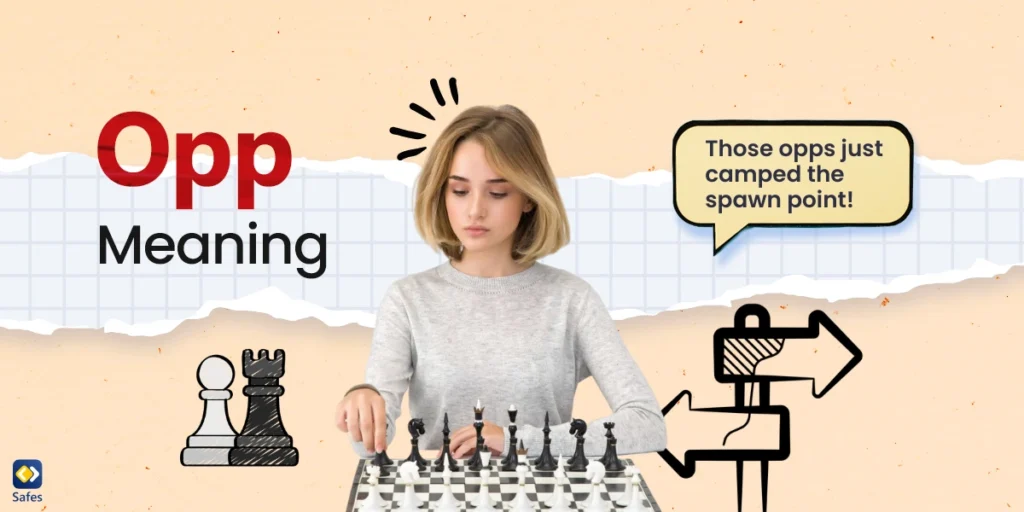
Ashley: the other team camped spawn the whole game
Ashley: certified opp behavior ngl
This shows “opp” used loosely for any rival team, no personal beef involved.
Example 3 — Sincere callout
Jess: I heard what you said behind my back
Jess: didn’t think you’d act like an opp
Here the tone is genuinely hurt, showing the word still carries real weight sometimes.
Example 4 — Sarcastic group chat
Tyler: who ate the last slice
Cody: not me, ask your opp Marcus
This uses “opp” as a throwaway joke pinning blame on a friend, no real accusation meant.
Example 5 — Casual flex
Ashley: my opps stay quiet when I pull up 💅
This shows “opp” used confidently, almost bragging about being unbothered by rivals.
Opp vs. Similar Slang
| Word | Core Meaning | Tone | Best Used When |
|---|---|---|---|
| Opp | Rival, enemy, disloyal person | Ranges serious to joking | Calling out real or joking betrayal |
| Hater | Someone who criticizes out of jealousy | Mild, dismissive | Brushing off online negativity |
| Snake | Someone secretly disloyal | Sharp, accusatory | Exposing betrayal after trust |
| Cap | A lie or exaggeration | Light, playful | Calling out dishonesty in conversation |
The biggest mix-up is “opp” versus “hater.” A hater dislikes you from a distance with no real stakes. An opp is positioned as actively against you, sometimes inside your own circle. People often use them interchangeably online, but the original meaning keeps “opp” sharper.
The Emotional Vibe Behind “Opp”
“Opp” exists because every group needs a quick way to name betrayal without writing a paragraph. One word does the job: someone flipped sides, someone’s not safe to trust right now.
It spread fast because conflict is universal, but drill culture gave it a sharp, specific sound. Saying “opp” feels punchier than “enemy” or “rival” — it’s compact and instantly recognizable.
When someone calls another person an opp, it signals they’re paying attention to loyalty. It says: I notice who’s really on my team. Calling someone else an opp, even jokingly, paints them as the outsider in that moment.
That’s the real appeal — it turns small social friction into a story with sides. Even a joke about stolen leftovers becomes a tiny drama with a villain, which is part of why it spread so naturally next to terms like ctfu in everyday texting.
Is “Opp” Offensive?
No, “opp” is not a slur and isn’t inherently offensive to any group. It’s slang for rival or enemy, not a term targeting race, gender, or identity.
Context changes the temperature fast. In casual talk, it’s fine; in aggressive posts, it could sound threatening. Said about a real, ongoing conflict, it can sound like a genuine warning rather than a joke.
It’s generally safe to use casually in both the USA and UK without causing offense. People connected to actual gang or drill conflicts should avoid using it loosely, since it carries different weight in those contexts. For formal or academic writing, “rival” or “opponent” works as a neutral substitute.
📌 Quick note for parents and teachers: “Opp” usually means rival or enemy, and most teens use it as a harmless joke about friends or rivals. It comes from drill and hip-hop culture and rarely signals real danger in everyday conversation. Context matters more than the word itself.
Opp Slang — FAQ
Q: What does opp mean on TikTok? A: On TikTok, “opp” usually appears in captions or comments joking about rivals, fake friends, or anyone “caught lacking” on camera. It rarely signals real conflict and mostly works as comedy.
Q: Is opp a bad word? A: No, “opp” isn’t a slur or a banned word. It can sound aggressive in serious contexts, but in everyday texting or TikTok it’s typically playful.
Q: What’s the difference between opp and hater? A: An opp is treated as an active rival or threat, sometimes inside your own circle. A hater just criticizes from a distance without real stakes attached.
Q: Do Americans and British people use opp the same way? A: Mostly yes, since both scenes borrowed it from drill music. The UK version often blends with roadman slang like “opp block,” while US usage stays closer to its Chicago drill roots.
The Bottom Line
“Opp” survives because it names betrayal in one syllable, whether that’s a real rival or a friend who ate your leftovers. It started serious in Chicago drill culture and now lives mostly as internet comedy.
Knowing the difference between joking and genuine conflict use is what separates fluent slang use from awkward overuse. Have you seen “opp” used in a way that surprised you? Drop it in the comments.
This article is reviewed periodically for accuracy and reflects ongoing cultural research into slang usage across US and UK platforms.

Maggie Wiersma is a USA-based writer with 2 years of experience covering slang meanings, internet culture, and modern language trends. With a background in communication studies, she creates simple and engaging content that helps readers understand today’s most popular slang terms.