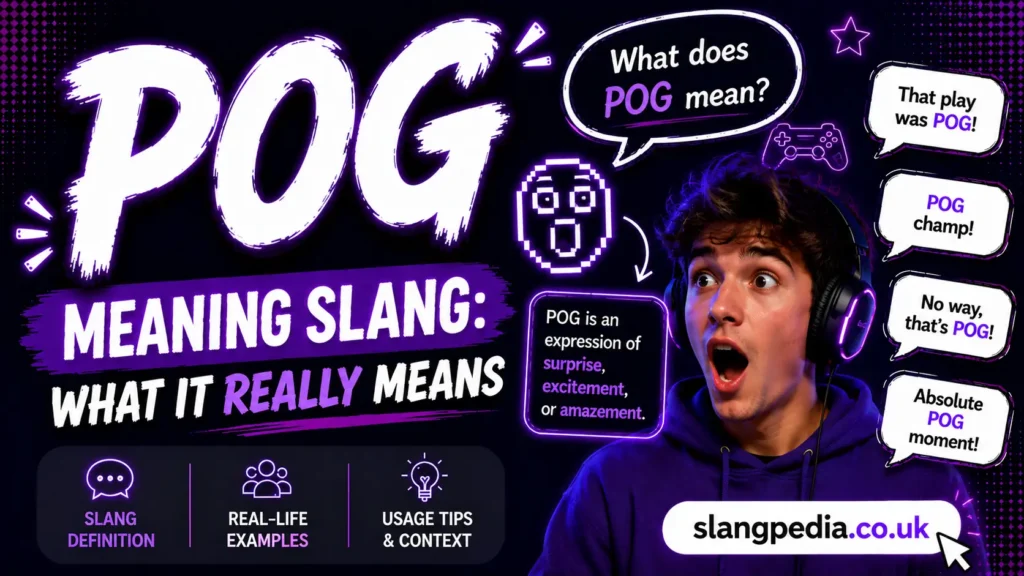
“Pog” means something is awesome, hype, or exciting — you’ll see it most on Twitch, Discord, and gaming TikTok when someone reacts to a clutch play or a great moment.
TL;DR
- “Pog” signals excitement, hype, or approval, usually about something impressive.
- The tone is loud, enthusiastic, and a little exaggerated — never sarcastic on its own.
- It started in gaming livestream culture, tied to a specific Twitch emote.
- Gamers, streamers, and Discord users ages 13–30 use it most.
- Warning: using it outside gaming or chat contexts can sound try-hard or dated.
What Does Pog Mean in Slang?
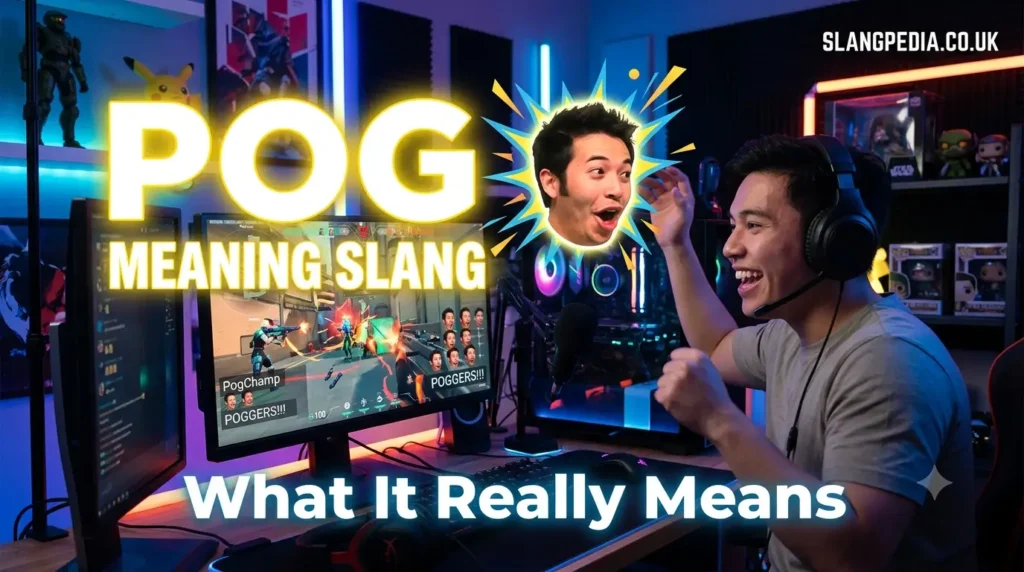
Someone clutches a 1v4 in Valorant, and the Discord voice chat erupts: “POG! POG! POG!” Three friends spam the word back-to-back, stacking hype on top of hype. That’s pog doing its job.
At its core, pog means something is exciting, impressive, or great. It’s a reaction word, not a description you’d use in a calm sentence. People type it, yell it, or spam it in chat the second something good happens.
Pog = an excited reaction to something awesome or hype-worthy
The nuance is in the energy. Pog isn’t quiet approval — it’s loud, immediate, almost involuntary. It signals “I’m hyped right now,” not “I thought about this and approve.” That immediacy is what separates it from a calmer compliment like bm, which carries a totally different emotional charge despite also being gaming slang.
Place primary keyword naturally — done above in the first 100 words.
Where Did the Slang “Pog” Come From?
Pog comes from gaming and livestream culture, specifically Twitch. The word traces back to streamer Gootecks, who made an exaggerated excited face during a 2011 video. Streamer PogChamp turned that face into a Twitch emote, and the emote’s name shortened in chat to “Pog” and “PogChamp.”
Why Is “Pog” Spelled Different Ways?
You’ll see “Pog,” “Poggers,” and “PogChamp” used almost interchangeably. “PogChamp” is the original emote name. “Poggers” emerged as a playful, slightly goofier variant once other emote sites copied the format. “Pog” became the shorthand once everyone got tired of typing the full word.
Timeline:
- 2011: Gootecks’ exaggerated reaction face is filmed and clipped.
- 2012: Twitch turns the face into the PogChamp emote, and chat starts spamming it.
- 2026: “Pog” and “Poggers” are everyday hype words across Discord, TikTok gaming clips, and Twitch chat.
What Does Pog Mean in Text?
In texts and DMs, pog works as a quick celebratory reaction — almost like a digital high-five. It shifts slightly in group chats, where people spam it back-to-back to build collective hype rather than send it once.
Common emoji pairings include 🔥, 😱, and 💯. Some people still use the actual PogChamp or Poggers emote if the platform supports it.
Text exchange:
Marcus: bro I just clutched the ranked game solo
Tyler: POG. screenshot or it didn’t happen
Marcus: [sends clip]
Tyler: okay that’s actually poggers
| Term | Meaning | Local Flavor |
|---|---|---|
| Pog | General hype reaction | US/UK gaming chat staple |
| Poggers | Playful, slightly bigger reaction | Common in Discord servers |
| PogChamp | Full original emote name | Used more by older Twitch users |
This kind of layered slang is similar to how low-key shifts meaning depending on who’s saying it and where.
What Does Pog Mean on TikTok?
On TikTok, pog shows up mostly in captions and comments under gaming clips, clutch moments, or stream highlights. It’s less common in voiceovers since it’s more of a written hype word than something people naturally say out loud in a video.
It shows up heavily under gaming creators, esports highlight pages, and Discord-meme TikToks. The meaning stays the same as texting — pure hype, no sarcasm. It’s roughly equally popular on US and UK TikTok, since gaming culture isn’t split heavily by region the way some slang is.
Pog in Real Conversations: 5 Examples
Example 1 — Clutch gaming play
Tyler: bro that ace was so pog
Signals genuine excitement about an impressive in-game moment.
Example 2 — Sarcastic group chat
Jess: oh wow pog 🙄 you beat the tutorial level
Used ironically to mock something that isn’t actually impressive.
Example 3 — Sincere compliment
Ashley: your art for the stream overlay is so pog
Genuine praise outside of gaming, applied to creative work.
Example 4 — Hype spam
Marcus: POG POG POG POG
Pure excitement, no explanation needed — just stacking hype.
Example 5 — Casual approval
Cody: new controller came in today
Tyler: pog, finally
Quick, low-effort approval in a casual exchange.
Pog vs. Similar Slang
| Word | Core Meaning | Tone | Best Used When |
|---|---|---|---|
| Pog | Excited reaction to something impressive | Loud, hype | Right after a great moment happens |
| Based | Approval of someone’s honest opinion | Confident, respect-driven | Someone says something bold or true |
| Fire | Something is excellent in quality | Cool, casual | Describing music, looks, or content |
| Lit | Something is exciting or fun | High-energy | Describing events or atmosphere |
The closest mix-up is pog vs. fire. Fire describes ongoing quality — a song, an outfit, a meal. Pog reacts to a moment in real time, especially a skill-based or surprising one. People confuse them because both signal “this is good,” but pog needs an event to react to.
The Emotional Vibe Behind “Pog”
Pog exists because typing “wow, impressive!” feels too slow for how fast online reactions move. Chat moves in seconds, not sentences. Pog compresses excitement into one syllable everyone already recognizes.
It spread fast because Twitch chat rewards repetition. When ten people spam the same word, it feels like a shared reaction, almost like a crowd cheering together. That collective rhythm is part of the appeal — it’s not just a word, it’s a chant.
Using pog signals you’re plugged into gaming or streaming culture, even loosely. It says “I know the reference” without explaining it. Describing someone’s play as pog tells others that person earned a real, unscripted reaction — not empty praise.
That instinct for instant collective reaction shows up elsewhere too, similar to how based gets used to mark a moment of approval that needs to register immediately, not after reflection.
Is “Pog” Offensive?
No, pog is not offensive. It’s not a slur and doesn’t target any specific group.
Context barely changes that — pog stays neutral whether it’s sincere or sarcastic. It’s safe to use in both the USA and UK without causing offense. The only group who might want to avoid it is anyone trying to sound professional, since it reads as very casual and gaming-specific.
For formal writing, “impressive” or “exciting” works as the standard English alternative.
📌 Quick note for parents and teachers: Pog is harmless gaming and internet slang with no offensive history. It mainly appears in gaming chats, Discord servers, and TikTok comments. There’s no need for concern if a young person uses it.
Pog Slang — FAQ
Q: What does pog mean on TikTok?
A: It’s used in captions and comments under gaming clips or impressive moments. It signals excitement or hype, the same way it works in texting.
Q: Is pog a bad word?
A: No. Pog isn’t offensive and has no harmful history. It’s purely a hype reaction word from gaming culture.
Q: What’s the difference between pog and fire?
A: Pog reacts to a specific impressive moment, usually skill-based. Fire describes ongoing quality, like a song or outfit.
Q: Do Americans and British people use pog the same way?
A: Yes, largely. Gaming and Twitch culture isn’t split heavily by region, so both groups use pog the same way.
Q: Why is it called “PogChamp” instead of just “pog”?
A: PogChamp was the original Twitch emote name. “Pog” became the shortened version once people started typing it constantly.
The Bottom Line
Pog isn’t just a gaming word — it’s a shared language for instant excitement. It lets people react together, in real time, without slowing down to explain themselves.
Once you spot it, you’ll notice it everywhere gaming culture lives: Discord, Twitch, and TikTok comments. It’s simple, harmless, and built for speed.
Have you seen pog used in a way that surprised you? Drop it in the comments.

Maggie Wiersma is a USA-based writer with 2 years of experience covering slang meanings, internet culture, and modern language trends. With a background in communication studies, she creates simple and engaging content that helps readers understand today’s most popular slang terms.