“Muse” means someone (or something) that inspires you, often used to describe a person you’re low-key obsessed with or romantically drawn to — you’ll see it most on Instagram captions and TikTok comments when someone wants to compliment a crush without saying it directly.
TL;DR
- “Muse” means a person who inspires you creatively, romantically, or aesthetically.
- The tone is flattering, a little dramatic, and slightly old-fashioned on purpose.
- It comes from classical art and poetry but got remixed by TikTok and Instagram culture.
- Mostly used by people aged 18–30 who post photography, art, or aesthetic content.
- Warning: calling someone your “muse” too early can come across as intense or over-the-top.
What Does Muse Mean in Slang?
Picture this: a guy posts a black-and-white photo of his girlfriend on Instagram. The caption just says “my muse 🤍.” No further explanation needed. Everyone in the comments gets it instantly.
That’s the modern life of the word “muse.” In slang terms, muse = the person who inspires your creativity, your mood, or your whole aesthetic. It’s usually romantic, but not always.
The nuance matters here. Calling someone your muse signals more than attraction. It says this person moves something in you — visually, emotionally, artistically. It’s a step up from “crush” and a step below “soulmate.” It sits in that dramatic middle ground people love online.
Muse = someone who inspires you, usually in a romantic or artistic way
The word shows up constantly next to other soft-launch language. It often pairs with bae in captions when someone wants to hint at a relationship without confirming it outright. Place primary keyword note: muse fits naturally here without forcing it.
Where Did the Slang “Muse” Come From?
The word “muse” did not start online. It started in ancient Greek mythology, where the nine Muses were goddesses of art, music, and poetry. Painters and writers have called their inspiration a “muse” for centuries.
The slang shift happened on Instagram and TikTok around 2019–2020. Photographers, artists, and couples reclaimed the word for captions. It moved from classical reference to everyday flirting language fast.
Why Is “Muse” Spelled Different Ways?
You’ll rarely see spelling variants for “muse” itself, since it’s a short, simple word. Some people stylize it as “muz” in texts as a shortened nickname. Others capitalize it (“Muse”) for dramatic emphasis in captions.
Timeline:
- Pre-2019: Used mainly in art, fashion, and photography circles to describe a creative subject.
- 2020–2022: Instagram couples and creators adopt it for romantic captions and soft launches.
- 2023–2026: Mainstream TikTok slang, used both sincerely and ironically across the US and UK.
What Does Muse Mean in Text?
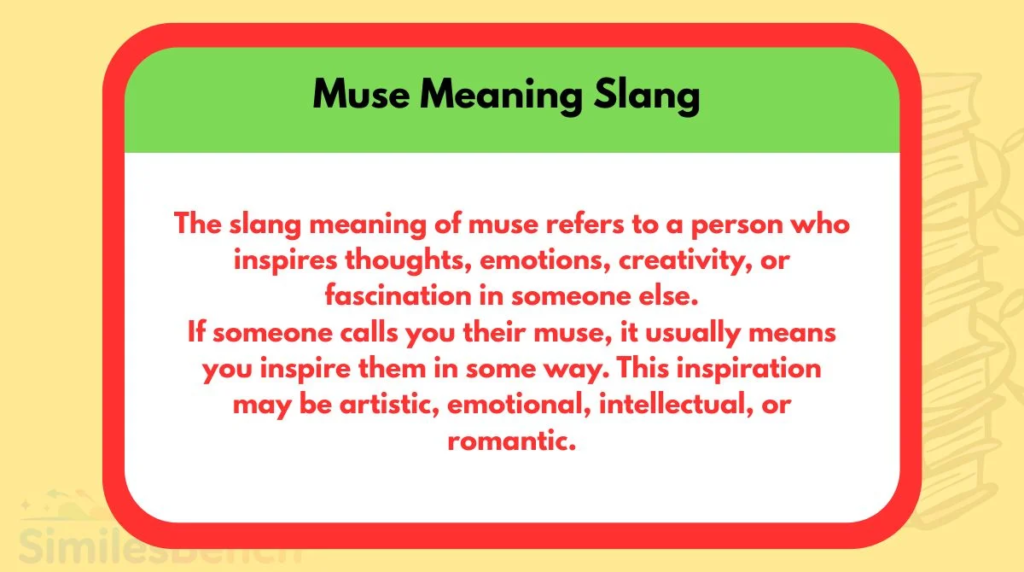
In texts and DMs, “muse” usually shows up as a compliment with a flirty edge. In private texts, it’s sincere — often a way to say “you inspire me” without sounding too serious.
In group chats, it gets ironic fast. Friends use it to tease someone who’s clearly obsessed with their crush. Common emojis paired with it: 🤍, 🎨, 📸, and ✨.
Real text exchange:
Jess: sent him another photo lol Ashley: girl you are his entire muse Jess: I KNOW and it’s terrifying Ashley: embrace it 😭
The meaning shifts slightly based on who’s saying it. The same flirty tone often shows up alongside mid when people are joking about someone’s situationship status.
| Phrase | Meaning | Where It’s Used |
|---|---|---|
| “my muse” | romantic/creative inspiration | Instagram captions |
| “muse behavior” | acting like you’re someone’s main inspiration | TikTok comments |
| “certified muse” | joking confirmation someone is the obsession | Group chats |
What Does Muse Mean on TikTok?
On TikTok, “muse” mostly appears in comments under aesthetic content — photography, fashion, art transformations, or couple videos. It also shows up in captions on “get ready with me” or photoshoot-style videos.
The meaning stays close to the texting version, just more public and performative. It’s slightly more popular on US TikTok in romantic contexts, while UK TikTok leans toward the artistic, photography-based use.
Muse in Real Conversations: 5 Examples
Example 1 — Soft launch caption
Tyler: posted “my muse” under her photo, no caption otherwise
This signals a relationship reveal without saying it directly.
Example 2 — Sarcastic group chat tease
Marcus: bro is whipped, she’s literally his muse now
Cody: stop it’s true though 💀
This uses “muse” to mock a friend’s obvious infatuation.
Example 3 — Sincere compliment
Ashley: you’ve been my muse since day one, fr
This is a genuine, emotional use with no irony at all.
Example 4 — Funny self-deprecating
Jess: I’m nobody’s muse, I just have good lighting
This flips the word into a joke about photo editing instead of romance.
Example 5 — Casual creative compliment
Cody: these poems are about you, you’re my muse lol
This use leans artistic, framing the person as creative inspiration, not just romantic interest.
Muse vs. Similar Slang
| Word | Core Meaning | Tone | Best Used When |
|---|---|---|---|
| Muse | Someone who inspires you creatively or romantically | Flattering, dramatic | Captioning photos or compliments |
| Bae | Romantic partner or crush | Casual, affectionate | Everyday relationship talk |
| Soulmate | Deep, fated emotional connection | Intense, sincere | Serious long-term relationships |
| Type | Someone’s usual romantic preference | Neutral, descriptive | Describing attraction patterns |
The biggest confusion happens between “muse” and “type.” Calling someone your type just describes a preference. Calling someone your muse implies they actively inspire your creativity or mood, not just your taste.
The Emotional Vibe Behind “Muse”
People reach for “muse” because plain compliments feel boring now. Saying “you’re pretty” is flat. Calling someone your muse sounds artistic, intentional, and a little poetic.
It fills a gap between casual flirting and serious declarations. It lets someone express deep admiration while keeping a creative, almost detached framing. That distance makes it feel safer to say out loud.
Using the word also signals taste. The speaker positions themselves as someone with an artistic eye, not just a typical texter. It’s a subtle flex dressed up as a compliment.
For the person being described, it feels elevated. Being called a muse suggests you’re not just attractive — you’re inspiring. That distinction matters to people who grew up online, where everyone’s curating an aesthetic. The same elevated language pattern shows up when people describe their main character energy era, another phrase built around feeling artistically significant.
Is “Muse” Offensive?
No, “muse” is not offensive. It carries zero history as a slur and targets no specific group. Context barely changes that fact, since the word stays flattering in almost every use case.
It’s safe to use in both the USA and UK without causing offense. The only risk is social, not ethical — using it too early in a relationship can feel intense or overly dramatic.
Nobody specifically needs to avoid this word. The formal English alternative for professional or academic writing is simply “inspiration” or “source of inspiration.”
📌 Quick note for parents and teachers: “Muse” describes someone who inspires another person creatively or romantically. It is not harmful or inappropriate. You’ll mostly see it in art classes, photography captions, and teen romantic slang online.
Muse Slang — FAQ
Q: What does muse mean on TikTok? A: On TikTok, “muse” describes someone who inspires a creator’s content, mood, or aesthetic. It shows up in captions and comments on photography, fashion, and couple videos. The meaning stays romantic or artistic, rarely literal.
Q: Is muse a bad word? A: No, “muse” is not a bad word. It has no offensive history and targets no group. It’s purely a flattering, artistic compliment used in everyday slang.
Q: What’s the difference between muse and bae? A: “Bae” simply means a romantic partner or crush. “Muse” implies that person actively inspires your creativity, mood, or art, making it feel more artistic and intentional.
Q: Do Americans and British people use muse the same way? A: Mostly yes, though Americans lean more romantic and caption-driven with it. British users, especially in art and photography circles, use it slightly more literally to describe creative subjects.
Q: Can you call yourself a muse? A: Yes, people sometimes joke about being their own muse, usually sarcastically. It’s typically used as a confident, self-deprecating joke rather than a sincere claim.
The Bottom Line
“Muse” works because it turns a simple compliment into something that feels artistic and intentional. It signals admiration without sounding plain or overused, which is exactly why it spread across captions, comments, and texts so fast.
Next time you see it, you’ll know exactly what’s being said underneath the dramatic flair. Have you seen “muse” used in a way that surprised you? Drop it in the comments.
This article is reviewed regularly for accuracy and reflects ongoing slang usage research across US and UK digital culture.

Maggie Wiersma is a USA-based writer with 2 years of experience covering slang meanings, internet culture, and modern language trends. With a background in communication studies, she creates simple and engaging content that helps readers understand today’s most popular slang terms.