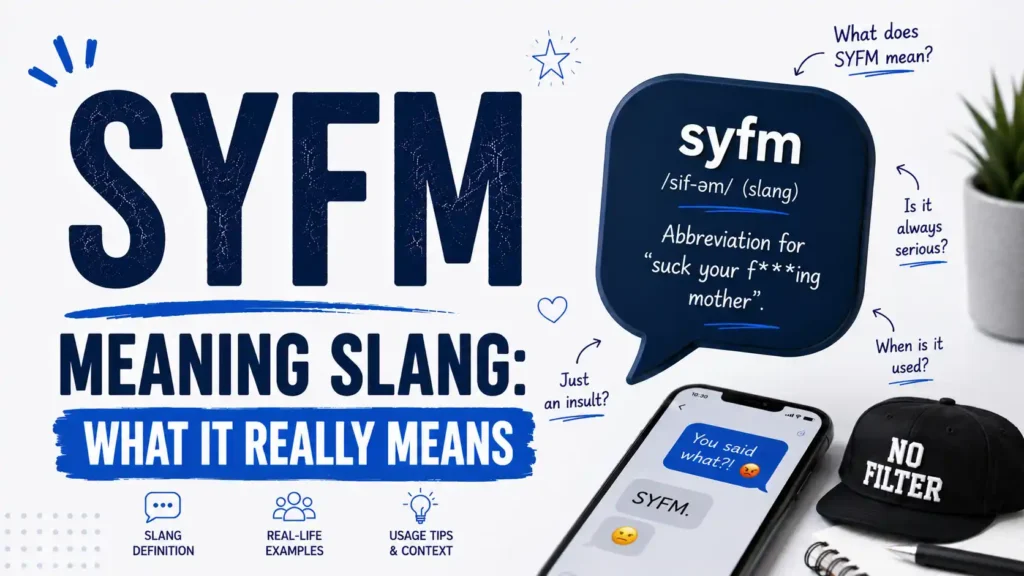
“SYFM” means “Shut Your F***ing Mouth” — you’ll see it most on Twitter/X, Discord, and iMessage when someone is beyond done with what another person just said.
TL;DR
- SYFM = aggressive acronym for “Shut Your F***ing Mouth,” used to shut someone down hard
- Tone is angry, fed-up, or sarcastically dismissive — not playful
- Originated in early internet chat culture and spread through Black Twitter and gaming communities
- Used mostly by people aged 16–28 across US and UK platforms
- Warning: This is a strong phrase — using it casually in the wrong context reads as genuinely hostile
What Does SYFM Mean in Slang?
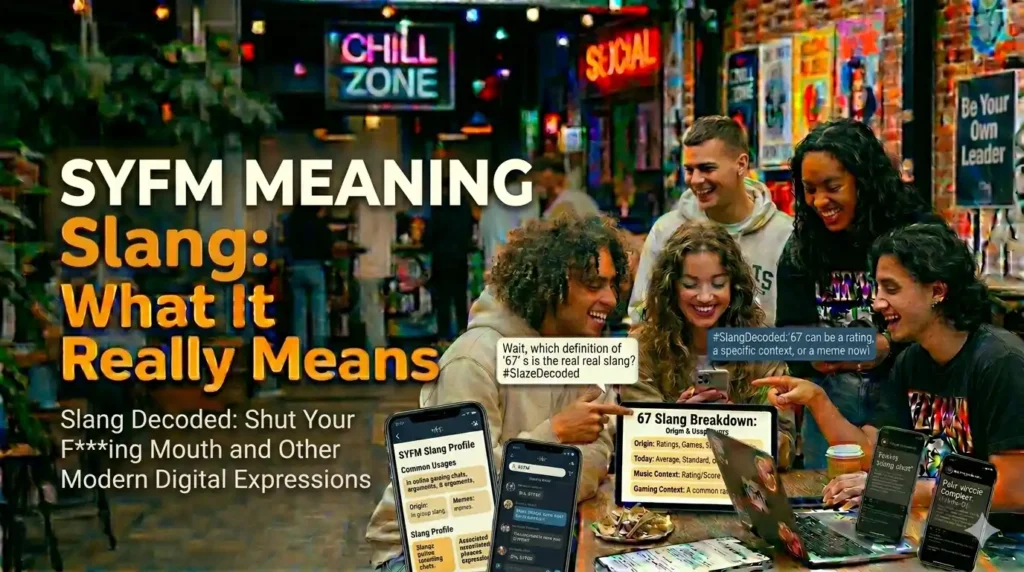
Your friend just sent you a voice note defending someone who absolutely did not deserve it. You’ve heard the excuse three times already. You type back one thing: SYFM.
That’s where this acronym lives. SYFM stands for Shut Your F*ing Mouth** — a blunt, high-intensity shutdown. It’s not a playful jab. It signals that the speaker has fully lost patience and wants the conversation to end, now.
The tone is the whole point. You don’t say SYFM when you’re mildly annoyed. You use it when you’re at your limit — when someone is wrong, loud, and refusing to stop. It has the same energy as NFS (no funny s***), but pushed harder.
SYFM = a blunt acronym meaning “Shut Your F*ing Mouth,” used to aggressively end an argument or call someone out.**
The word hits differently depending on who’s typing it. Between close friends, it can function as a sarcastic “oh my god stop.” In a real beef, it reads as a direct threat to end the conversation.
Where Did the Slang “SYFM” Come From?
SYFM emerged from early internet chat culture — specifically IRC channels and AOL Instant Messenger threads in the early-to-mid 2000s. Acronym-heavy communication was the norm, and aggressive abbreviations like STFU became staples fast.
SYFM followed the same path as STFU but with an added layer. It gained traction specifically in gaming communities on platforms like Xbox Live and early Reddit, where trash talk was common and short.
By the 2010s, it had moved into mainstream social media — especially Black Twitter, where punchy, confrontational language became a defining style. The phrase’s meaning didn’t really shift; it just expanded its audience.
Why Is “SYFM” Spelled Different Ways?
You might see STFYM used interchangeably with SYFM in some communities. STFYM adds “the” (Shut The F*** Your Mouth), though the word order is scrambled — it’s less grammatically logical but still widely understood.
Some users also write it lowercase as syfm in casual text threads, which actually softens the intensity slightly.
Timeline:
- 2003–2006: SYFM appears in IRC rooms and early gaming chat as trash-talk shorthand
- 2012–2016: Spreads through Twitter and Tumblr, especially in fandom arguments and stan culture
- 2020–present: Normalized in Discord servers and iMessage threads among Gen Z; often used sarcastically between friends
What Does SYFM Mean in Text?
In private texts, SYFM usually signals genuine frustration. It’s the kind of thing you send when someone texts you something stupid for the third time. In group chats, it can tip toward sarcastic — especially if everyone’s already roasting each other.
Emojis that pair with it: 💀 (dead at what you just said), 😭 (exasperated), 🤦, and occasionally 😐 when it’s icily delivered.
Example text exchange:
Marcus: bro she was actually right though Tyler: SYFM right now I can’t Marcus: lmaooo I’m serious Tyler: I’m blocking you 💀
In this context, Tyler’s SYFM is playfully fed-up — not a genuine threat. That’s the shift that happens in close friendships.
Much like ISTG (I swear to God), SYFM can flip between sincere and ironic depending entirely on who’s in the thread.
| Phrase | Meaning | Common Context |
|---|---|---|
| SYFM rn | Shut your f***ing mouth right now | Immediate reaction to something wild |
| SYFM challenge | Dare to stop talking | Sarcastic, usually in group chats |
| Not SYFM again | Disbelief at being told to stop | Self-referential, meme format |
What Does SYFM Mean on TikTok?
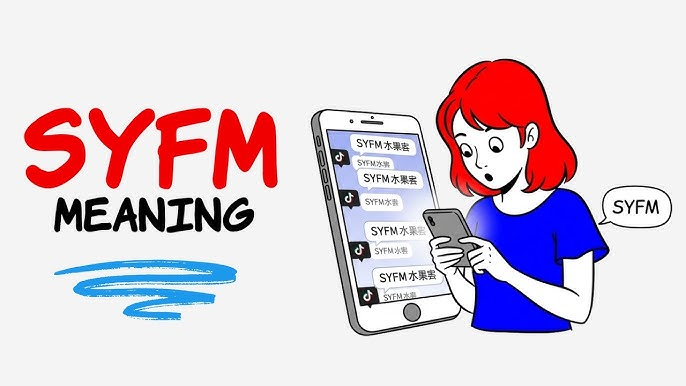
On TikTok, SYFM shows up most in comment sections — usually as a reaction to a video where someone said something controversial or embarrassing. It’s rarely used in captions because it’s too aggressive for most content creators to put on their own posts.
You’ll see it under drama videos, callout content, and hot-take TikToks where the comment section is in full riot mode. The TikTok meaning is largely the same as the texting meaning — but the volume is turned up because it’s public.
US TikTok uses it more frequently than UK TikTok, though UK users absolutely recognize it. On UK TikTok, you’re more likely to see roadman-adjacent alternatives instead.
SYFM in Real Conversations: 5 Examples
Example 1 — Group chat chaos
Jess: wait she said WHAT at the party Ashley: SYFM I’m still processing it
SYFM signals Ashley is shocked and overwhelmed — not actually angry at Jess.
Example 2 — Genuine argument
Cody: you’re overreacting bro it’s not that deep Marcus: SYFM. I’m not doing this with you.
Here, SYFM is a hard stop. Marcus is drawing a clear line.
Example 3 — Sarcastic between friends
Tyler: I told you the ending was bad from the start Jess: SYFM you literally cried at it
Pure irony. Jess is clowning Tyler, not actually hostile.
Example 4 — Reaction to bad news
Ashley: they discontinued the spicy chicken sandwich Cody: SYFM. No. That’s not real.
Comedic disbelief. SYFM used as an expression of denial, not anger.
Example 5 — Stan Twitter energy
Marcus: your fave literally flopped Tyler: SYFM before I report you 😭
Performative aggression — classic stan culture posturing.
SYFM vs. Similar Slang
| Word | Core Meaning | Tone | Best Used When |
|---|---|---|---|
| SYFM | Shut Your F***ing Mouth | Aggressive, hostile, or exasperated | Someone won’t stop and you’re done |
| STFU | Shut The F*** Up | Blunt but slightly lighter | General irritation or playful shutdown |
| NPC | Non-Player Character (someone acting robotic) | Mocking, dismissive | Someone is saying something predictable |
| Deadass | Seriously, for real | Intense but not hostile | Emphasizing you mean what you say |
The easiest mix-up is SYFM vs. STFU. Both tell someone to be quiet, but SYFM lands harder. STFU has been around long enough that it reads almost casual now. SYFM still carries genuine edge — it sounds like something you’d say to someone’s face, not just online.
The Emotional Vibe Behind “SYFM”
SYFM exists because STFU got too soft. Once a word spreads wide enough, it loses its bite. Internet culture always escalates — when one phrase stops shocking people, something sharper takes its turn.
What SYFM really signals is total emotional exit. The person using it isn’t trying to argue anymore. They’ve decided the other person’s words don’t deserve engagement — just termination.
It also says something about online communication specifically. Text strips out tone of voice. SYFM compensates by being impossible to misread. There’s no gentle version of it.
When someone receives a SYFM, it stings in a specific way. It’s not a refutation. It’s a dismissal. It says: you’re not worth a real reply. That’s the emotional cut — and that’s why it spreads. JOI and similar dismissive internet slang fill a similar gap — shorthand for “I’m done here.”
The word is popular in communities where directness is a value. It performs confidence. It performs unbotheredness. That combination travels fast online.
Is “SYFM” Offensive?
Yes — SYFM is an explicitly aggressive phrase. It contains a strong expletive and is designed to shut someone down.
It’s not a slur and doesn’t target any specific identity group. But it’s still hostile language. Context determines impact: between close friends who use crude humor freely, it often reads as playful. Directed at someone in a real argument, it reads as hostile and dismissive.
In the USA and UK, most adults 18–35 recognize it without being shocked. But using it toward someone older, in a professional setting, or toward someone who doesn’t know you well can land badly.
Anyone in a workplace, school, or formal context should avoid SYFM entirely. The appropriate formal alternative is simply: “I’d prefer you stop discussing this” or “I disagree and don’t want to continue this conversation.”
📌 Quick note for parents and teachers: SYFM stands for “Shut Your F***ing Mouth” and is an aggressive internet acronym young people use online. It’s not a slur, but it’s explicitly rude language. It shows up most in text messages, Discord, and social media comments — often between friends as dark humor, but sometimes in genuine arguments.
SYFM Slang — FAQ
Q: What does SYFM mean on TikTok? A: On TikTok, SYFM means “Shut Your F***ing Mouth.” It’s most common in comment sections under drama or hot-take videos. Users drop it as a reaction to something shocking or infuriating — usually aimed at the person in the video, not the creator.
Q: Is SYFM a bad word? A: SYFM contains explicit language and carries a genuinely aggressive tone. It’s not a slur, but it is a strong phrase. It’s perfectly understood among young adults online, but it’s not appropriate for professional, academic, or formal use.
Q: What’s the difference between SYFM and STFU? A: Both mean “be quiet,” but SYFM hits harder. STFU has been mainstream so long it often reads as casual now. SYFM still carries genuine edge and is used when someone is seriously fed up — not just mildly annoyed.
Q: Do Americans and British people use SYFM the same way? A: Mostly yes, though it’s more common in US online spaces. UK users understand it immediately but may reach for British-specific alternatives in casual speech. The meaning doesn’t change between regions — just frequency of use.
The Bottom Line
SYFM is more than just an acronym for a rude phrase. It’s a signal — a digital hard stop that says the conversation is over on the sender’s terms. It fills the gap between “I’m annoyed” and something far more final. When you see it in a text thread or comment section, someone has decided the other person’s words no longer deserve a real reply.
The next time you see SYFM, you’ll know exactly what energy it carries. Have you seen SYFM used in a way that surprised you? Drop it in the comments.
Content reviewed for cultural accuracy. Slang meanings evolve — definitions reflect current usage as of 2026.

Maggie Wiersma is a USA-based writer with 2 years of experience covering slang meanings, internet culture, and modern language trends. With a background in communication studies, she creates simple and engaging content that helps readers understand today’s most popular slang terms.