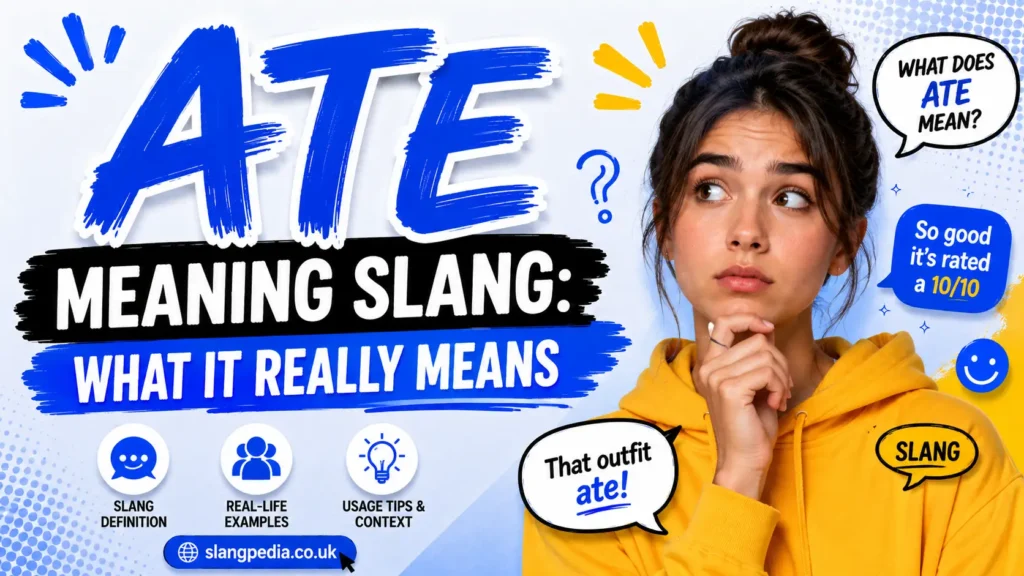
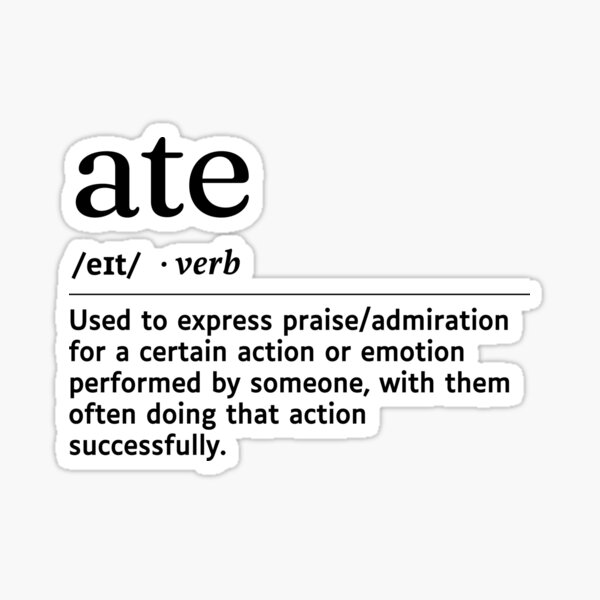
“Ate” means you absolutely nailed something — you’ll see it most on TikTok and Instagram comments when someone delivers a look, performance, or moment so flawlessly that there’s nothing left to add.
TL;DR
- “Ate” means to execute something perfectly — a fit, a performance, a clap-back, anything done with undeniable skill
- Tone is celebratory, hype, and deeply affirming — never sarcastic in its original use
- Origin: Black American vernacular (AAVE), spread widely through drag culture and then TikTok around 2020–2021
- Used by Gen Z and Millennials across the US and UK, though UK users picked it up slightly later
- Usage warning: Don’t overuse it on basic moments — “ate” is for genuinely impressive execution, not everyday wins
What Does Ate Mean in Slang?
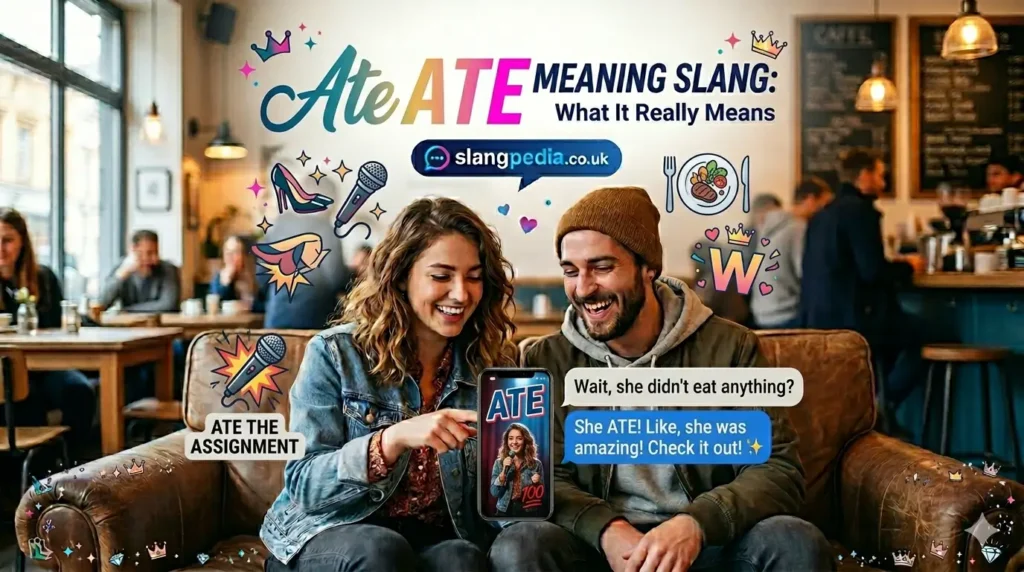
You’re scrolling TikTok at midnight. Someone just posted a video of themselves walking into a party in a perfectly put-together outfit — coat draped just right, confidence through the roof. The top comment? “She ate and left no crumbs.”
That sentence is a complete cultural sentence. “Ate” here means she executed so well, so thoroughly, that there’s literally nothing left to critique or add. She consumed the moment.
The phrase almost always pairs with “left no crumbs” — meaning nothing was wasted, nothing fell short.
Ate = performed or executed something so perfectly that the result speaks for itself
You’ll find “ate” in TikTok comments, Instagram captions, and iMessage threads between friends. It’s affirming. It’s hype. It’s the highest compliment you can hand someone about their execution — whether that’s a fit, a clapback, a cover, or a whole vibe.
It lives in the same family as slay, which also celebrates flawless performance — but “ate” carries a slightly more complete, decisive energy.
Where Did the Slang “Ate” Come From?
“Ate” comes from Black American English (AAVE). In AAVE, “ate” as a metaphor for dominance goes back decades — “eating” a scene or a competition meant consuming it completely, leaving nothing for anyone else.
The phrase gained real traction in drag culture, where performers would describe a look or a lip sync as having been “eaten.” RuPaul’s Drag Race helped push it into queer communities online.
By 2020, it was all over TikTok — especially in fashion, dance, and performance content. By 2021, it had crossed into mainstream Gen Z vocabulary across the US. The UK followed in 2022, largely through viral content and British creators reacting to American trends.
Why Is “Ate” Spelled Different Ways?
You’ll occasionally see “eight” used phonetically as a joke replacement — it’s purely ironic and not a real alternate spelling. Some people write “ATE” in all caps for extra emphasis. Neither is a true variant; the standard spelling is simply “ate.”
Timeline:
- 2018–2019: Common in US drag and queer AAVE communities online
- 2020–2021: Explodes on TikTok; “ate and left no crumbs” becomes a full phrase
- 2022–2026: Fully mainstream in Gen Z slang across the US and UK
What Does Ate Mean in Text?
In texts and DMs, “ate” is pure hype. Send someone a selfie and get “you ate” back — that’s the highest form of compliment with minimum words.
In group chats, it often comes with fire or crown emojis: 🔥👑. One-on-one, it’s more personal and sincere.
Common emoji pairings: 🔥 👑 💅 🫡 🍽️ (the plate, because she ate the whole thing)
Example text exchange:
Jess: okay tell me the truth, does this look good or am I cooked
Marcus: bro you ATE. wear that.
Jess: stoppp you’re just saying that
Marcus: left no crumbs. I’m serious.
In this exchange, “ate” lands as both reassurance and genuine hype — Marcus isn’t hedging. It’s a full endorsement.
It’s worth knowing how “ate” relates to no cap, another affirmation that signals honesty — they often appear in the same sentence when someone really means what they’re saying.
Common “Ate” Phrases by Platform:
| Phrase | Platform | Meaning |
|---|---|---|
| “She ate and left no crumbs” | TikTok / Instagram | Total perfection — nothing missing |
| “You ate that” | iMessage / Discord | Direct compliment for something just shared |
| “Ate different today” | Twitter / Threads | They outdid even their own usual standard |

What Does Ate Mean on TikTok?
On TikTok, “ate” lives in the comments section. It’s the response to a flawless outfit video, a dance routine executed to perfection, a makeup transformation, or a skit where someone absolutely delivered.
It also shows up in captions — creators use it self-referentially: “I think I ate on this one 🍽️” as a way to signal confidence without being arrogant. The plate emoji makes the joke land without feeling like bragging.
TikTok US and TikTok UK use “ate” equally as of 2024–2026. British creators have fully adopted it — it no longer reads as exclusively American. The meaning stays consistent across both: perfect execution, nothing left over.
@bbclearningenglish You ate! That outfit ate! She ate that performance! 🤓 ‘ate’ is used by Gen Z in everyday English and on social media! 👀 Watch this video to find out how people in London are using it! Everyone is using it! Don’t miss out! 🤩 ✍️ Tell us something you ate at recently! #learnenglish #spokenenglish #speakenglish #slang #genz #genzslang #informalenglish #vocab #ate #youate ♬ original sound – BBC Learning English
Ate in Real Conversations: 5 Examples
Example 1 — Outfit compliment
Tyler: dude I just saw your fit post
Ashley: and???
Tyler: you ATE. no further questions.
“Ate” signals complete approval — Tyler has made up his mind, no caveats.
Example 2 — Ironic self-drag
Cody: made dinner for the first time ever
Jess: how’d it go
Cody: burned it but I ate (the smoke alarm went off)
Here “ate” is used ironically — Cody literally ate the bad food. The double meaning is intentional and funny.
Example 3 — Sincere group chat hype
Marcus: okay the presentation is done. I think it went well
Ashley: bro you ate that whole room up
Tyler: facts. they were locked in
In this context, “ate” extends beyond aesthetics — it covers performance and presence.
Example 4 — Music reaction
Jess: did you hear that new verse yet
Cody: she ATE. I’ve played it four times.
Short, decisive, no explanation needed. The all-caps signals extra emphasis.
Example 5 — Sarcastic group chat
Ashley: okay I said one thing in the meeting
Marcus: one thing?? you literally ate the whole meeting
Tyler: nothing left 💀
The group is teasing Ashley for being assertive — “ate” is used affectionately but with a slight edge.
Ate vs. Similar Slang
| Word | Core Meaning | Tone | Best Used When |
|---|---|---|---|
| Ate | Executed perfectly, nothing left to critique | Celebratory, decisive | Someone absolutely delivered on something specific |
| Slay | Killed it, performed excellently | Energetic, hype | General excellence — fashion, personality, confidence |
| Killed it | Did exceptionally well | Casual, approving | Work, sports, performance — less fashion-specific |
| Bodied | Dominated or outperformed | Intense, competitive | Comparisons, competitions, freestyle battles |
The key confusion is between “ate” and “slay.” Both celebrate excellence — but “ate” implies totality and completion (“left no crumbs”), while “slay” is broader and more ongoing. You can slay your whole life. You ate a specific moment.
The Emotional Vibe Behind “Ate”
“Ate” fills a specific emotional gap. English doesn’t have a single word that means “you did that so completely there’s nothing left to add.” “Great” doesn’t cut it. “Amazing” is tired. “Flawless” is formal.
“Ate and left no crumbs” is visceral. It uses hunger and consumption as a metaphor for mastery. The image is sharp — someone so good at what they did that they consumed the whole thing. Nothing remained.
It spread fast online because it’s satisfying to say and to receive. It gives full credit. There’s no “but.” No hedging. It’s the opposite of “almost.”
When someone uses “ate,” they’re also signaling cultural fluency — they know the phrase, they’re in the space, they’re paying attention. It’s a form of belonging through language.
What it says about the person described: they didn’t just do something well — they owned it. There was intention behind the execution.
It shares that decisive energy with the word slay, but “ate” feels more final — like a verdict, not just a cheer.
Is “Ate” Offensive?
No — “ate” is not a slur and is not offensive to any specific group. It’s a genuine term of praise.
Context matters slightly. Using it to describe someone’s work presentation or cooking in a professional email would be jarring — it’s casual slang, not formal language. Save it for social settings, texts, and comments.
Both Americans and British people can use it comfortably. It originated in Black American culture (AAVE) and drag communities, so there’s a cultural lineage worth acknowledging — but it’s now widely adopted across racial and cultural lines without stigma attached to non-originators using it.
Formal English alternative: “She executed that flawlessly” / “He delivered an exceptional performance.”
📌 Quick note for parents and teachers: “Ate” in this slang context means someone did something impressively well — it’s the equivalent of saying they “nailed it.” It’s not harmful or suggestive. You’re most likely to see it in TikTok comments and group chats as a form of praise.
Ate Slang — FAQ
Q: What does ate mean on TikTok? A: On TikTok, “ate” means someone executed something perfectly — a look, a dance, a performance. It appears in comments like “she ate and left no crumbs,” meaning nothing about the execution was lacking.
Q: Is ate a bad word? A: No. “Ate” is a positive slang term that means someone did something exceptionally well. It’s not offensive, not a slur, and not considered inappropriate in casual conversation.
Q: What’s the difference between ate and slay? A: Both mean you performed excellently, but “ate” implies total, complete execution — nothing left to improve. “Slay” is broader and more energetic, applied to general confidence and presence. “Ate” is more like a final verdict on a specific moment.
Q: Do Americans and British people use ate the same way? A: Yes, with minor timing differences. American Gen Z adopted it first (around 2020–2021). UK creators followed by 2022. The meaning is now identical on both sides — flawless execution, nothing left to critique.
The Bottom Line
“Ate” is more than a compliment. It’s a declaration that someone left no room for criticism. It came from AAVE and drag culture, moved through TikTok, and is now one of Gen Z’s most efficient forms of praise. One word — or three (“ate and left no crumbs”) — carries more weight than a paragraph of compliments.
You’ll recognize it instantly once you know it. And when someone drops it on your content or your fit or your performance, there’s really nothing better to receive.
Have you seen “ate” used in a way that surprised you? Drop it in the comments.
Article reviewed for cultural accuracy and current usage. Slang meanings shift — last verified 2026.

Maggie Wiersma is a USA-based writer with 2 years of experience covering slang meanings, internet culture, and modern language trends. With a background in communication studies, she creates simple and engaging content that helps readers understand today’s most popular slang terms.