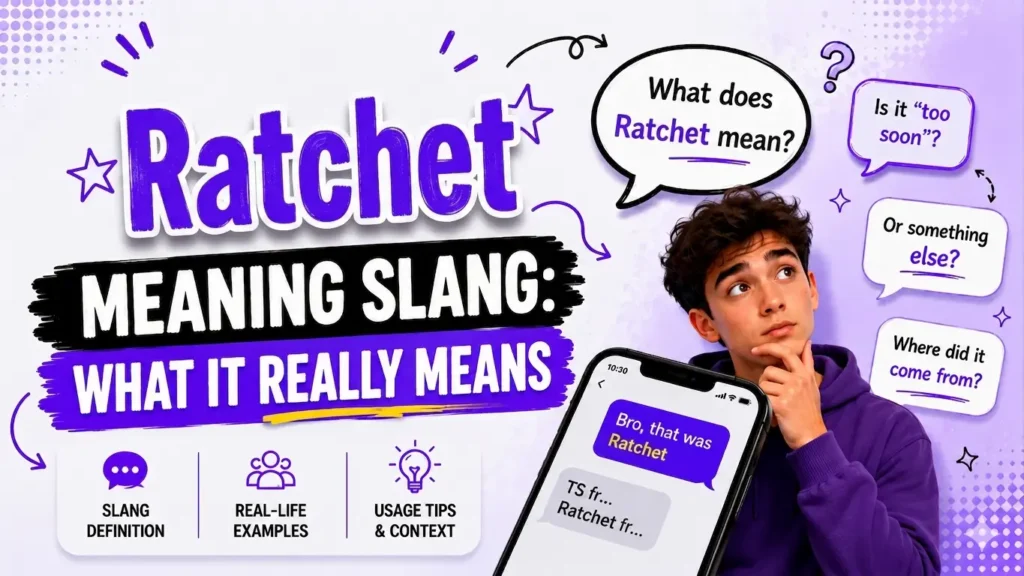
“Ratchet” means acting loud, messy, or lacking class — you’ll see it most on TikTok and Twitter/X when someone calls out chaotic or embarrassing behavior.
TL;DR
- Ratchet = loud, wild, or low-class behavior — usually aimed at a person, not a situation
- Tone is almost always judgmental or playfully shady, rarely used as a compliment
- Originated in Southern hip-hop and AAVE (African American Vernacular English) around 2012
- Used heavily by Gen Z on TikTok, Instagram, and Discord — mostly in the US
- Warning: calling someone ratchet directly to their face reads as a serious insult, not banter
What Does Ratchet Mean in Slang?
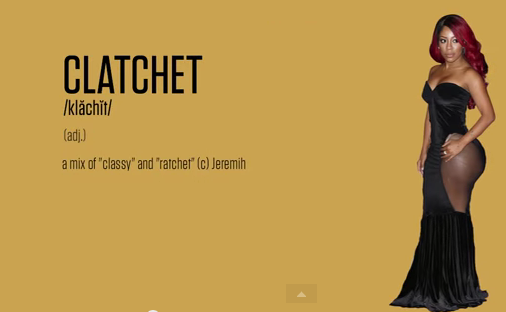
Picture this: a TikTok comment section under a video of someone starting a fight at a graduation ceremony. Someone types: “bro the whole situation was so ratchet lmaooo.” Everyone knows exactly what they mean.
Ratchet = acting loud, chaotic, or embarrassingly low-class.
It’s not just about being messy. The word carries a specific tone — a mix of judgment, amusement, and mild disgust. When someone calls a person or situation ratchet, they’re saying it’s beneath a certain standard of behavior.
The word lives in that space between dragging someone and laughing at them. It’s rarely neutral. Sometimes it’s affectionate between close friends, but that’s the exception, not the rule.
Ratchet = someone (or something) acting wild, loud, and embarrassingly out of pocket
In the same way that sus signals distrust with one word, ratchet signals a whole vibe — chaotic, messy, kind of a lot — in a single term that lands instantly.
Where Did the Slang “Ratchet” Come From?
Ratchet traces back to Southern hip-hop, specifically Shreveport, Louisiana. The rapper Shreveport’s own Lil Boosie and the broader Dirty South rap scene used the word in the early 2000s to describe people or situations that were rough around the edges.
The word exploded online around 2012 when Nicki Minaj’s track “Specifically” and a wave of Vine and Twitter content pushed “ratchet” into mainstream American slang. From there, it traveled fast.
By 2014, it had crossed into pop culture completely. White and non-Black creators started using it widely, which triggered real debate about cultural appropriation — a conversation that still comes up today.
Why Is “Ratchet” Spelled Different Ways?
You’ll sometimes see it spelled “rachet” (missing the t) or even “rachett” — both are typos that stuck. The word has no alternate official spelling. If you see those versions, it’s the same word, just typed fast.
Timeline:
- 2000s: Originates in Southern hip-hop and AAVE in Louisiana and Texas
- 2012: Goes viral via Twitter and Vine; picked up by mainstream pop culture and memes
- 2024–2026: Still active on TikTok and Instagram — often ironic or self-referential
What Does Ratchet Mean in Text?
In texts and DMs, “ratchet” usually functions as a quick judgment dropped after a story. It reads as light shade between friends rather than a serious insult — unless the context makes it pointed.
In group chats, it’s almost always playful. It often pairs with 💀 or 😭 emojis, leaning into the humor of the chaos. One-on-one texts land differently — it can feel sharper, more personal.
Example text exchange:
Tyler: bro did you see what happened at Cody’s party last night
Jess: no what
Tyler: Ashley threw a drink at someone over a game of beer pong
Jess: LMAOOO that’s so ratchet 💀
The word signals that Jess finds the situation funny and kind of embarrassing — classic dual-use.
In the same way that people use ts to dismiss drama, ratchet labels it while keeping the mood light.
| Phrase | Meaning | Context |
|---|---|---|
| “That’s so ratchet” | That behavior is messy/embarrassing | Reacting to a wild story |
| “She’s being ratchet rn” | She’s acting chaotic right now | About someone’s current behavior |
| “Ratchet behavior” | Consistently low-class actions | General judgment, often social media captions |
What Does Ratchet Mean on TikTok?

On TikTok, “ratchet” shows up most in comment sections reacting to drama, cringe content, and conflict clips. It’s a quick, punchy judgment — perfect for the fast-scroll comment format.
You’ll see it in captions like “POV: your coworker is being ratchet again.” It frames relatable chaos.
The TikTok meaning stays close to the texting meaning — messy, chaotic, embarrassing — but the tone online leans more ironic. Creators use “ratchet” to signal self-awareness, sometimes calling themselves ratchet as humor.
It skews heavier toward US TikTok, especially in Black creator spaces. UK TikTok uses it but less often — British slang has its own vocabulary for similar vibes.
Ratchet in Real Conversations: 5 Examples
Example 1 — Group chat after drama
Marcus: Tyler literally wore sunglasses inside during the whole ceremony
Ashley: that’s the most ratchet thing I’ve heard today 💀
The word signals playful judgment — it’s funny, not cruel.
Example 2 — Ironic self-description
Jess: I just ate cereal at 2am over the sink
Cody: you’re so ratchet lmaoo
Here it’s affectionate. Close friends clowning on each other.
Example 3 — Sincere frustration
Marcus: she showed up to the interview like that??
Tyler: honestly ratchet. I can’t defend it
Tone shifts — this is genuine disappointment, not jokes.
Example 4 — Sarcastic defense
Ashley: people really said the concert was “too ratchet”
Jess: too ratchet?? it was literally the best night
Used sarcastically here — reclaiming the label as a positive.
Example 5 — Discord server reaction
Cody: bro the new season of that show is unhinged
Marcus: unhinged doesn’t cover it. pure ratchet television
Applies to content, not a person — expanding the word’s range.
Ratchet vs. Similar Slang
| Word | Core Meaning | Tone | Best Used When |
|---|---|---|---|
| Ratchet | Loud, chaotic, low-class behavior | Judgmental, sometimes playful | Describing people or situations acting messy |
| Messy | Drama-causing, stirring conflict | Gossipy, light shade | Someone keeps starting problems |
| Extra | Over-the-top, too much | Playful, mildly critical | Someone is exaggerating or overdoing it |
| Ghetto | Low-class, rough | Often offensive and loaded | Largely considered a slur — avoid |
The biggest confusion is between ratchet and messy. Messy describes someone who specifically creates drama. Ratchet is broader — it covers chaotic behavior, poor decisions, and a general lack of polish. Someone can be messy without being ratchet, and ratchet without necessarily being messy.
The Emotional Vibe Behind “Ratchet”
Ratchet exists because English needed a word that captures chaotic, embarrassing behavior without being clinical. “Inappropriate” is too formal. “Trashy” is too cruel. Ratchet hits a middle register — judgment with a raised eyebrow, not a fist.
It spread fast because it’s visual. You can hear ratchet behavior when someone says the word. It carries rhythm, volume, and color in a way that boring words don’t.
When someone calls a situation ratchet, they’re placing themselves above it — observing from a safe distance. When they call themselves ratchet, it’s almost always self-deprecating humor. That dual function is rare in slang and it’s part of why the word lasted.
Like no cap, ratchet communicates something authentic about how the speaker sees the world — specifically, what they consider acceptable and what falls below the line.
The word also carries cultural weight. It came from a specific community and got borrowed widely — sometimes carelessly. That history matters.
Is “Ratchet” Offensive?
Yes — used directly at someone, ratchet is a genuine insult. It’s not a slur, but it carries real sting.
The word has complicated roots in AAVE and Black Southern culture. When people outside those communities use it casually, it can read as appropriative — especially if they’d never say it to the people the word was originally used to describe.
Context matters a lot. Friends clowning on each other in a group chat is different from a stranger calling someone ratchet online.
In the USA, the word is widely understood but still socially risky depending on who’s saying it to whom. In the UK, it’s understood but feels more imported — less culturally loaded, but also less earned.
For professional or academic writing, use: “disruptive,” “chaotic,” “unprofessional,” or “inappropriate.”
📌 Quick note for parents and teachers: “Ratchet” is slang for someone acting loud, chaotic, or low-class. It’s not a slur but is often used as an insult. You’ll see it in TikTok comments, texts, and social media captions — mostly aimed at behavior, sometimes at a person directly.
Ratchet Slang — FAQ
Q: What does ratchet mean on TikTok? A: On TikTok, ratchet means messy, chaotic, or embarrassingly low-class behavior. It appears in comments reacting to drama, cringe clips, or conflict videos. The TikTok usage skews ironic — creators sometimes call themselves ratchet as humor.
Q: Is ratchet a bad word? A: It’s not a profanity, but it functions as an insult when aimed directly at someone. Calling a friend ratchet in a joking context reads very differently than using it seriously. Context and tone carry most of the weight.
Q: What’s the difference between ratchet and messy? A: Messy specifically means someone who creates or thrives on drama. Ratchet is broader — it covers chaotic behavior, poor judgment, and lack of polish. You can be ratchet without being messy, and vice versa.
Q: Do Americans and British people use ratchet the same way? A: Not quite. In the US, ratchet carries more cultural weight — it has deep roots in AAVE and Southern hip-hop. In the UK, the word is understood but used more loosely and less frequently. British slang has its own equivalents like “grim” or “peak.”
The Bottom Line
Ratchet is more than a put-down. It’s a cultural temperature check — a word that tells you what someone considers chaotic, low-class, or beneath a certain standard of behavior.
When you hear it in a TikTok comment or a group chat, you know the situation went sideways. The word does a lot with very few letters.
Used between friends, it’s shade with a smile. Used on a stranger, it’s an insult. That’s the full range.
Have you seen ratchet used in a way that surprised you? Drop it in the comments.
Reviewed by native US and UK English speakers. Definitions reflect current usage as of 2026.

Maggie Wiersma is a USA-based writer with 2 years of experience covering slang meanings, internet culture, and modern language trends. With a background in communication studies, she creates simple and engaging content that helps readers understand today’s most popular slang terms.