“ATP” means “at this point” — you’ll see it most on TikTok and iMessage when someone is expressing exhaustion, disbelief, or a frustrated conclusion about a situation.
TL;DR
- ATP = “at this point” — used to signal that someone has reached a conclusion, usually out of frustration
- Tone is typically exasperated, resigned, or darkly humorous — rarely neutral
- Spread from Black Twitter and AAVE-influenced online spaces around 2019–2020
- Most popular with Gen Z aged 16–28 on TikTok, Twitter/X, iMessage, and Discord
- ⚠️ Usage warning: don’t use ATP in formal writing or professional messages — it reads as immature
What Does ATP Mean in Slang?
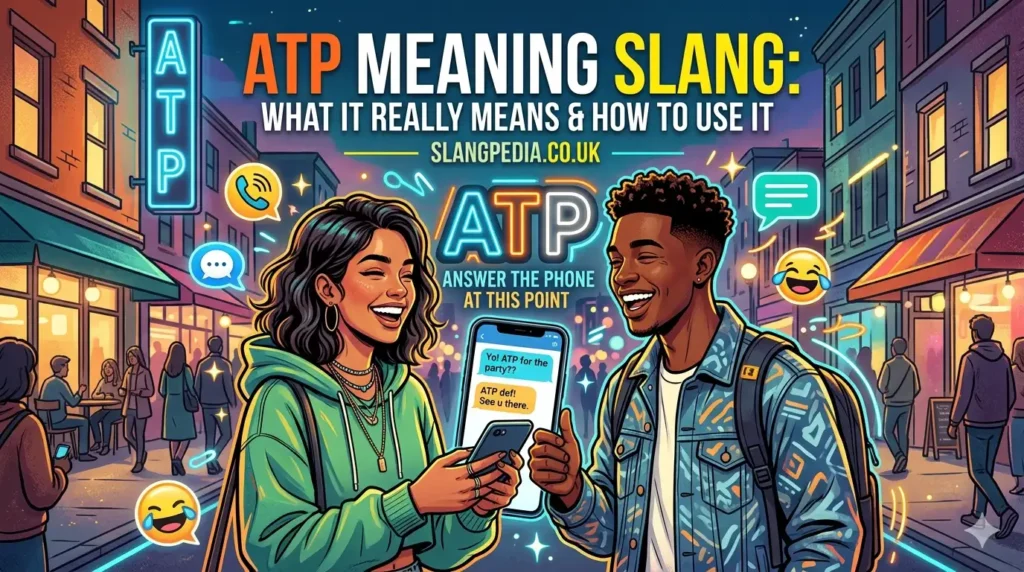
Picture this: your group chat just watched someone post the same type of drama for the fifth time this week. Someone finally types: “ATP just log off forever.” No explanation needed. Everyone knows exactly what that means.
ATP stands for “at this point” — and it signals that the speaker has hit a wall. They’ve seen enough, processed enough, or dealt with enough. The word doesn’t just communicate a conclusion. It carries weight. It says: I’ve been patient, and that patience is gone.
The tone is almost always tired, done, or sarcastically resigned. It’s the text equivalent of a long exhale.
ATP = “at this point” — used to show exhaustion, finality, or dark humor about a situation
You’ll often spot ATP alongside slang like iykyk — both thrive in spaces where the speaker assumes shared frustration. ATP places the speaker at the end of their rope. Sometimes that’s serious. More often, it’s comedic.
Where Did the Slang “ATP” Come From?
ATP grew out of Black Twitter and AAVE-influenced digital spaces around 2019. It started as a shorthand for processing frustration in real time — usually about relationships, social media drama, or everyday absurdity.
The abbreviation itself isn’t new. “At this point” has existed in English forever. But the texted, lowercase, standalone version — dropped mid-rant for maximum impact — is a product of internet culture.
By 2020, it had crossed into broader Gen Z vocabulary on TikTok. Comment sections, video captions, and stitch replies all picked it up. It moved from Black Twitter to mainstream use fast — a pattern common to AAVE-rooted slang online.
Why Is “ATP” Spelled Different Ways?
You’ll mostly see ATP in all caps, which matches the abbreviation format. Some users write it lowercase (atp), especially in casual DMs or quick replies. The lowercase version often reads as softer or more stream-of-consciousness. Both mean the same thing.
Rarely, someone spells it out as “at this point” — but that defeats the punchiness of the abbreviation.
Timeline:
- 2019: Popularized on Black Twitter as a frustrated, punchy shorthand in rant threads
- 2020: Spreads to TikTok comment sections during lockdown content booms
- 2024–2026: Fully mainstream across US and UK Gen Z — appears in memes, captions, and everyday DMs
What Does ATP Mean in Text?
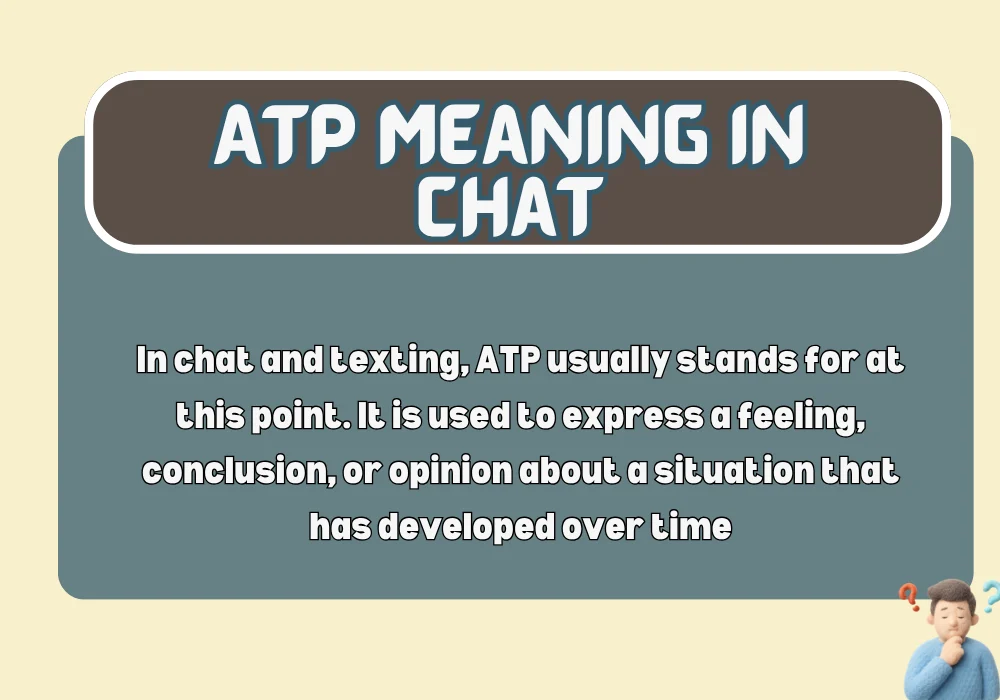
In texts and DMs, ATP is almost always a mic-drop statement. It comes at the end of a rant or observation, not the beginning. It says: I’ve thought about this. Here’s where I’ve landed.
In private texts, it tends to be sincere — a real expression of exhaustion or resolution. In group chats, it leans comedic. The group setting amplifies the drama.
Common emojis paired with ATP: 😭 💀 🙏 😮💨
Text exchange:
Tyler: she canceled plans again last minute
Jess: ATP just stop making plans with her
Tyler: fr I’m so done
Jess: 😭 seriously atp it’s a pattern
ATP here signals Jess has heard enough to deliver a verdict. It’s blunt, but not cruel.
You’ll also see ATP paired with slang like NGL — both cut to the emotional core of a moment without much setup.
| Phrase | Meaning | Vibe |
|---|---|---|
| “ATP just give up” | You’ve reached the logical conclusion | Exhausted, resigned |
| “ATP I’m not surprised” | You’ve seen this coming | Sarcastic, tired |
| “ATP we all knew” | Collective realization | Wry, knowing |
What Does ATP Mean on TikTok?

On TikTok, ATP appears most in captions and comments — rarely in voiceovers. It’s the go-to phrase for reaction content, “storytime” videos, and drama recaps.
Creators use it to hook viewers fast. A caption like “ATP why does this keep happening to me 😭” tells you immediately: relatable disaster content ahead.
The meaning stays consistent with texting — exhaustion, finality, dark humor. But on TikTok, it skews more comedic because the platform rewards performative frustration.
ATP is equally popular on US and UK TikTok. UK users have folded it into their own slang ecosystem without changing the meaning. It’s one of the few Gen Z abbreviations that crossed the Atlantic without friction.
ATP in Real Conversations: 5 Examples
Example 1 — Group chat verdict
Marcus: bro she’s still posting about him
Ashley: ATP just block and move on
ATP signals that the group has moved past sympathy into practical advice.
Example 2 — Ironic self-awareness
Cody: ATP I am the problem 💀
Tyler: finally some self-reflection
Used here as dark, self-deprecating humor — Cody owns the conclusion.
Example 3 — Sincere exhaustion
Jess: how’s the job search going
Marcus: ATP I might just move back home
No humor here. This is genuine defeat. ATP marks a real turning point.
Example 4 — Sarcastic commentary
Tyler: ATP can we all agree reality TV is scripted
Ashley: took you this long? 😂
Sarcastic and pointed — ATP here signals mock-patience finally snapping.
Example 5 — Casual group observation
Cody: atp the wifi in this building is a personal attack
Marcus: 💀 facts
Jess: report it to management
Casual, low-stakes frustration — ATP adds comedic weight without real anger.
ATP vs. Similar Slang
| Word | Core Meaning | Tone | Best Used When |
|---|---|---|---|
| ATP | “At this point” — signals a conclusion | Exhausted, resigned, darkly comic | You’ve reached the end of your patience |
| IDK | “I don’t know” — expresses uncertainty | Casual, unbothered | You genuinely have no answer |
| NGL | “Not gonna lie” — signals honesty | Confessional, direct | About to admit something real |
| FR | “For real” — signals agreement or emphasis | Affirming, casual | Reinforcing something just said |
The word people confuse ATP with most is FR. Both can end a statement with emphasis. The difference: FR confirms agreement, while ATP signals a conclusion reached after observation or experience. “That movie was bad fr” is simple agreement. “ATP that movie franchise is just over” is a verdict.
The Emotional Vibe Behind “ATP”
ATP exists because sometimes frustration needs a timestamp.
It doesn’t just say I’m frustrated — it says I’ve been watching this long enough to reach a conclusion. That’s what makes it distinct. The “at this point” structure implies history. You’ve observed. You’ve waited. You’ve given benefit of the doubt. Now you’re done.
Online spaces are exhausting. Drama cycles. Bad takes repeat. The same people disappoint in the same ways. ATP gives users a way to mark that moment of finally — without melodrama.
When someone uses ATP, they come across as self-aware and a little world-weary. They’re not exploding. They’re concluding. That’s actually a sophisticated emotional register for a three-letter abbreviation.
What does it say about the subject? Usually that they’ve tested the speaker’s patience one too many times. ATP is rarely the first thing said. It’s the last.
This is why ATP spread so fast. Slang like IYKYK thrives in the same exhausted-but-knowing register — both reward people who’ve been paying attention long enough to reach a shared conclusion.
Is “ATP” Offensive?
ATP is not offensive. It is not a slur. It doesn’t target any group, identity, or individual in a harmful way.
Context doesn’t make it offensive — it just changes whether it reads as sincere or comedic. Used at someone directly (“ATP just quit”), it can feel blunt but not cruel. Used about a situation, it’s almost always harmless.
It’s safe to use in the USA and UK without causing offense to anyone.
Who should avoid it: Anyone writing for a professional, academic, or formal context. HR emails, university essays, and job applications should stick to “at this point” written in full.
For formal writing, the equivalent is: “At this stage,” “Given the current situation,” or “Based on everything so far.”
📌 Quick note for parents and teachers: ATP means “at this point” — it’s an expression of frustration or resignation, not a threat or harmful phrase. You’ll see it in texts, TikTok comments, and group chats. It carries no offensive meaning and is used the same way across US and UK teen and young adult spaces.
ATP Slang — FAQ
Q: What does ATP mean on TikTok? A: On TikTok, ATP means “at this point” and appears in captions and comments on reaction, drama, and relatable content. It signals that the creator or commenter has reached an exasperated conclusion. The tone is usually humorous or resigned, not genuinely angry.
Q: Is ATP a bad word? A: No. ATP is not a bad word, slur, or offensive term. It’s a neutral abbreviation that expresses frustration or a final conclusion. It’s appropriate for casual digital use, though too informal for professional or academic writing.
Q: What’s the difference between ATP and FR? A: ATP (“at this point”) signals that a conclusion has been reached after observation or experience. FR (“for real”) confirms agreement or adds emphasis. You’d say “ATP this show is unwatchable” to mark a verdict, but “this show is so bad fr” to agree with someone else’s point.
Q: Do Americans and British people use ATP the same way? A: Mostly yes. Both US and UK Gen Z use ATP with the same meaning and tone. UK users haven’t changed or adapted it — it traveled intact through TikTok and crossed over without friction. Regional slang differences don’t significantly affect how ATP is used or understood.
The Bottom Line
ATP is more than an abbreviation. It’s a marker of having reached your limit — calmly, knowingly, and usually with a touch of dark humor. It signals that the speaker has been paying attention long enough to form a final opinion. When you see ATP, someone is done explaining themselves. They’ve arrived at a conclusion, and they’re sharing it. Next time it appears in your feed or DMs, you’ll know: this person has thought it through. Have you seen ATP used in a way that surprised you? Drop it in the comments.
Article verified by native US and UK English speakers. Slang meanings are reviewed regularly for cultural accuracy.

Maggie Wiersma is a USA-based writer with 2 years of experience covering slang meanings, internet culture, and modern language trends. With a background in communication studies, she creates simple and engaging content that helps readers understand today’s most popular slang terms.