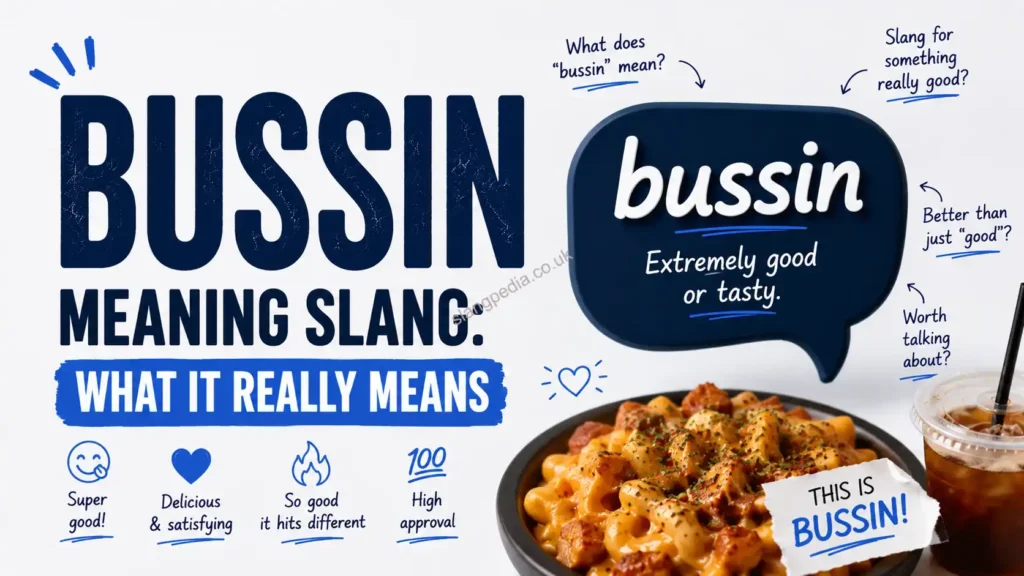
“Bussin” means something is exceptionally good — usually food — and you’ll see it most on TikTok and iMessage when someone tastes something and completely loses it.
TL;DR
- Bussin = so good it hits different, most often said about food
- Tone is enthusiastic, high-energy, and genuinely approving — never ironic by default
- Originated in AAVE (African American Vernacular English) and spread through Black TikTok around 2020–2021
- Used widely by Gen Z across the US and UK, especially ages 16–28
- Usage warning: Saying “bussin” about something mediocre ironically can still land wrong — context matters
What Does Bussin Mean in Slang?
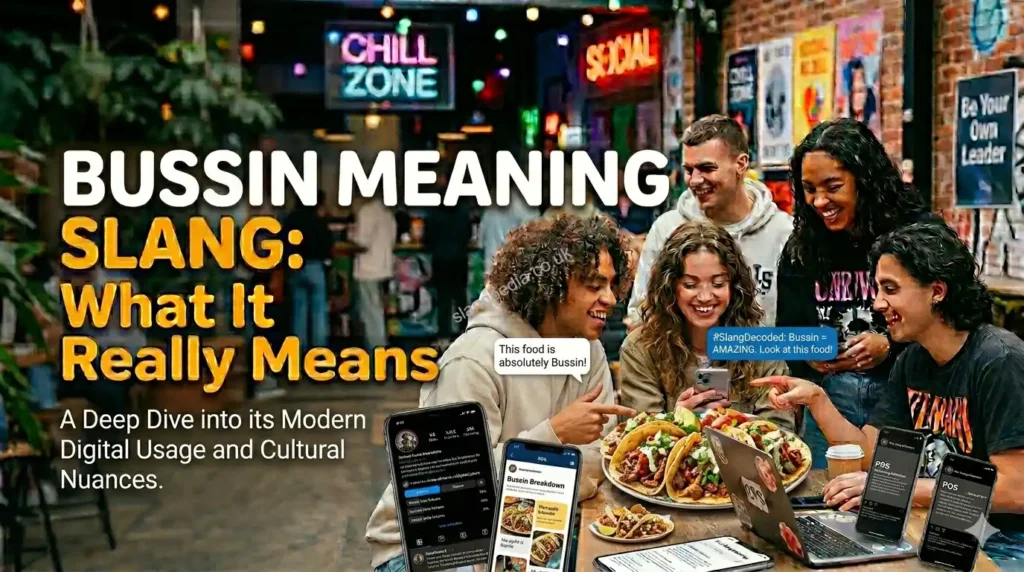
Your friend texts you at midnight: “bro my mom just made jerk chicken” — and before you can even reply, they follow up with “this is literally BUSSIN.”
That’s the word in its natural habitat.
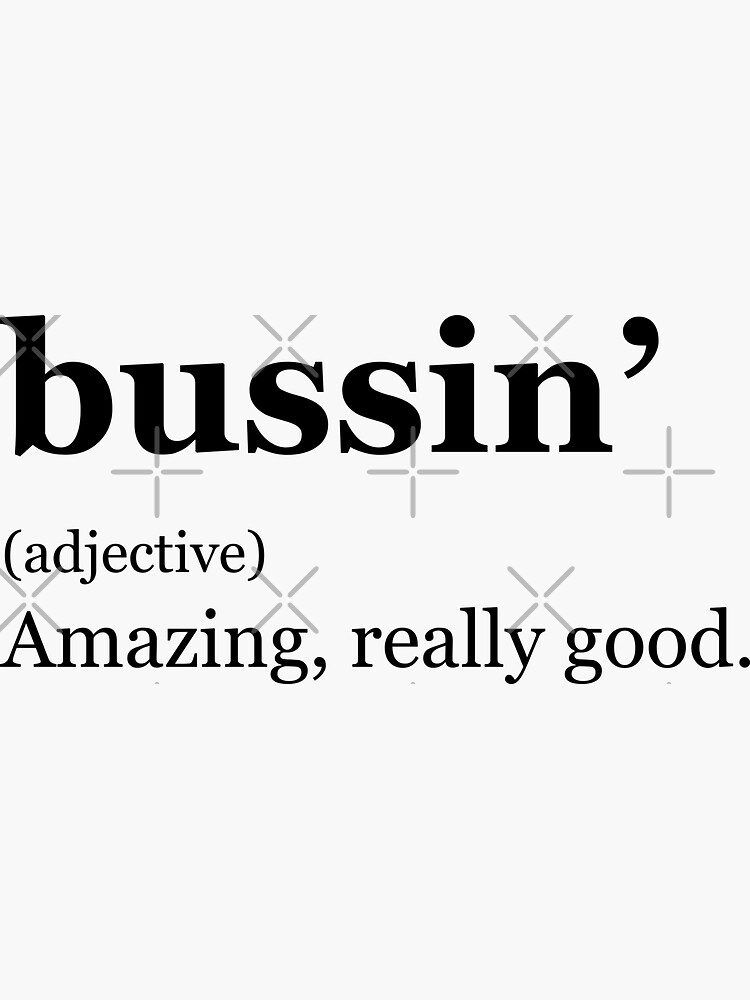
Bussin means something is exceptionally, undeniably good. It’s not a polite compliment. It’s a declaration. When someone calls food bussin, they’re saying it genuinely slaps — no caveats, no qualifiers.
Bussin = this is outrageously good, especially food
The nuance matters here. Bussin carries heat behind it. It’s not “oh, this is nice.” It’s a full-body reaction. Using it signals you’re fully sold — no performance, no half-measures.
It also lives in a specific register. Saying something is bussin feels communal. It invites others to agree, to share in the reaction. That’s why it spread so fast in comment sections and group chats.
You’ll often see it paired with no cap — “this is bussin no cap” — which doubles down on the sincerity.
Where Did the Slang “Bussin” Come From?

Bussin is rooted in AAVE (African American Vernacular English). It comes from Black Southern dialect, where “bussin” or “busting” meant something was popping off — full, lively, overflowing with energy or flavor.
The word spread online primarily through Black TikTok creators starting around 2020. Food videos, mukbangs, and taste-test content pushed it into the mainstream.
Why Is “Bussin” Spelled Different Ways?
You’ll see bussin, bussing, and occasionally bussin’ (with an apostrophe). All three refer to the same word.
“Bussin'” with the apostrophe reflects the dropped g from spoken vernacular. “Bussing” is a spelling some people use who aren’t familiar with the original AAVE form. “Bussin” — no apostrophe — is the standard digital spelling and the most widely recognized.
Timeline:
- 2018–2019: Used in AAVE communities, especially in Southern US food culture and Black Twitter
- 2020–2021: Black TikTok creators push it into mainstream feeds via food content
- 2022–2026: Fully mainstream — used in UK slang, memes, brand marketing, and school lunch debates worldwide
What Does Bussin Mean in Text?
In texts and DMs, bussin is pure enthusiasm. It usually shows up right after someone shares food news — a new restaurant, a home-cooked meal, or a delivery order that exceeded expectations.
In group chats, it’s an invitation. Drop “bussin” and someone will ask “where from??” almost every time.
Common emoji pairings: 🔥😭🙏💀 — the “I’m dead it’s so good” cluster.
Text exchange:
Tyler: bro tried that new ramen place on Fifth
Marcus: and???
Tyler: genuinely bussin like I almost cried
Marcus: 💀 sending location NOW
In that exchange, bussin signals real conviction. Tyler isn’t hyping it for the group — he means it.
You’ll also see it paired with slay in compliment chains — “bussin and slay behavior honestly.”
Common Bussin Slang Combos
| Phrase | Meaning | Where You’ll See It |
|---|---|---|
| “Bussin bussin” | Doubled for max emphasis — extremely good | TikTok comments, iMessage |
| “Not bussin” | Disappointment — it didn’t deliver | Honest food reviews, casual texts |
| “Bussin no cap” | Good and I’m not exaggerating — genuine praise | Group chats, Discord |
What Does Bussin Mean on TikTok?
On TikTok, bussin lives in the food content lane. It appears in captions, on-screen text, and comment sections under cooking videos, restaurant reviews, and “I tried it so you don’t have to” content.
The TikTok meaning lines up with the texting meaning — no real shift. But on TikTok, the word often gets repeated for emphasis: “BUSSIN BUSSIN” in all caps signals genuine shock at how good something is.
It’s popular on both US and UK TikTok, though British creators sometimes mix it with their own slang (“this is well bussin mate”).
Food TikTok and Black TikTok remain its primary home. Brands and restaurant accounts now use it in marketing copy — which some users side-eye.
Bussin in Real Conversations: 5 Examples
Example 1 — Late night food text
Jess: okay my roommate made homemade mac and this is bussin
Ashley: I’m coming over right now I don’t care
Bussin here signals pure excitement — an open invitation.
Example 2 — Sarcastic group chat
Cody: guys the school cafeteria pizza is bussin today
Tyler: 💀 you okay?
Cody: I said what I said
The irony is built into the context — school cafeteria food being “bussin” is the joke.
Example 3 — Sincere compliment
Marcus: your playlist is actually bussin
Jess: omg stop you’re going to make me cry
Bussin stretched beyond food here — used sincerely to praise a playlist.
Example 4 — Restaurant Discord
Ashley: tried the new Korean BBQ spot downtown
Cody: how was it
Ashley: genuinely bussin. Top 3 ever.
“Genuinely bussin” adds weight — she’s not being casual, she means it.
Example 5 — Family group chat chaos
Tyler: mom’s lasagna is bussin bussin tonight
Mom: I don’t know what that means but thank you sweetheart
The doubled “bussin bussin” is for maximum emphasis — and the generational gap lands the humor.
Bussin vs. Similar Slang
| Word | Core Meaning | Tone | Best Used When |
|---|---|---|---|
| Bussin | Exceptionally good, usually food | High energy, genuine, enthusiastic | Reacting to food or anything that genuinely impressed you |
| Slaps | Hits hard, sounds or tastes great | Casual, confident | Music, food, any sensory experience |
| Fire | Excellent, top-tier quality | Bold, declarative | Music, outfits, food — versatile |
| Hits different | Uniquely good in a way hard to explain | Reflective, almost emotional | Nostalgic or context-specific praise |
The word people mix up most with bussin is fire. Both mean excellent — but fire is broader and more established. Bussin carries more energy and specificity. Calling something fire is steady approval. Calling it bussin is a reaction. If fire is a nod, bussin is a standing ovation.
The Emotional Vibe Behind “Bussin”
Bussin exists because English didn’t have a word that felt visceral enough for food joy.
“Delicious” is clinical. “Amazing” is overused. “Bussin” sounds like what it means — it has a fullness to it, an energy that matches the experience of biting into something unexpectedly perfect.
That’s why it spread so fast. It filled an emotional gap.
When someone says bussin, they’re not reviewing food. They’re sharing a moment. The word is an invitation — get in on this, you’d feel the same way.
It also signals cultural fluency. Using bussin correctly places you inside a community. It’s not just praise; it’s a vibe check. You’re saying: I know what this is, I’ve lived in these spaces, and yes — this passes.
What does it say about the food (or thing) being described? That it genuinely delivered. There’s no ironic bussin by default. The word carries sincerity by design.
That emotional weight is why no cap pairs with it so naturally. Together, they double down on authenticity.
Is “Bussin” Offensive?
No — bussin is not a slur or an offensive term. It doesn’t target any group.
The important context: bussin comes from AAVE. Non-Black speakers using it isn’t inherently offensive, but it’s worth being aware of its roots rather than treating it as a neutral internet word.
In the US and UK, it’s considered safe and casual in everyday conversation. Most people hear it as enthusiastic food slang with no negative edge.
Younger speakers and older adults may read it differently — but it carries no real risk of causing offense to anyone in most social contexts.
Who might want to avoid it: Anyone in a professional or academic setting. In those spaces, “excellent,” “outstanding,” or “exceptional” are better choices.
📌 Quick note for parents and teachers: “Bussin” is positive slang that means something is very good, almost always food. It originated in African American Vernacular English and became widely popular on TikTok. It is not harmful, not aggressive, and not targeted at anyone — it’s simply enthusiastic praise.
Bussin Slang — FAQ
Q: What does bussin mean on TikTok? A: On TikTok, bussin means something — usually food — is exceptionally good. It appears in captions, comments, and on-screen text under food videos and taste-test content. The TikTok meaning is the same as everyday slang use.
Q: Is bussin a bad word? A: No. Bussin is a positive slang term with no offensive meaning. It comes from AAVE and is widely used across Gen Z in the US and UK as enthusiastic praise.
Q: What’s the difference between bussin and fire? A: Both mean excellent, but bussin is more reactive and high-energy — it’s a response to something that genuinely surprised you. Fire is steadier and more versatile. Bussin tends to stay in the food lane; fire works across fashion, music, and more.
Q: Do Americans and British people use bussin the same way? A: Mostly yes. Both use bussin as food praise. British speakers sometimes blend it with their own dialect — “well bussin” or “proper bussin” — but the core meaning stays the same across both regions.
The Bottom Line
Bussin is more than a compliment — it’s a communal reaction. It says: this exceeded expectations and I need you to know that.
It started in AAVE food culture, exploded on Black TikTok, and became one of Gen Z’s most recognized slang exports worldwide. When you see it in a comment section or a text, you know exactly what it means: unqualified, enthusiastic approval.
Next time someone says “this is bussin,” you’ll feel the full weight of it — not just the definition, but the moment it’s describing.
Have you seen bussin used in a way that surprised you? Drop it in the comments.
Reviewed for cultural accuracy and native usage. Last updated 2026.

Maggie Wiersma is a USA-based writer with 2 years of experience covering slang meanings, internet culture, and modern language trends. With a background in communication studies, she creates simple and engaging content that helps readers understand today’s most popular slang terms.