
“Kink” means a sexual preference or practice outside mainstream norms — you’ll see it most on TikTok, Twitter, and Reddit when people discuss sexual identity or make self-deprecating jokes about their interests.
TL;DR
- Definition: A sexual preference, practice, or fetish that differs from what most people consider “vanilla” or conventional.
- Tone: Can be playful, serious, or educational depending on context. Sometimes ironic or self-aware.
- Origin: Comes from BDSM and sexual communities; mainstream uptake exploded around 2015–2018 via sex education TikToks and meme culture.
- Who uses it: Gen Z, millennials, and sex-positive online communities. Anyone discussing sexuality openly.
- Warning: Using it to shame someone’s sexuality is the only real misstep—frame it neutrally in serious conversations.
What Does Kink Mean in Slang?
You’re scrolling through TikTok and a creator posts: “POV: you’re explaining your kinks to someone and they just give you that look.” The comments blow up. Nobody’s offended. Everyone’s laughing because it’s relatable.
That’s modern “kink.” It’s not clinical. It’s not whispered. It’s a word Gen Z uses to talk about sexual preference without shame or shock value.
Kink = Any sexual interest, preference, or practice that’s outside mainstream/conventional sexuality.
In slang, “kink” doesn’t always mean hardcore BDSM. It can mean anything: role-play, specific body types you’re attracted to, power dynamics in relationships, or anything outside what pop culture calls “normal” sex. The word itself is neutral, but the tone varies wildly. Someone might say “I have a kink for tall guys” (casual, jokey) or discuss it seriously in a sex-education context. You’ll also see kink-shaming used as a concept to critique people who mock others’ sexuality.
The beauty of the word online is that it’s honest without being aggressive. It lets people name their sexuality without performance or shame.
Where Did the Slang “Kink” Come From?
The word “kink” itself comes from BDSM and sex-positive communities, where it emerged in the 1970s–1980s. Originally, it meant a specific twist or knot in rope—literal and metaphorical. BDSM practitioners adopted it to describe any departure from vanilla sexuality.
It stayed niche for decades. Then TikTok happened.
Around 2018–2020, sex educators and content creators started using “kink” openly in educational videos. Suddenly, the word wasn’t shameful. It was educational. It was relatable. Gen Z saw creators casually discuss kinks the same way they’d discuss favorite hobbies. The shift was massive: from underground community jargon to mainstream slang, especially on platforms where young people felt safe exploring identity questions.
| Year | What Happened |
|---|---|
| 1970s–1980s | BDSM communities use “kink” to describe non-vanilla sexuality; stays underground |
| 2015–2018 | Sex educators and LGBTQ+ creators bring it to YouTube and Instagram |
| 2018–2020 | TikTok sex education explodes; “kink” becomes casual vocabulary for Gen Z |
| 2020–2026 | Mainstream recognition; used in dating apps, casual conversation, and meme culture |
What Does Kink Mean in Text?
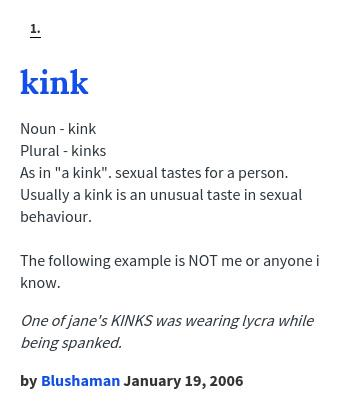
In DMs and group chats, “kink” shifts tone dramatically depending on context. A private one-on-one text about kinks is usually sincere and trust-based. A group chat? It’s often a joke.
Texting behavior:
- Private chat: Serious, vulnerable, educational tone
- Group chat: Joking, teasing, self-deprecating
- With a partner: Direct, negotiation-focused
| Context | Example Message | Tone |
|---|---|---|
| Private conversation | “ok so like… i’ve never told anyone this but i have a kink for—” | Vulnerable, trusting |
| Group chat | “bestie discovered a new kink and i can’t stop laughing” | Joking, supportive |
| Dating app | “open to exploring different kinks” | Direct, informative |
Real text exchange:
Jess: yo did you see that TikTok about kink negotiation
Marcus: nah what was it
Jess: literally just her explaining how to talk to partners about this stuff
Marcus: honestly needed that lol
The emojis that pair with “kink” vary: 👀 (intrigued/tea), 💀 (dying laughing), 🍆 (sexual context, but less common in serious chats), or just a simple emoji-free message if it’s serious. The word itself is desexualized enough now that it doesn’t always need visual markers. Compare this to TMI, which usually pairs with embarrassment signals like 😭 or 🤦.
| Emoji Pair | Meaning | Example |
|---|---|---|
| 👀 + kink | Curious, judging in a fun way | “omg what’s your kink 👀” |
| 💀 + kink | Laughing at relatable or absurd kink | “the way i just learned that’s a whole kink 💀” |
| No emoji | Serious/educational context | “i think kink education should be in schools” |
What Does Kink Mean on TikTok?
TikTok is where “kink” lives. You’ll see it in:
- Sex education content: Creators explaining consent, negotiation, or safety around kinks.
- Relatable humor: “Things I didn’t know were kinks until TikTok,” “Rating random kinks,” etc.
- Serious discussions: LGBTQ+ creators and sex workers discussing sexuality openly.
The TikTok meaning doesn’t really shift from texting—it’s still the same definition. But the audience is massive. A sex educator posting about kinks reaches millions. That reach normalized the conversation faster than anywhere else.
UK TikTok and US TikTok use it identically. No regional difference. The algorithm amplifies sex-positive creators equally on both sides of the Atlantic.
Kink in Real Conversations: 5 Examples
Example 1 — Self-aware joke
Tyler: honestly i have weird kinks
Ashley: don’t we all
Tyler’s admitting something vulnerable but framing it as universal humor. The tone is light, inviting Ashley to bond over shared awkwardness rather than getting defensive.
Example 2 — Educational
Alex: so like when did you first realize you had a kink?
Cody: honestly senior year when i was reading smut and realized i kept coming back to specific tropes
This feels like a real conversation between friends who trust each other. No shame. Just honest reflection.
Example 3 — Teasing in a group chat
Megan: found out my roommate’s kink and i’m never letting her live it down
Jordan: STOP 💀
Megan: i’m just saying it explains so much about her dating choices
Megan’s not shaming—she’s bonding through teasing. The tone is loving, not cruel.
Example 4 — Dating context
Person A: so like… are you open to exploring different stuff
Person B: depends what you mean but yeah probably
Person A: cool because i have some kinks we could talk about
Straightforward, consent-focused. No performance. Just negotiation.
Example 5 — Meme energy
Marcus: bro i’m convinced everyone on TikTok is discovering new kinks every day
Tyler: facts. the algorithm really said “here’s something you didn’t know you liked”
This is commentary on how the algorithm works, framed as humor but grounded in truth.
Kink vs. Similar Slang
| Word | Core Meaning | Tone | Best Used When |
|---|---|---|---|
| Kink | Specific sexual practice or preference outside the norm | Neutral to playful | Discussing sexuality openly or joking about preferences |
| Fetish | Strong sexual attraction to a specific object or scenario | More intense/clinical | Describing something that’s a requirement for arousal |
| Weird | Strange, outside normal experience | Judgmental | Making fun of something; lacks sex-positive framing |
| Freaky | Sexually adventurous or unconventional | Playful, sometimes complimentary | Describing someone as sexually confident; flirty context |
Key difference: “Kink” is the Gen Z umbrella term. “Fetish” is narrower—it’s a specific thing that’s central to someone’s sexuality. You might have multiple kinks but fewer fetishes. “Freaky” is more about someone’s personality (adventurous, willing); “kink” is about the specific interest itself.
The Emotional Vibe Behind “Kink”
This word exists because sexuality was suffocating under shame. For decades, people couldn’t name their desires without fearing judgment. “Kink” filled that gap. It let people say: I want this. It’s not shameful. It’s just… different.
The word spread fast online because Gen Z rejected their parents’ sexual shame framework. TikTok, Reddit, and Twitter gave people permission to discuss sexuality like they discuss music taste. That shift is cultural, not just linguistic.
When someone says “I have a kink,” they’re claiming agency over their sexuality. They’re refusing to hide or apologize. There’s confidence in naming it plainly.
When someone is described as having a kink—”that’s her kink”—it can be affectionate or teasing, but rarely hostile in Gen Z spaces. The speaker is acknowledging: Everyone has something. This is hers. Compare that to kink-shaming, which is framed as negative specifically because the community decided shaming sexuality is bad.
The emotional vibe is: I see you. I don’t judge. Let’s talk about it.
Is “Kink” Offensive?
No. The word itself isn’t offensive—it’s a neutral descriptor. It’s not a slur.
Using “kink” to shame someone is offensive, but that’s a misuse of the word, not the word itself. Context matters. In sex education spaces, at pride events, or between consenting adults, “kink” is safe and positive.
Is it safe to use in the US and UK? Yes. Both countries have shifted toward sex-positive language. You won’t offend people by using “kink” neutrally. If you’re using it to mock someone’s sexuality, that’s the problem—not the word.
Who should avoid it? Formal professional contexts (resumes, academic papers) where a more clinical term like “sexual preference” works better. Parents and teachers sometimes avoid it because it sounds provocative, even though it isn’t.
Formal alternative: “Non-conventional sexual practice” or “sexual preference” in academic or professional writing.
📌 Quick note for parents and teachers: “Kink” is a neutral term Gen Z uses to discuss sexuality without shame. It’s not harmful—it’s actually a sign of healthier attitudes toward sex. You’ll see it on TikTok, in peer conversations, and increasingly in sex education content. Teaching kids the word and its proper use is better than avoiding it.
Kink Slang — FAQ
Q: What does kink mean on TikTok?
A: On TikTok, “kink” means a sexual interest or practice outside the mainstream. It shows up in sex education videos, relatable humor, and serious discussions about sexuality. The meaning is identical to general slang use—the platform just normalized the conversation.
Q: Is kink a bad word?
A: No. “Kink” is a neutral descriptor. It’s not a slur or curse word. Using it to shame someone’s sexuality is disrespectful, but the word itself is fine in casual, educational, or intimate contexts.
Q: What’s the difference between kink and fetish?
A: A kink is any sexual interest outside the norm. A fetish is narrower—it’s something that’s central or required for sexual arousal. You can have many kinks but fewer fetishes. “Fetish” is also more clinical-sounding.
Q: Do Americans and British people use kink the same way?
A: Yes, identically. Both use “kink” as a neutral descriptor for non-mainstream sexuality. No regional meaning shift. It’s one of the few Gen Z slang terms without a US vs UK divide.
The Bottom Line
“Kink” is Gen Z’s way of talking about sexuality without shame or shock value. It’s destigmatizing desire, creating space for honest conversations, and refusing the judgment previous generations accepted.
The word itself will keep evolving, but its core function is locked in: naming sexuality directly.
Next time you see “kink” online, you’re watching a culture that decided sexual shame was optional.
Have you seen “kink” used in a way that surprised you? Drop it in the comments.
Maggie Wiersma is a USA-based writer with 2 years of experience covering slang meanings, internet culture, and modern language trends. With a background in communication studies, she creates simple and engaging content that helps readers understand today’s most popular slang terms.

Pingback: TOS Meaning Slang: What It Really Means in 2026 - Slang Pedia