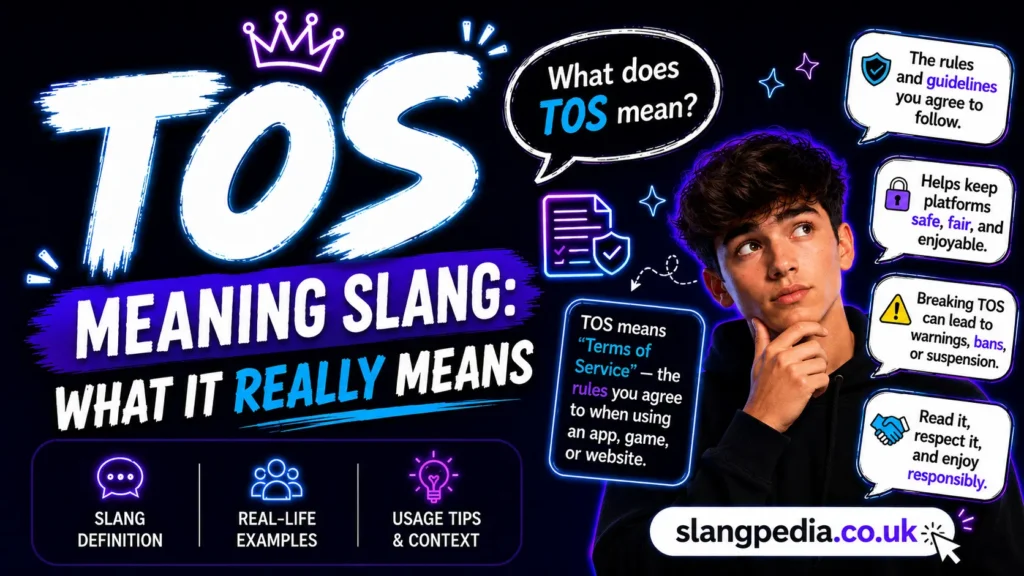
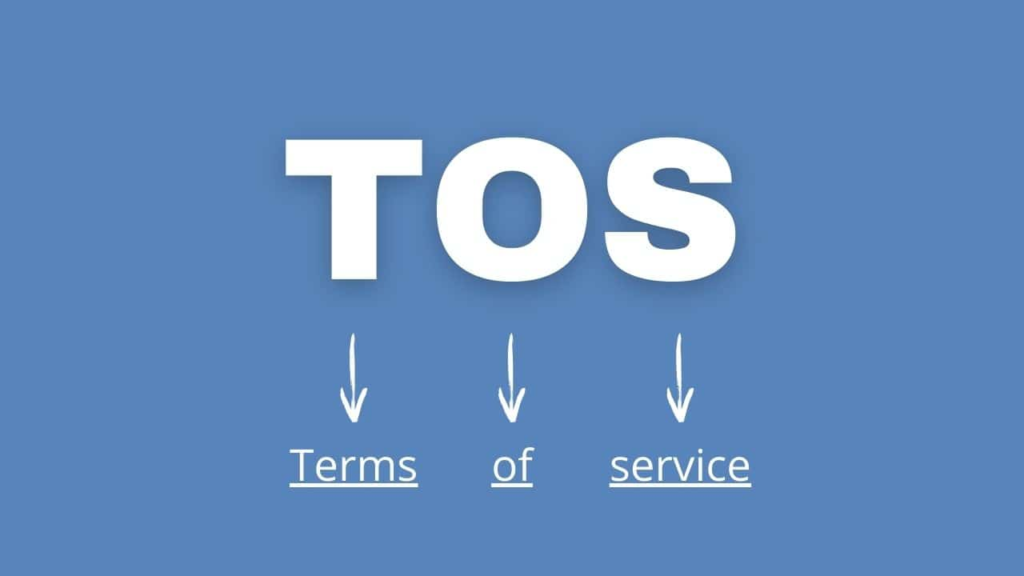
“TOS” means Terms of Service—the rulebook that governs online platforms—but Gen Z uses it as shorthand to joke about getting banned, breaking rules, or calling out suspicious activity, primarily in gaming and Discord communities.
TL;DR
- TOS = Terms of Service rules, but used sarcastically when someone breaks platform rules
- Tone: Humorous, knowing, slightly nervous (“am I about to get banned?”)
- Origin: Gaming and online communities, popularized through Twitch, Discord, Reddit (early 2010s)
- Who uses it: Gamers, Discord users, TikTok creators, streamers, community moderators
- Warning: Not offensive, but saying “that’s TOS” in context can mean different things—clarify if you mean literally violating rules or joking about it
What Does TOS Mean in Slang?
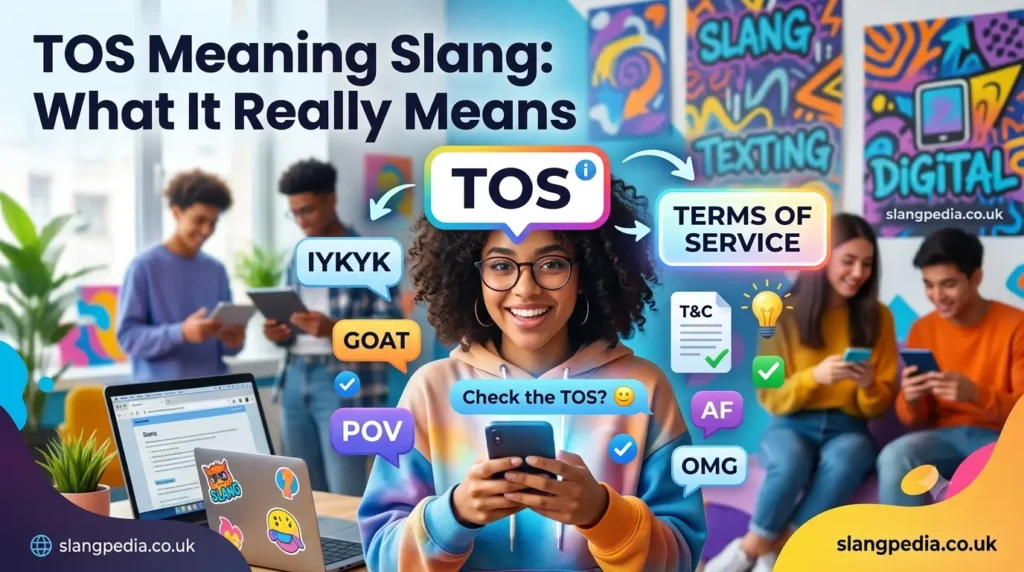
You’re scrolling through Discord and someone drops a clip of a streamer doing something chaotic. Another user comments: “That’s TOS lmao.” Everyone knows what it means without explanation. Nobody’s talking about reading the actual rulebook. They’re saying “that violates the rules and this person’s about to catch a ban.”
TOS in slang context means breaking the platform’s stated rules—or joking that you’re about to break them. It’s the digital equivalent of “that’s against the rules, my guy.” The tone is usually joking or ironically nervous, not accusatory. People use it when they see rule violations, when they’re doing something slightly sketchy themselves, or when someone’s behavior is so wild it has to be against TOS.
The nuance matters. Saying “that’s TOS” can mean: “You’re going to get banned for this,” “I’m joking about doing something banned,” or “What they’re doing is technically illegal on this platform.” Context determines which one. It signals you understand the rules—and that you’re about to break them or watch someone else do it.
TOS = breaking platform rules, often joked about rather than seriously warned about
The term lives strongest in gaming communities where platform enforcement feels most visible and bans hit the hardest.
Where Did the Slang “TOS” Come From?
TOS started as a literal acronym: Terms of Service. Every platform has one—YouTube, Twitch, Discord, TikTok, Reddit. Nobody reads them. That’s the joke.
Gaming communities and Twitch streamers began using “TOS” sarcastically around 2010–2014. When someone did something questionable, streamers would joke: “RIP, that’s TOS.” It became shorthand for imminent bans and rule violations. Reddit forums, especially r/GlobalOffensive and r/Dota2, normalized it. Discord servers picked it up. By 2018, it was everywhere in gaming spaces.
The meaning shifted from “I’m literally reading the TOS” to “that action violates TOS and we all know it.” It became a cultural marker: you use it when you’re in the know about platform rules, even when you’re about to ignore them.
In 2023–2024, TikTok and Instagram picked it up through gaming creators and meme culture. Now it appears in broader contexts: education (students joking about academic integrity), workplace Slack channels (people joking about company policy), and literally anywhere rule-governed online spaces exist.
Timeline
2010–2012: Twitch streamers start using TOS as shorthand for rule violations during live streams.
2015–2017: Reddit gaming communities and Discord servers weaponize the term; it becomes ironic shorthand.
2018–2022: Mainstream TikTok and YouTube creators adopt it; it spreads beyond gaming.
2024–2026: TOS is Gen Z standard vocabulary for “that violates the rules” across all platforms.
What Does TOS Mean in Text?
In DMs and group chats, TOS usually appears in these ways:
- Responding to someone’s wild story: “Wait that’s TOS lmaooo”
- Joking about your own behavior: “I’m about to TOS myself off this platform”
- Calling out someone’s activity: “Bro that’s literally TOS”
The meaning stays consistent, but the tone shifts. In private DMs, it’s usually joking and intimate. In group chats, it’s more performative. People use it to signal: “I understand the rules enough to know you’re breaking them, and it’s funny.”
Common emojis with TOS: 💀, 😭, 🚫, ⚠️, 💀💀
Example text exchange:
Jade: “I’m about to stream for 12 hours straight on that energy drink”
Marcus: “Lmfao that’s TOS”
Jade: “It’s not—”
Marcus: “The health code TOS 💀”
Here, Marcus is joking that Jade’s violating some unwritten rule about human endurance.
TOS = joking about breaking rules, usually casual and self-aware in texts
When someone uses salty in the same chat, they’re describing the emotional tone of someone calling out rule violations.
| Context | Example | Meaning |
|---|---|---|
| Streaming | “Did you see that? That’s 100% TOS” | Platform violation happened on camera |
| Gaming | “TOS me, I shot them through a wall” | Admitting to rule-breaking behavior |
| School/Work | “That assignment is straight TOS” | Against the rules or policy |
What Does TOS Mean on TikTok?
On TikTok, TOS appears mostly in comment sections and captions. Creators use it when joking about controversial content:
- Captions: “POV: I’m about to violate TOS” (before something slightly edgy)
- Comments: “That’s actually TOS 💀” (responding to something chaotic)
- Voiceovers: Creators narrate TOS violations during trend videos
TikTok’s use feels more general than Discord’s. It’s not always about Twitch bans anymore. People use it for any rule violation—ethical, legal, or platform-specific.
The meaning is the same across US and UK TikTok, but UK users favor bait more often for similar situations. US TikTok leans harder into TOS jokes.
TOS on TikTok = joking about controversial or rule-breaking content in captions and comments.
It’s more casual there than in dedicated gaming spaces. It feels like shorthand for “yeah that’s probably against the rules lol.”
TOS in Real Conversations: 5 Examples
Example 1 — Calling out a streamer
Tyler: “Did you watch that stream? Dude pulled a gun from under his desk”
Ashley: “LMAOOO that’s gotta be TOS”
Here, Ashley signals: “That’s explicitly against Twitch’s content policy and he’s definitely getting reported.”
Example 2 — Self-aware joking
Jordan: “I’m gonna start dropshipping fake Supreme hoodies”
Cody: “Bro you’re TOS in like 2 weeks”
Cody’s joking that Jordan’s violating eBay/Shopify’s terms, and he’ll get caught fast.
Example 3 — Group chat roasting
Priya: “I just told my boss off in a Slack message. All caps. Everything.”
Marcus: “That’s not TOS that’s just career TOS 💀”
Marcus makes a pun—violating workplace rules, not platform rules.
Example 4 — Genuine warning
Dev: “Should I post this screenshot of a private DM?”
Kira: “Honestly? That’s TOS. Discord’s got you”
Kira’s being sincere. Sharing private conversations violates terms of service.
Example 5 — Casual gaming
Alex: “I got banned for 24 hours lmfao”
Sam: “For what??”
Alex: “I have no idea what I did. Just straight TOS’d”
Alex is using “TOS’d” as a verb—got hit with a TOS violation.
TOS vs. Similar Slang
| Word | Core Meaning | Tone | Best Used When |
|---|---|---|---|
| TOS | Breaking platform rules | Joking, knowing | Someone violates platform policy |
| Banned | Actually removed from platform | Serious or sarcastic | Someone got permanently or temporarily kicked |
| Shadowbanned | Hidden algorithmic punishment | Paranoid, technical | Content suppression, not visible removal |
| Ratio’d | Socially called out | Embarrassed, public | Someone’s post got ratio’d with replies |
TOS and banned get confused. Banned means you’re actually removed. TOS means you’re about to be or should be banned based on your behavior. Shadowbanned is algorithmic—you don’t know it’s happening. TOS is explicit rule violation that everyone can see.
The Emotional Vibe Behind “TOS”
TOS exists because online rules are simultaneously everywhere and nowhere. Every platform has a 40-page rulebook. Zero people read it. Everyone breaks it slightly.
The term fills an emotional gap: “I understand the rules exist, I’m probably breaking them, and I think it’s funny.” It’s self-aware humor. It acknowledges power imbalances (platforms control our access) while claiming insider knowledge (I know the rules well enough to joke about breaking them).
TOS spreads because it performs social competence. Using it signals: “I’m online enough to know how moderation works. I’m rule-aware but not rule-bound.” It’s the opposite of being a rule-follower. It’s being rule-literate in a way that implies you’ll push boundaries safely.
When someone says “that’s TOS,” they’re not nagging—they’re bonding. It’s in-group language. You only use it if you understand internet culture deeply enough to know what Terms of Service actually mean and why they’re broken constantly.
The person being described? They’re either chaotic (doing wildly entertaining stuff), careless (about to get caught), or legitimately dangerous (actually violating harmful policies). The word slides between these meanings depending on who’s saying it and whether the vibe is drip or chaos.
Is “TOS” Offensive?
No. TOS is not offensive. It’s not a slur, it doesn’t target any group, and context doesn’t change that. It’s safe to use everywhere—school, work, family group chats, college essays. It’s an acronym that got adopted as slang.
Only watch out for: using it to describe something genuinely harmful as a joke. If someone’s describing actual illegal activity or serious policy violations, saying “that’s TOS lol” can read as dismissive or tone-deaf.
In professional writing (resumes, formal emails, academic papers), write out Terms of Service instead. TOS is casual and online-specific. It belongs in emails to colleagues under 30, not in job applications or legal documents.
📌 Quick Note for Parents and Teachers
TOS means “Terms of Service”—the platform rules everyone’s supposed to follow but often jokes about breaking. It’s not harmful or offensive. You’ll see it in gaming streams, Discord servers, and TikTok comments. Kids use it to bond over shared rule-breaking or to call out chaotic behavior. It’s not a warning sign, just online slang that shows they understand how digital communities work.
TOS Slang — FAQ
Q: What does TOS mean on TikTok?
A: It means breaking platform rules, usually in captions or comments when someone’s content is edgy or controversial. Creators joke “POV: I’m about to violate TOS” before posting something slightly risky. The meaning is the same as in gaming, but the context is broader—it includes any rule-breaking, not just platform bans.
Q: Is TOS a bad word?
A: No. TOS is an acronym, not a curse word or slur. It’s safe to use everywhere. People only use it in casual settings because it’s internet slang, not because it’s offensive or inappropriate.
Q: What’s the difference between TOS and banned?
A: TOS means breaking the rules—you’re about to get banned or you should be. Banned means you’re already removed from the platform. TOS is the violation; banned is the consequence.
Q: Do Americans and British people use TOS the same way?
A: Yes, mostly. Both use it for platform rule violations and joke about it equally. The main difference: UK users might say “that’s bait” (an older term) instead, while US users default to TOS. But both understand both terms.
Slang Etymology Quick Reference
| Slang Term | Origin Space | Peak Popularity | Still Used? |
|---|---|---|---|
| TOS | Twitch / Gaming forums | 2015–2022 | Yes, actively |
| Banned | Platform moderation culture | 2010–present | Yes, always |
| Ratio’d | Twitter discourse | 2018–present | Yes, Gen Z primary |
| Shadowbanned | Algorithm folklore | 2016–present | Yes, TikTok/Instagram |
The Bottom Line
TOS is shorthand for understanding how online power works. It means “this breaks the rules and we both know it.” It’s self-aware, joking, and rule-literate. You’ll hear it across every platform Gen Z uses—gaming, Discord, TikTok, even school group chats.
The word survives because rule-breaking is built into online culture. Platforms make strict rules; users push boundaries; everyone jokes about consequences. TOS is the language of that dynamic.
Next time you see it in a comment, you’ll know exactly what layer of irony is happening.

Maggie Wiersma is a USA-based writer with 2 years of experience covering slang meanings, internet culture, and modern language trends. With a background in communication studies, she creates simple and engaging content that helps readers understand today’s most popular slang terms.