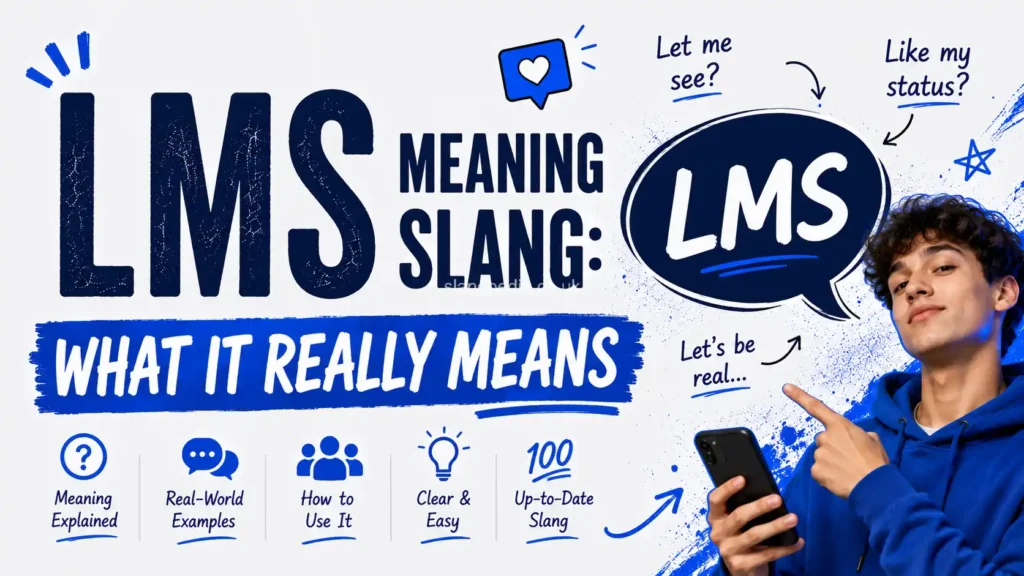
“lms” means “like my status” — you’ll see it most on Instagram Stories and Snapchat when someone wants attention, validation, or to start a game with their followers.
TL;DR
- “lms” stands for “like my status” — a call for engagement on social posts
- Tone is casual and low-stakes; it’s not desperate, just playful or bored
- Originated on Facebook around 2010–2012, then migrated to Snapchat and Instagram
- Used mostly by teens and young adults aged 13–25, across the US and UK
- Don’t confuse it with “let me see” — context tells you which meaning is in play
What Does LMS Mean in Slang?
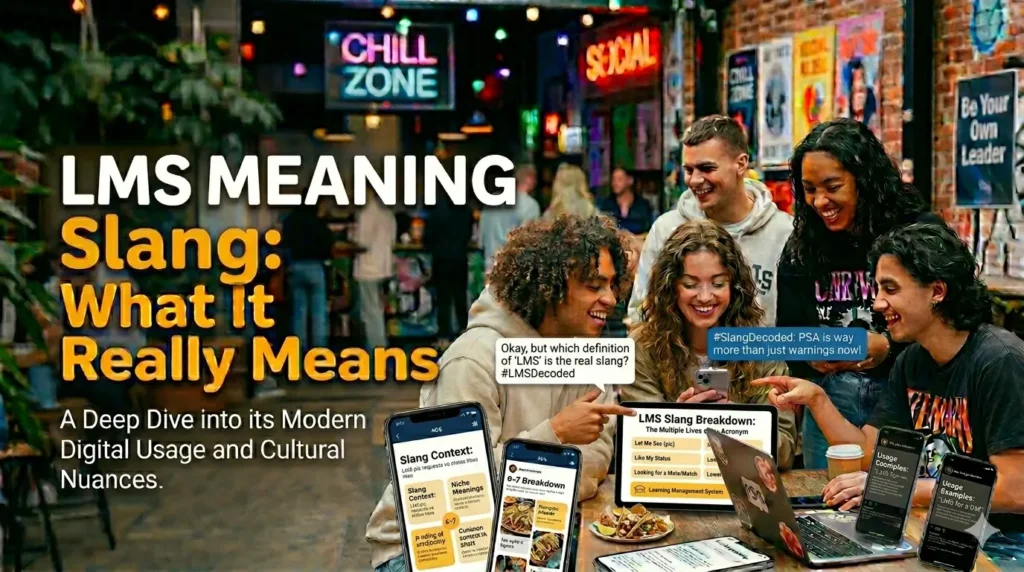
You’re scrolling Instagram at midnight. Someone posts a blank Story with just the letters “lms” and a bold number — “lms for a tbh.” You know exactly what they want: likes. Attention. A reason to slide into DMs.
LMS is a call-to-action dressed up as casual internet slang. It tells followers to interact with a post in exchange for something — a truth, a rate, a shoutout, or just acknowledgment.
The tone matters here. “lms” isn’t desperate. It’s breezy. It’s the digital equivalent of holding a raffle at a house party.
lms = like my status/post in exchange for a reaction or game
The phrase fits naturally alongside tbh (to be honest), another engagement-bait term that often pairs with lms in the same post. Together, they power an entire micro-economy of social validation online.
Where Did the Slang “LMS” Come From?
LMS started on Facebook. In the early 2010s, Facebook users could “like” status updates — text posts before photo feeds took over. Teens discovered that asking for likes triggered a chain reaction: likes meant visibility, and visibility meant social capital.
By 2012, “lms for a tbh” was everywhere on Facebook. It was almost a genre of post on its own.
Why Is “LMS” Spelled Different Ways?
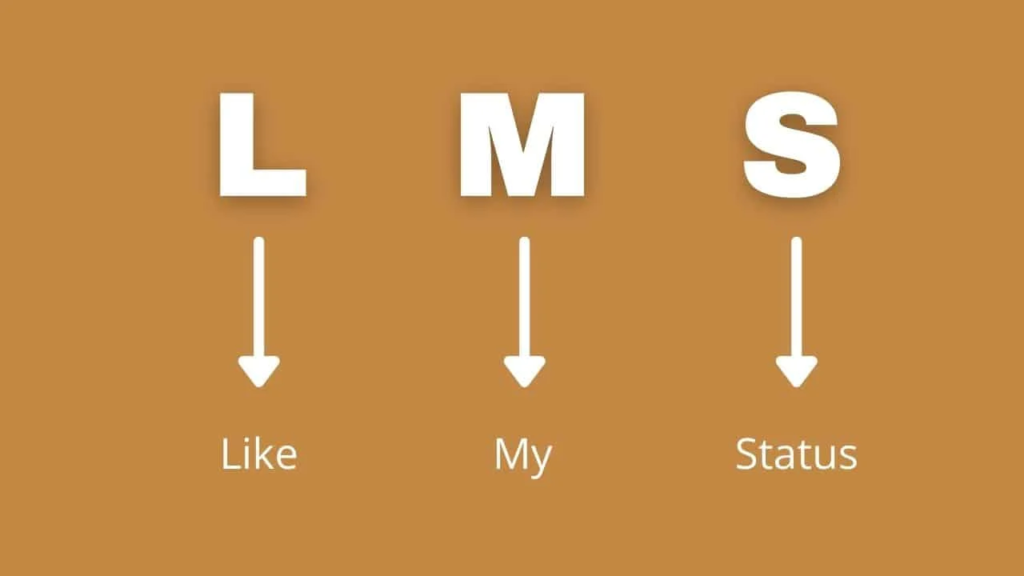
You’ll sometimes see “lmss” (double S for emphasis) or written out as “like my status.” Neither changes the meaning. The abbreviated form dominates because typing speed is the point — it’s slang, not a form letter.
Timeline:
- 2010–2012: Facebook teens use “lms” to drive likes and tbh chains
- 2014–2017: Snapchat and Instagram Stories adopt the format; meaning broadens
- 2022–2026: Still used on Instagram and TikTok Lives, sometimes ironically by older Gen Z
What Does LMS Mean in Text?
In private texts, lms usually shifts meaning slightly. It becomes shorthand for “let me see” — a casual request to share something.
The two meanings rarely confuse people in context. If someone sends you a selfie and you reply “lms,” they know you’re asking to see more. If someone posts publicly “lms for a rate,” the social media meaning kicks in.
Common emojis paired with lms: 👀 🔥 💬 ✨
Real text exchange:
Tyler: just posted something kinda personal lms
Jess: lms? bro just send it to me directly lol
Tyler: nah it’s a story go watch it
Jess: fine fine watching now
The use of iykyk follows a similar logic — both are in-group signals that reward people who are already paying attention.
Common LMS Phrases and Variations
| Phrase | Meaning | Platform |
|---|---|---|
| lms for a tbh | Like my post for an honest opinion about you | Instagram, Snapchat |
| lms for a rate | Like my post and I’ll rate you 1–10 | Snapchat, Instagram Stories |
| lms = let me see | Casual ask to share or show something | iMessage, WhatsApp |
What Does LMS Mean on TikTok?
On TikTok, lms shows up mainly in captions and comment sections. Creators use it to drive engagement — “lms if you relate” functions like a poll without the poll feature.
It also appears in comment games: “lms and I’ll rate your page” or “lms for a FYP shoutout.” The TikTok meaning stays close to the original — it’s still a like-request with a reward attached.
US TikTok uses it more than UK TikTok, where the phrase feels slightly more dated. UK Gen Z tends to prefer direct DM culture over public engagement games. But both audiences recognize it instantly.
LMS in Real Conversations: 5 Examples
Example 1 — Instagram Story game
Ashley: lms for a tbh 👀
Marcus: [likes] ok drop it
Ashley: honestly you give the best advice in our group fr
The “lms” here opens a social contract — like, then receive.
Example 2 — Ironic use in group chat
Cody: lms if you’re also doing nothing tonight
Tyler: bro this isn’t facebook 2013
Cody: lms if you don’t care
Cody uses lms sarcastically. The joke lands because everyone knows it’s an outdated move.
Example 3 — Private DM, “let me see” meaning
Jess: i made a meme about our teacher
Marcus: lms 💀
Jess: [sends image]
Marcus: I’m sending this to everyone
Here lms means “let me see” — totally different register from the public post version.
Example 4 — Sincere engagement request
Tyler: posted my art for the first time ever. lms if you fw it
Ashley: already liked it, it’s actually so good
Tyler uses lms without irony. It signals vulnerability wrapped in casual phrasing.
Example 5 — Sarcastic Discord reply
Cody: lms if you think I should quit my job
Marcus: bro we’re in a Minecraft server
Cody: lms if you don’t care about my life choices
The Discord context makes lms absurd on purpose — that’s the whole joke.
LMS vs. Similar Slang
| Word | Core Meaning | Tone | Best Used When |
|---|---|---|---|
| lms | Like my status/post for a reward | Casual, playful | Posting a public engagement game |
| tbh | To be honest — often paired with lms | Open, direct | Sharing genuine opinions after lms |
| drop | Post or share something | Urgent, hype | Requesting content (“drop it rn”) |
| fw | F*** with / support or like something | Cool, affirming | Asking if someone supports your content |
People most often mix up lms and tbh because they appear together so often. The difference: lms is the action request, tbh is the reward. One asks for engagement; the other delivers honesty.
The Emotional Vibe Behind “LMS”
LMS exists because social validation has a price structure online. It formalizes something we all feel but rarely say: “I want attention, but I’ll make it worth your while.”
It spread fast because it gave teenagers a low-stakes way to ask for engagement. Asking “do people like me?” directly is terrifying. Posting “lms for a tbh” is not. The game format removes the vulnerability.
When someone posts lms, they’re signaling social confidence. They expect responses. They’re not begging — they’re hosting.
When someone ignores an lms post, that silence carries weight too. It’s a quiet rejection dressed as inaction.
The word also connects to PSA-style posts, where creators make public announcements to drive attention — different tactic, same underlying need for digital affirmation.
LMS is honest about what social media actually is: a points system. It just makes the game visible.
Is “LMS” Offensive?
No — lms is not offensive in any context. It carries no slurs, no targeted meaning, and no cultural baggage that makes it harmful. It’s safe to use in the US and UK across all demographics.
The only awkward scenario: using it in a professional or academic setting. “Lms for a tbh” in a work Slack is just strange, not offensive. In formal writing, replace it with “please engage with this post” or “share your feedback.”
Who should avoid it? Anyone over 40 using it sincerely in a professional context might come across as trying too hard. That’s about social context, not harm.
📌 Quick note for parents and teachers: “lms” stands for “like my status” and is a common social media phrase used by teens to encourage engagement on posts. It’s not harmful or inappropriate. It often pairs with games like “lms for a tbh,” where followers exchange likes for honest feedback.
LMS Slang — FAQ
Q: What does lms mean on TikTok? A: On TikTok, lms means “like my status” or “like my post.” Creators use it in captions and comments to drive engagement, often promising a reward like a shoutout or rating in return.
Q: Is lms a bad word? A: No. LMS has no offensive meaning. It’s a harmless social media phrase used to request likes or engagement. There’s nothing inappropriate about the term in any context.
Q: What’s the difference between lms and tbh? A: LMS is the action request — it asks followers to like a post. TBH (to be honest) is the reward — an honest opinion shared after someone likes. They’re different parts of the same social media game, almost always used together.
Q: Do Americans and British people use lms the same way? A: Mostly yes, but US teens use it more actively. In the UK, lms feels slightly more retro — associated with older Snapchat and Facebook culture. UK Gen Z more often uses direct DMs instead of public engagement games.
The Bottom Line
LMS is a social contract in three letters. It’s how a generation learned to trade attention for attention online. The word started on Facebook, traveled to Snapchat and Instagram, and now lives on TikTok as both a genuine tool and a self-aware joke.
When you see lms, someone is inviting engagement — sometimes earnestly, sometimes with irony, sometimes both at once. Context is everything. Now you can read the room either way.
Have you seen lms used in a way that surprised you? Drop it in the comments.
Reviewed for cultural accuracy by native US and UK digital culture contributors. Last updated: May 2026.
Maggie Wiersma is a USA-based writer with 2 years of experience covering slang meanings, internet culture, and modern language trends. With a background in communication studies, she creates simple and engaging content that helps readers understand today’s most popular slang terms.