“PTSO” means “put that shit on” — you’ll see it most on TikTok and Instagram when someone is hyping up a song, outfit, or vibe so hard they’re basically demanding you experience it immediately.
TL;DR
- PTSO = “put that shit on” — urgent, hyped-up praise for music, fashion, or content
- Tone is enthusiastic and commanding — it’s hype, not a request
- Originated in hip-hop and Black Twitter/TikTok spaces around 2021–2022
- Mostly used by Gen Z on TikTok, Twitter/X, and in DMs
- Usage warning: Dropping it in a formal or professional context will read as extremely out of place
What Does PTSO Mean in Slang?
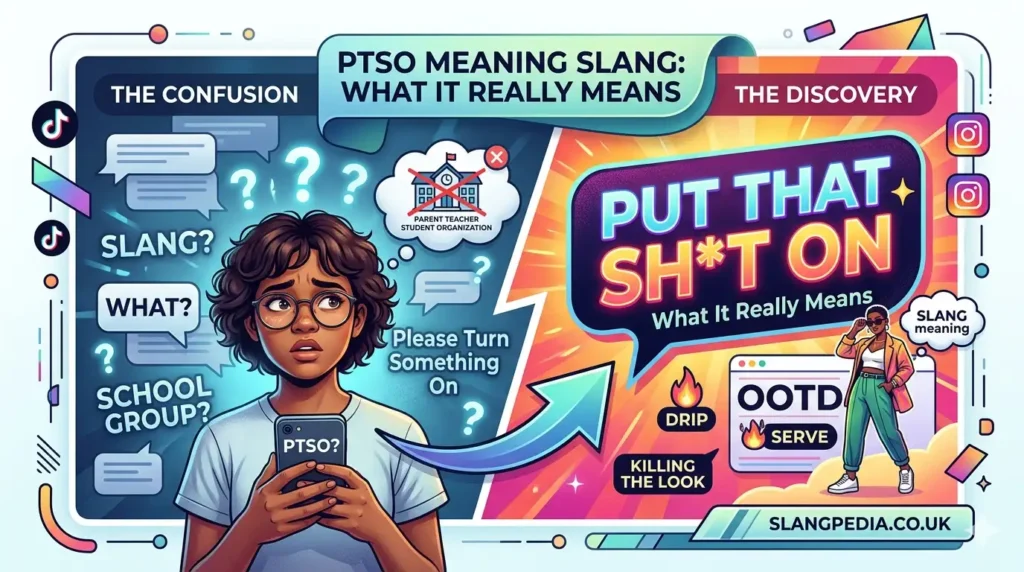
You’re on TikTok. Someone posts a video of their friend absolutely cooking in a new fit. The top comment? “PTSO NO CAP 🔥🔥🔥.” You scroll past it, mildly confused. What does PTSO even mean?
PTSO = “put that shit on” — a high-energy phrase used to praise something so hard you’re telling people they need to experience it right now. It’s the verbal equivalent of grabbing someone by the shoulders and pointing.
The word signals more than just “I like this.” It carries urgency and conviction. When someone says PTSO about a track, they’re not suggesting you listen. They’re insisting. That commanding tone is what separates it from a simple compliment.
It lives mainly in music, fashion, and culture content. You’ll see it under rap snippets, outfit videos, and food reviews. Think of it as a stronger, Gen Z-coded version of saying something slaps.
PTSO = a demand disguised as a compliment
The abbreviation keeps the raw energy of the full phrase. Saying it out loud or typing it in all-caps hits different than “this is good.” That’s the whole point.
Where Did the Slang “PTSO” Come From?
PTSO grew out of hip-hop and Black digital culture, specifically the way people talk about music on Black Twitter and early TikTok. The phrase “put that shit on” was already common in casual speech — it meant crank it up, play it loud, give it the proper treatment.
Around 2021, the abbreviation started circulating in TikTok comments under music content. It spread quickly because it was punchy, versatile, and easy to drop in a comment without context.
By 2022, it had jumped from music spaces into fashion and food content. By 2023, it was mainstream enough that creators were using it in captions, not just comments.
Why Is “PTSO” Spelled Different Ways?
You might see PTSO, pts on, or occasionally the full phrase written out as “put that sh*t on.” The acronym is by far the dominant form online. Some users drop vowels or abbreviate differently depending on their keyboard habits. The meaning stays the same across all versions.
Timeline:
- 2021: “PTSO” appears regularly in TikTok music comments, rooted in hip-hop listening culture
- 2022: Spreads into fashion and lifestyle content; starts showing up in Instagram captions
- 2023–2026: Fully mainstream across Gen Z social media; used for music, food, outfits, and mood content
What Does PTSO Mean in Text?
In private texts, PTSO usually means someone found a song or video and they cannot wait for you to experience it. It’s a recommendation with zero chill. The urgency is the point.
In group chats, it often opens a link drop. Someone sends a song, followed by “PTSO rn.” There’s an expectation you’ll engage immediately.
Common emojis paired with it: 🔥, 🙏, 😭, ‼️. The crying emoji means it’s so good it’s almost painful.
Example text exchange:
Marcus: yo [link] Tyler: what’s this Marcus: PTSO trust me bro Tyler: alright alright… ok yeah this goes hard
That exchange captures it perfectly — PTSO isn’t an explanation. It’s a command backed by confidence. When someone says it, they’re staking their credibility on whatever they’re recommending.
Just like chopped is used to write something off completely, PTSO is its hype-culture opposite — it elevates something to non-negotiable status.
| Phrase | Meaning | Context |
|---|---|---|
| PTSO rn | Put it on immediately, no hesitation | Sharing music urgently |
| PTSO no cap | Put it on, I’m dead serious | Vouching for a track or outfit |
| PTSO different | This hits uniquely hard | When something has a rare quality |
What Does PTSO Mean on TikTok?
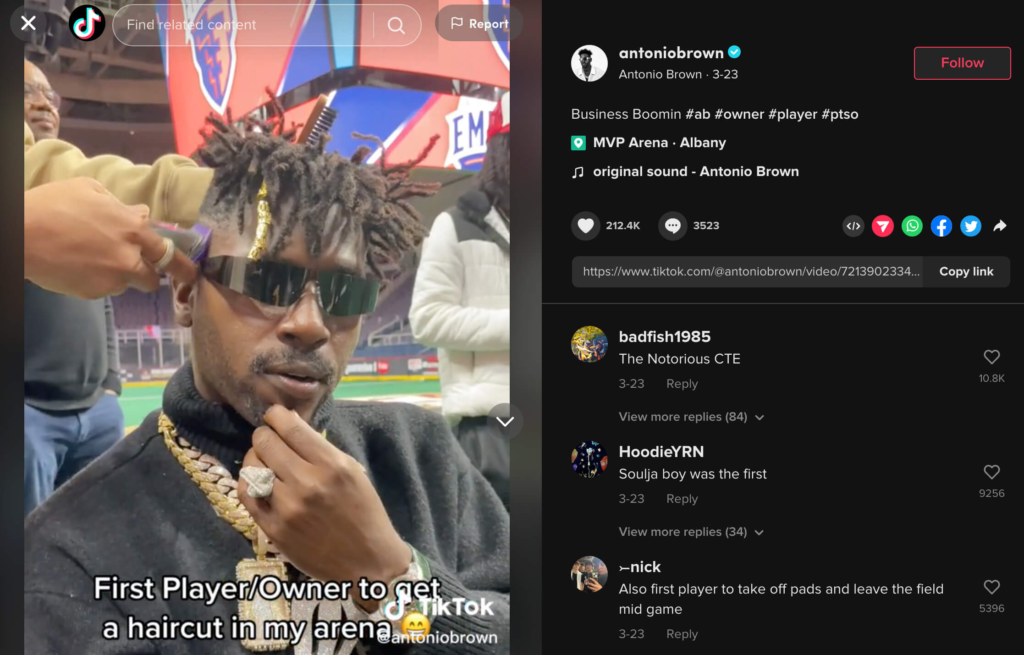
On TikTok, PTSO lives in music video comments, outfit checks, and “what I eat in a day” content. It shows up as a standalone comment — just “PTSO” with a fire emoji — or in captions where creators are pushing their audience toward a sound.
The TikTok meaning is the same as the texting meaning: urgent, high-energy praise. But on TikTok it carries a social function too. Commenting PTSO signals that you’re in the culture, that you recognize quality, that your taste is credible.
It’s more popular on US TikTok but has spread to UK TikTok through music content, especially drill and Afrobeats. The UK usage is essentially identical.
PTSO in Real Conversations: 5 Examples
Example 1 — New song drop
Jess: have you heard the new track yet Ashley: PTSO rn it’s literally insane
PTSO signals she’s not suggesting it — she’s demanding Jess experience it immediately.
Example 2 — Outfit appreciation
Cody: bro what are you wearing lmaooo Marcus: PTSO the fit is cold and you know it
Used ironically here — Marcus is defending himself with pure confidence.
Example 3 — Sincere food recommendation
Tyler: what should I order Jess: the jerk chicken PTSO it’s genuinely the best thing on the menu
Sincere and helpful — PTSO adds weight to a genuine recommendation.
Example 4 — Sarcastic group chat
Ashley: just discovered elevator music Cody: PTSO 💀 nobody asked but okay Marcus: she really said this goes hard
Used sarcastically — the group is clowning on Ashley’s unironic enthusiasm.
Example 5 — Casual album reaction
Tyler: finished the album Marcus: and? Tyler: PTSO bro. every track.
Short and final — PTSO used as a verdict, not just hype.
PTSO vs. Similar Slang
| Word | Core Meaning | Tone | Best Used When |
|---|---|---|---|
| PTSO | Put that on right now | Urgent, commanding, hyped | Recommending music, outfits, or food with conviction |
| Slaps | This sounds/feels great | Casual approval | General praise for music or food |
| Bussin | This is exceptionally good (esp. food) | Enthusiastic, AAVE-rooted | Reacting to food in the moment |
| No skip | Every track is worth listening to | Declarative, album-specific | Reviewing a full project or playlist |
The word people confuse PTSO with most is “slaps.” The difference is command vs. comment. “This slaps” is a reaction. “PTSO” is a directive. One describes your experience; the other tells someone else what to do. That’s a meaningful cultural gap.
The Emotional Vibe Behind “PTSO”
PTSO exists because passive recommendations don’t cut it anymore. Saying “this is good” in a world of infinite content means nothing. PTSO adds urgency. It says: I’ve filtered the noise and found something real. Trust me.
It also reveals something about the speaker. Using PTSO means you’re confident in your taste. You’re putting your credibility on the line. If the thing doesn’t deliver, you look out of pocket. That social risk is part of what makes it feel genuine.
It spread fast because TikTok’s comment culture rewards strong reactions. Algorithmically and socially, bold engagement beats mild approval every time.
And for the person being described — the one whose song or fit earns a PTSO — it’s the highest peer-voted praise in that ecosystem. Better than a like. More personal than a share.
Words like HB fill emotional shorthand roles in digital culture too — Gen Z consistently invents compressed language to carry weight without length.
PTSO is a trust transfer. Someone is saying: this thing earned my full attention. Now it should earn yours.
Is “PTSO” Offensive?
No — PTSO is not offensive, not a slur, and not associated with any harmful meaning. It’s enthusiastic slang used to praise things. There’s no targeted group, no loaded history behind the letters.
Context doesn’t shift the meaning into offensive territory. Whether you’re in a DM, a comment section, or a group chat, PTSO means the same thing and causes no offense.
Non-native speakers of AAVE-influenced internet slang should be aware of the cultural origin and use it authentically rather than performatively. But it’s not a gatekept term — it’s spread freely across communities.
For formal writing, replace it with: “I highly recommend this” or “this is worth your time.”
📌 Quick note for parents and teachers: PTSO stands for “put that shit on” — it contains mild profanity but carries no harmful meaning. It’s slang used to recommend music, outfits, or food enthusiastically. You’ll most likely see it in social media comments or text messages. It’s not a slur or a coded threat.
PTSO Slang — FAQ
Q: What does PTSO mean on TikTok? A: On TikTok, PTSO means “put that shit on” — it’s used in comments and captions to urgently recommend a song, outfit, or piece of content. It signals strong, credible praise in Gen Z music and fashion spaces.
Q: Is PTSO a bad word? A: It contains mild profanity (“shit”) but isn’t considered a bad word in the contexts where it’s used. It’s not a slur or a harmful phrase. Most platforms don’t filter it, and it reads as enthusiastic rather than aggressive.
Q: What’s the difference between PTSO and “slaps”? A: “Slaps” is a reaction — it describes how something made you feel. PTSO is a command — it tells someone else they need to experience something right now. PTSO carries more urgency and social stakes.
Q: Do Americans and British people use PTSO the same way? A: Mostly yes. US usage is more common and came first, rooted in hip-hop and Black digital culture. UK Gen Z picked it up through music content — mainly drill and Afrobeats crossover spaces on TikTok. The meaning and tone are identical in both regions.
The Bottom Line
PTSO is more than recommendation slang. It’s a cultural currency — a way of saying “I vouch for this with my taste on the line.” When you see it, someone isn’t just pointing at something good. They’re transferring credibility. They’re insisting you pay attention.
Next time it shows up in a comment or a text, you’ll know exactly what’s happening: someone found something real in a flood of content, and they want you to feel it too.
Have you seen PTSO used in a way that surprised you? Drop it in the comments.
Article verified by native US and UK digital culture reviewers. Slang meanings are reviewed regularly to reflect current usage.

Maggie Wiersma is a USA-based writer with 2 years of experience covering slang meanings, internet culture, and modern language trends. With a background in communication studies, she creates simple and engaging content that helps readers understand today’s most popular slang terms.