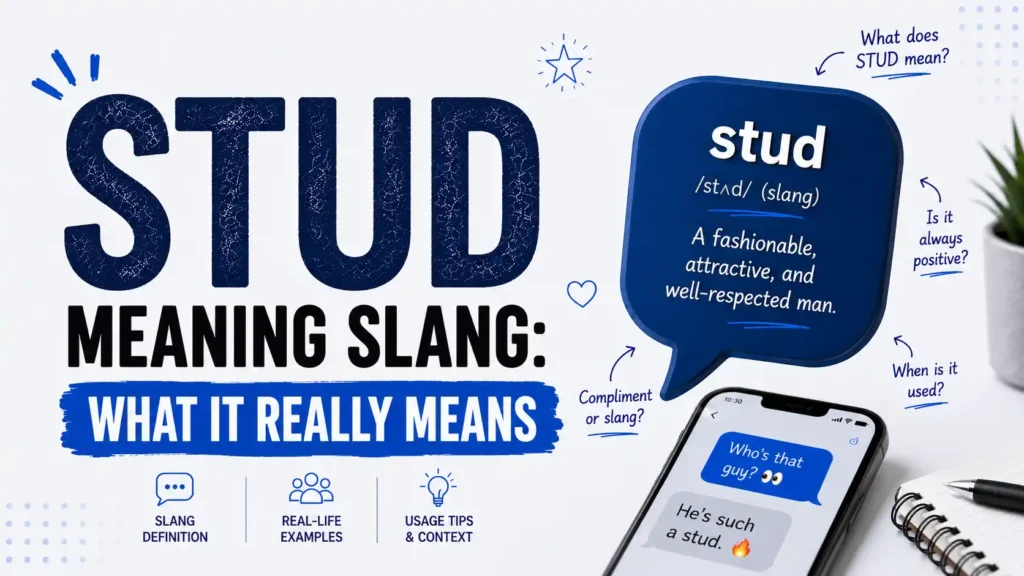
“Stud” means a confident, attractive, or exceptionally skilled person — you’ll see it most on TikTok and Instagram when someone is hyping up a friend, a crush, or themselves.
TL;DR
- Stud = someone who’s confident, attractive, skilled, or all three at once
- Tone is almost always hype, admiration, or affectionate teasing
- Originally used in Black American vernacular and sports culture; spread through social media around 2018–2020
- Used widely by Gen Z across TikTok, iMessage, and Discord
- Usage warning: In LGBTQ+ spaces, “stud” has a specific meaning (a masculine-presenting Black lesbian) — context matters a lot
What Does Stud Mean in Slang?
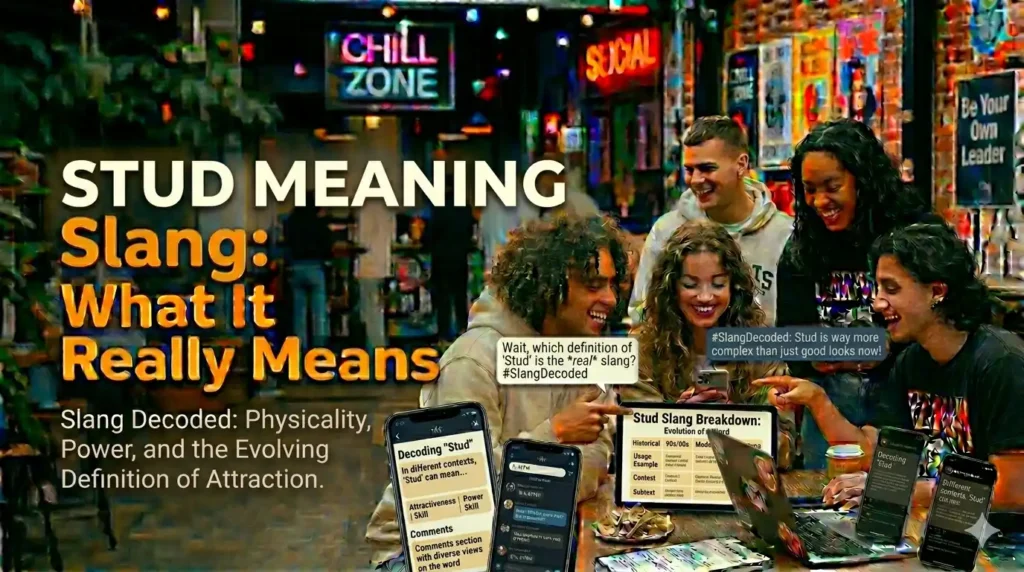
Picture this: your friend posts a gym selfie and someone replies instantly — “bro is a STUD.” No question mark. No emoji. Just full confidence in the assessment.
That’s the word doing its job.
In everyday Gen Z slang, stud describes someone who commands attention — either through looks, skill, charisma, or all three together. It’s high praise. When someone calls you a stud, they’re not just saying you’re good-looking. They’re saying you carry yourself like you know it.
The word has real weight. It signals that the person being described has an effortless kind of cool — not trying too hard, just naturally impressive.
Stud = a confident, impressive, or attractive person who earns admiration without asking for it
The word fits naturally into hype culture. It shows up in comment sections, locker room texts, and Discord servers alongside terms like baddie — another word for someone who’s attractive and self-assured.
The vibe is always positive. Nobody calls someone a stud to cut them down.
Where Did the Slang “Stud” Come From?
The word “stud” in its animal-breeding sense is centuries old — a stud horse was a prized male kept for reproduction. That root meaning (strong, valued, sexually capable) quietly shaped how the word moved into human slang.
In American sports culture and AAVE (African American Vernacular English), “stud” was used from at least the mid-20th century to describe an impressive, dominant man. Think locker-room compliments and old-school hip-hop lyrics.
By the early 2000s, it started appearing in a second, distinct context: LGBTQ+ communities — specifically, Black lesbian communities — began using “stud” to describe a masculine-presenting Black lesbian or queer woman. That usage is still active and carries real cultural weight today.
Online, the hype-culture version exploded around 2018–2021, driven by TikTok and sports Twitter. Athletes, gamers, and influencers all got called studs in comment sections. The word crossed racial and gender lines.
Why Is “Stud” Spelled Different Ways?
You’ll almost always see “stud” spelled as-is. Unlike slang terms like “feening” or “bestie,” there aren’t major alternate spellings. Some users write “studd” for emphasis, but that’s a style choice, not a variant.
Timeline:
- Pre-2000s: Used in AAVE and sports culture to praise confident, dominant men
- Early 2000s: Adopted in Black lesbian/queer communities as a specific identity label
- 2018–2021: Explodes on TikTok and Twitter as general Gen Z hype slang
- 2024–2026: Mainstream across iMessage, Discord, and social media — used regardless of gender
What Does Stud Mean in Text?

In texts and DMs, “stud” is a quick, punchy compliment. It rarely needs explanation. Drop it in a reply and the meaning lands immediately.
In private texts between close friends, it often comes with irony — calling your friend a stud when they do something dumb is a classic move. In group chats, it’s more likely to be sincere hype.
Common emojis paired with it: 💪, 🔥, 😤, 🫡
Example text exchange:
Tyler: bro I just benched 225 for the first time Marcus: no way dude you’re an actual stud Tyler: lmao finally Marcus: lock in king 🔥
Like words such as slay, “stud” travels easily between sincere and ironic. The tone shifts depending on the relationship.
Common “stud” phrases by context:
| Phrase | Context | Meaning |
|---|---|---|
| “you’re such a stud” | Compliment between friends | Genuine praise for skill or looks |
| “absolute stud behavior” | Group chat reaction | Hyping someone’s bold move |
| “stud mode activated” | Gaming / sport | Someone is performing exceptionally well |
What Does Stud Mean on TikTok?
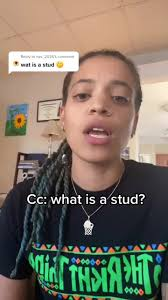
On TikTok, “stud” shows up mostly in comment sections and captions — rarely in voiceovers. It’s a reaction word.
You’ll see it under gym content, fashion videos, highlight reels, and skill showcases. Commenters drop it fast, often in all caps: “THIS MAN IS A STUD.” The energy is pure hype.
The TikTok meaning aligns closely with the texting meaning — confident, impressive, admirable. However, on UK TikTok, the word appears slightly less often. British creators tend to use “goat,” “don,” or “peak” in similar moments.
US TikTok drives the term. It’s most popular in fitness, sports, and streetwear spaces.
Stud in Real Conversations: 5 Examples
Example 1 — Gym achievement
Marcus: just ran a 6-minute mile for the first time Tyler: actual stud behavior bro, no cap
Marcus’s milestone earns genuine, no-irony respect — “stud” here signals pure admiration.
Example 2 — Ironic friend group chat
Ashley: spilled coffee on myself before the interview lol Jess: total stud as always 💀 Ashley: please I’m iconic
Jess uses “stud” sarcastically here — it’s affectionate ribbing between close friends.
Example 3 — Sports hype
Cody: did you watch the game last night Tyler: bro he scored 40 points, the man is a stud Cody: easily top 5 in the league rn
No irony here. “Stud” lands as straight sports praise — dominant performance energy.
Example 4 — Discord gaming server
Marcus: clutched the 1v4 with a pistol lmao Cody: you are genuinely a stud for that Ashley: how
In gaming Discord servers, “stud” describes a high-skill play. The compliment has real weight coming from teammates.
Example 5 — Fashion/style flex
Jess: ok the fit today was fire ngl Ashley: you were SUCH a stud, everyone was looking Jess: i mean… i know
Ashley uses “stud” to confirm Jess’s self-confidence — it’s an agreement more than a surprise.
Stud vs. Similar Slang
| Word | Core Meaning | Tone | Best Used When |
|---|---|---|---|
| Stud | Confident, attractive, or exceptionally skilled person | Hype, admiration, sometimes ironic | Praising someone’s looks, performance, or attitude |
| Baddie | Attractive, stylish, and self-assured person | Complimentary, often feminine-coded | Describing someone’s style or confidence, especially women |
| Goat | Greatest of all time — skill-focused | Reverent, serious | Someone has demonstrated undeniable long-term excellence |
| Don | Respected, authoritative, or impressive person | Respectful, often UK-coded | UK English — calling out someone who runs their environment |
The biggest confusion is between stud and goat. “Goat” is specifically about sustained excellence — the best ever. “Stud” is more immediate. You can call someone a stud for one good play, one great outfit, one clutch moment. It’s about the vibe in the moment, not a career legacy.
The Emotional Vibe Behind “Stud”
Why does this word stick? Because it does something most compliments don’t — it validates how someone carries themselves, not just what they’ve done.
Calling someone a stud is saying: you have a quality that can’t really be faked. Confidence. Presence. That thing.
It spread fast online because hype culture needs short, punchy, repeatable words. “Stud” hits in one syllable. It sounds physical. It sounds earned.
When someone uses it, they’re positioning themselves as someone who recognizes excellence — which is its own form of social credibility. The person saying it gets to be the one who spotted the stud.
When someone gets called a stud, the compliment lands differently than “good job” or “nice work.” It’s not evaluating a task. It’s recognizing a person.
In an era of irony and over-qualification, sometimes people just want to say: this person is impressive, full stop. Words like rizz fill a similar gap — short, confident, culturally loaded.
“Stud” fills the space where admiration needs to be quick, certain, and real.
Is “Stud” Offensive?
“Stud” is not a slur and is not offensive in its general hype-culture use. Most people across the US and UK receive it as a compliment.
However, context matters significantly. In LGBTQ+ spaces — especially Black queer communities — “stud” is a specific identity label for masculine-presenting Black lesbians or queer women. Using it casually in those spaces without understanding that meaning can feel dismissive or appropriative.
Outside those communities, it’s safe to use as general praise. It doesn’t carry racial or gender baggage in mainstream slang use.
That said, it can feel awkward in professional or formal settings. In academic or workplace writing, use “confident,” “impressive,” or “skilled” instead.
📌 Quick note for parents and teachers: “Stud” is a compliment in most teen contexts — it means someone is impressive, confident, or attractive. It’s not harmful slang. In LGBTQ+ settings, it can also refer to a specific identity (masculine-presenting Black lesbian), so the meaning depends on who’s using it and where.
Stud Slang — FAQ
Q: What does stud mean on TikTok? A: On TikTok, “stud” is used in comments and captions to describe someone who’s impressive, attractive, or exceptionally skilled. It’s most common under fitness, sports, and style content. The meaning matches how it’s used in texts — pure admiration, sometimes ironic between friends.
Q: Is stud a bad word? A: No, “stud” is not a bad word. It’s a compliment in mainstream slang use. In LGBTQ+ communities, it has a specific identity meaning (masculine-presenting Black lesbian), so awareness of context matters — but the word itself isn’t offensive.
Q: What’s the difference between stud and goat? A: “Stud” describes someone impressive in the moment — their look, vibe, or current performance. “Goat” (Greatest Of All Time) is a bigger, longer-term claim about sustained excellence. You can be a stud after one great play. You become a goat over years.
Q: Do Americans and British people use stud the same way? A: Mostly, yes — but UK users reach for it less often. British Gen Z tends to prefer “don,” “peak,” or “goat” in the same situations where Americans say “stud.” The word is understood in both countries but feels more native to US slang culture.
The Bottom Line
“Stud” isn’t just a compliment — it’s a cultural signal. It tells the person being described that they have something real: confidence, skill, presence. The word cuts through irony when it needs to. It works in sports, fashion, gaming, and friendship. It’s been around long enough to feel earned but short enough to hit instantly.
In LGBTQ+ spaces, it carries specific meaning that deserves respect. In mainstream Gen Z culture, it’s one of the cleanest, most direct ways to tell someone they’ve got it.
Now you’ll recognize it every time it shows up — and you’ll know exactly what it’s doing.
Have you seen “stud” used in a way that surprised you? Drop it in the comments.
Article reviewed for cultural accuracy. US and UK usage verified against current social media trends.

Maggie Wiersma is a USA-based writer with 2 years of experience covering slang meanings, internet culture, and modern language trends. With a background in communication studies, she creates simple and engaging content that helps readers understand today’s most popular slang terms.