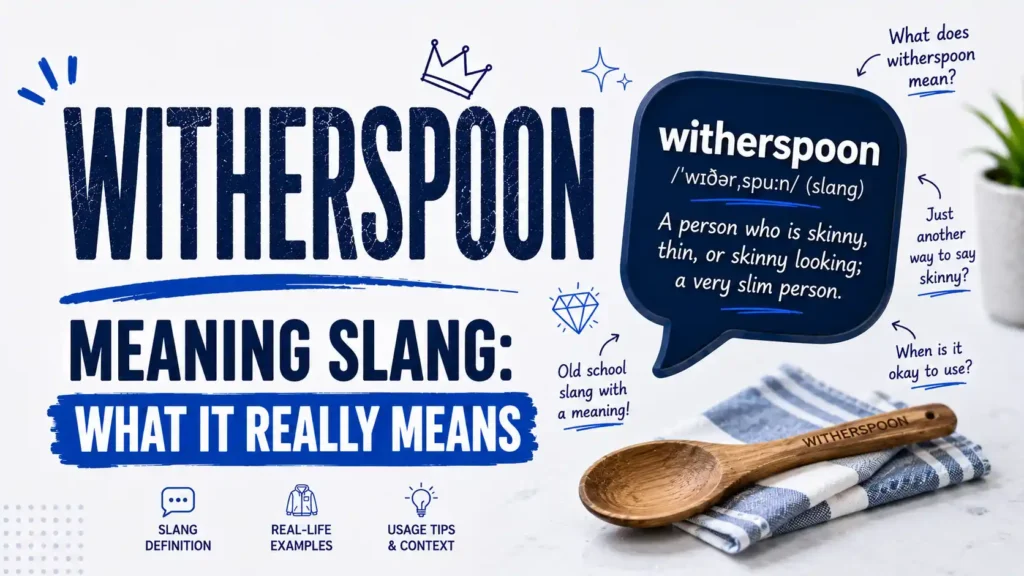
“Witherspoon” means calling someone out for acting fake or performing emotions for an audience — you’ll see it most on TikTok and Twitter/X when someone clocks another person’s over-the-top, theatrical reaction as completely staged.
TL;DR
- Witherspoon = accusing someone of dramatically overacting or being fake in their emotional response
- The tone is sharp and calling-out — it’s a roast, not a compliment
- Likely spread from social media commentary culture around 2022–2023, referencing theatrical “Oscar moment” energy
- Mostly used by Gen Z and younger Millennials on TikTok, Twitter/X, and Discord
- Usage warning: Aim it at the wrong person and it can read as unnecessarily cruel — context matters
What Does Witherspoon Mean in Slang?
You’re watching a TikTok reaction video. Someone just found out their flight got delayed. They drop to their knees. They cover their face. They let out a slow, trembling “noooo.” Their friend films it all. The top comment? “The witherspoon was REAL today.”
That comment says everything. Witherspoon is Gen Z shorthand for someone performing emotions so theatrically that it stops feeling authentic. It’s named for the energy of an actor leaning hard into a dramatic moment — staging their feelings for maximum effect rather than just… feeling them.
The core meaning is simple: you’re clocking someone for being fake-emotional or over-the-top in a way that reads as performative.
witherspoon = a theatrical, exaggerated emotional performance that feels staged
The nuance matters though. Using “witherspoon” isn’t always a full roast. Sometimes it’s playful — you’re teasing a friend who cried at a Netflix commercial. Other times it’s sharp — you’re calling out someone who’s clearly playing victim for the camera. Tone depends entirely on context.
You’ll see it alongside terms like soak when someone not only overreacts but lingers in the drama, soaking up every drop of attention it brings.
Where Did the Slang “Witherspoon” Come From?
The exact documented origin is unclear, but it spread primarily through TikTok commentary culture and Twitter/X around 2022–2023. The term draws obvious energy from Reese Witherspoon’s association with expressive, emotionally-forward performances — though the slang itself isn’t an attack on the actress personally. It became shorthand for that kind of energy in real life.
The slang lives specifically in spaces where people dissect social behavior: drama TikTok, reality TV recap communities, and Discord servers dedicated to calling out “chronically online” behavior.
Meaning has stayed largely stable since it emerged — though it’s drifted slightly from purely “fake crying” toward any kind of exaggerated public emotional display.
Why Is “Witherspoon” Spelled Different Ways?
You might see witherspoon, Witherspoon (capitalized), or even wtherspoon in rapid-fire text slang. Capitalized versions usually signal the user treating it like a proper noun reference — nodding to the actress connection. Lowercase is the more common casual shorthand. The typo version shows up mainly in frenzied live comment sections.
Timeline:
- 2022: Early use in TikTok comment sections calling out reality TV contestants for staged crying
- 2023: Spread to Twitter/X and Discord as drama commentary culture exploded
- 2024–2026: Settled into casual Gen Z vocabulary, used both ironically and sincerely
What Does Witherspoon Mean in Text?
In private DMs, witherspoon tends to be affectionate ribbing between close friends. You send your friend a meme. They respond with three paragraphs about how it made them emotional. You reply: “babe the witherspoon is showing lol.”
In group chats, it sharpens. When someone plays up drama for the group’s attention, calling out the witherspoon is a social correction — gentle or otherwise.
Emojis that usually travel with it: 🎭 (most common), 😭 (ironic usage), 🏆 (Oscar energy), 🎬 (calling “cut” on the performance).
Real text exchange:
Tyler: omg I just dropped my AirPod in a puddle I literally cannot
Jess: the witherspoon is SENDING me rn
Tyler: I AM GRIEVING
Jess: 🎭🏆 Academy Award contender
Similar to how galosh gets used to describe someone who’s layering on drama unnecessarily, witherspoon homes in specifically on the performance aspect of that energy.
| Phrase | Meaning | Vibe |
|---|---|---|
| “The witherspoon was real” | Acknowledging someone fully committed to the drama | Playful/teasing |
| “Don’t witherspoon me” | Telling someone not to fake their reaction | Mild warning |
| “Peak witherspoon energy” | Someone’s emotional performance is at max level | Sarcastic |
What Does Witherspoon Mean on TikTok?
On TikTok, witherspoon appears mainly in comment sections — rarely in captions or voiceovers. It calls out on-camera behavior directly.
You’ll see it most on:
- Reality TV reaction videos
- “Storytime” videos where the drama feels rehearsed
- POV content where someone’s emotional reaction seems camera-ready
- Influencer “authentic moment” content that doesn’t feel authentic
The TikTok meaning aligns closely with the texting meaning, but it’s more public and more pointed. Leaving “witherspoon energy” in someone’s comments is a mini-callout — other viewers will like it and pile on.
US TikTok uses it more than UK TikTok, though UK users have picked it up. UK spaces tend to use their own vocabulary for fake behavior — “peng performance” or just “scripted” — more often.
Witherspoon in Real Conversations: 5 Examples
Example 1 — Ironic group chat
Marcus: guys I just stubbed my toe and honestly it’s the worst pain I’ve ever felt in my life
Ashley: the witherspoon from you today is unmatched
Ashley isn’t being mean — this is pure teasing between friends who know Marcus is dramatic.
Example 2 — Sincere callout
Cody: did you see her “breakdown” on her story after the drama? those were NOT real tears
Tyler: full witherspoon, she knew cameras were watching
Here it’s a genuine accusation — both are agreeing someone performed grief for an audience.
Example 3 — Funny, self-aware
Jess: okay I know I’m being dramatic but I genuinely cannot find my chapstick and I feel lost
Marcus: living for the witherspoon you serve us daily
Jess knows she’s doing it. Marcus is enjoying it. Zero shade — this is affectionate.
Example 4 — Sarcastic Discord reaction
Tyler: [posts clip of influencer crying about “the pressure of content creation”]
Ashley: 🏆 Oscar for Best Witherspoon goes to…
Cody: she’s gonna thank her ring light in the speech
Three users turning the callout into a bit — the sarcasm is shared entertainment, not targeted bullying.
Example 5 — Casual, no drama
Jess: I cried at that dog food commercial again
Marcus: your witherspoon era is thriving
Completely light. No edge. Just a funny way to note someone’s emotional softness.
Witherspoon vs. Similar Slang
| Word | Core Meaning | Tone | Best Used When |
|---|---|---|---|
| Witherspoon | Theatrical, performed emotional reaction | Calling-out, can be playful | Someone’s overacting their feelings for an audience |
| Performative | Acting for appearance rather than sincerity | Neutral to critical | Any context where action feels hollow |
| Extra | Over the top, excessive in any way | Light, often affectionate | Someone’s being dramatic about anything, not just emotions |
| Clout chasing | Doing something purely for attention/followers | Critical, accusatory | Someone’s actions are clearly audience-driven |
The word people most confuse with witherspoon is extra. “Extra” is broader — it covers anyone being over the top about anything, from their outfit to their coffee order. “Witherspoon” specifically targets the emotional performance angle. If someone cries dramatically, that’s witherspoon. If someone shows up to a casual dinner in a ballgown, that’s extra — not the same thing.
The Emotional Vibe Behind “Witherspoon”
Witherspoon exists because social media created a new kind of problem: audiences.
Before smartphones, you cried in private or in front of people who already knew you. Now, every emotional moment can be broadcast. That changes how some people perform those moments — whether consciously or not.
Gen Z picked up on this fast. They grew up watching influencers monetize “authentic” breakdowns. They developed a sharp eye for the gap between real emotion and staged emotion. Witherspoon is the word that fills that gap.
Using it says: I see what you’re doing. The mask slipped.
It’s not always cruel. Sometimes it’s a gentle reminder between friends that you don’t have to perform for each other. That’s the softer use.
But it also carries cultural weight. We’re in an era where emotional transparency is valued — which means emotional performance is easier to disguise. Witherspoon cuts through the disguise.
It’s related to why terms like soak exist — both describe someone who uses emotional situations to center themselves, often for an audience.
The word spread so fast because everyone has seen the thing it describes. Most people have scrolled past a cry-for-the-camera moment and felt that specific discomfort of witnessing something that doesn’t feel real.
Is “Witherspoon” Offensive?
Witherspoon is not a slur and is not offensive to any protected group.
It doesn’t target race, gender, sexuality, or religion. However, context changes everything. Calling out a friend’s drama with “witherspoon” in a group chat is gentle ribbing. Flooding a stranger’s comment section with it after they shared something genuinely vulnerable crosses a line.
It can be used to dismiss real emotional expression — that’s where it causes harm. If someone is genuinely distressed and you call it a witherspoon, you’re invalidating their feelings. That’s not the slang’s fault, but it’s a real misuse.
Safe to use in the USA and UK without causing offense in casual contexts. Avoid it in professional writing, academic settings, or any situation where you’re unsure if someone’s emotion is genuine.
Formal English alternative: “performative emotional display” or “theatrical reaction.”
📌 Quick note for parents and teachers: “Witherspoon” refers to someone acting out their emotions in an exaggerated, theatrical way — typically for an audience. It’s not harmful language on its own, and it doesn’t target any group. It appears most often in TikTok comments and group chats as playful teasing or mild social critique.
Witherspoon Slang — FAQ
Q: What does witherspoon mean on TikTok? A: On TikTok, “witherspoon” is used in comments to call out on-camera behavior that feels theatrically fake or staged. It targets people whose emotional reactions look performed rather than genuine — especially in storytime videos, reaction content, and influencer “real moments.”
Q: Is witherspoon a bad word? A: No, it’s not a slur or inherently offensive term. It becomes unkind when aimed at someone who is genuinely distressed or vulnerable. In casual, friendly contexts it’s typically playful teasing — but read the room before using it.
Q: What’s the difference between witherspoon and extra? A: “Extra” covers anyone being over the top in any way — clothes, opinions, reactions. “Witherspoon” is specifically about emotional performance for an audience. All witherspoon behavior is extra, but not all extra behavior is witherspoon.
Q: Do Americans and British people use witherspoon the same way? A: Mostly yes, but US TikTok popularized it first and uses it more frequently. UK Gen Z has adopted it, though British slang often defaults to “scripted,” “put on,” or “dead dramatic” for the same concept. The witherspoon reference lands more cleanly in American cultural context.
The Bottom Line
Witherspoon is Gen Z’s word for emotional theater — the art of feeling things loudly at an audience rather than actually feeling them. It spread because social media made performance and authenticity hard to tell apart. Knowing the word means you can spot the behavior and name it without a paragraph of explanation.
You’ll see it in comments, DMs, and Discord servers wherever someone’s drama reads more like a monologue than a real moment. It’s rarely malicious — usually it’s just Gen Z’s way of saying we see you.
Have you seen “witherspoon” used in a way that surprised you? Drop it in the comments.
Article reviewed for cultural accuracy and native speaker usage. Last updated: 2026.
Maggie Wiersma is a USA-based writer with 2 years of experience covering slang meanings, internet culture, and modern language trends. With a background in communication studies, she creates simple and engaging content that helps readers understand today’s most popular slang terms.