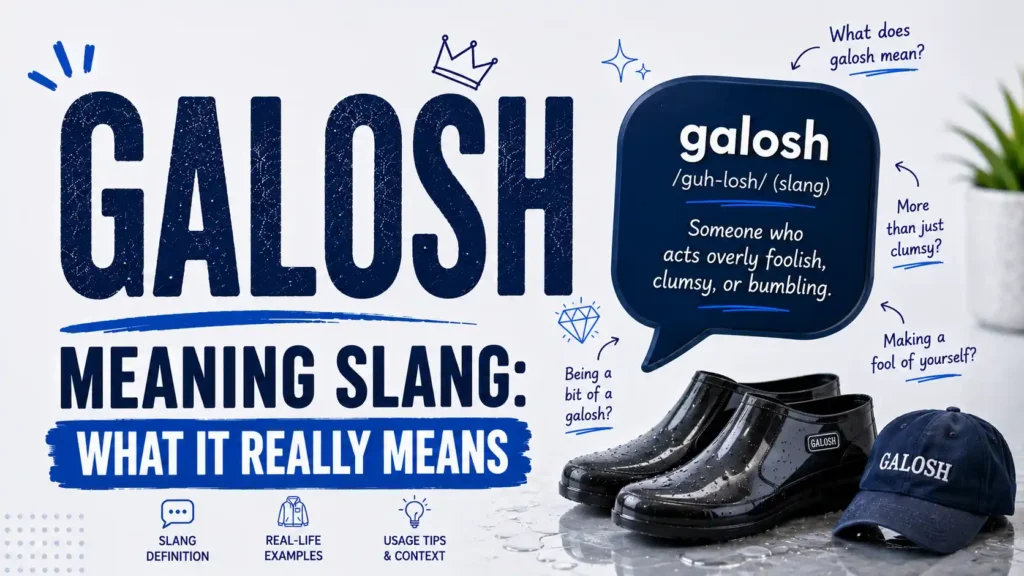
“Galosh” means someone who is totally clueless or socially unaware — you’ll see it most on UK TikTok and Discord when someone calls out a person acting oblivious in a group setting.
TL;DR
- Galosh = an insult for someone who is embarrassingly out of touch or socially dense
- Tone: mocking, but usually lighthearted — it’s more playful than malicious
- Origin: emerged from UK online spaces, likely rooted in older British slang repurposed by Gen Z
- Who uses it: predominantly UK teens and young adults aged 16–25, spreading to US audiences via TikTok
- Usage warning: calling someone a galosh in a serious argument can land harder than intended — context matters
What Does Galosh Mean in Slang?
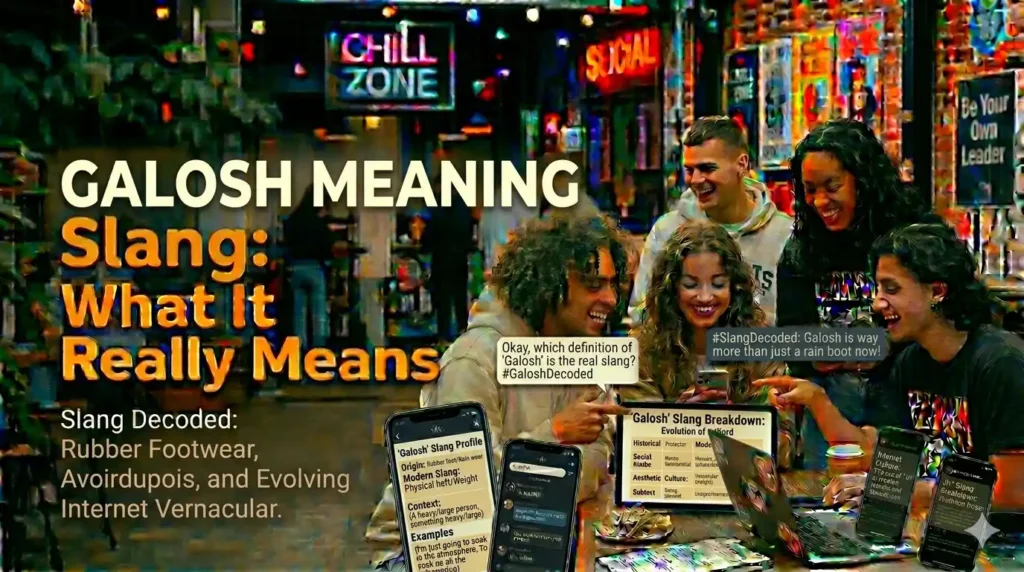
Picture a Discord server. Someone’s arguing confidently about a movie plot they clearly misremembered. Three people correct them. They double down. Someone types: “bro is a complete galosh.” The chat erupts.
That’s the energy of galosh. It labels someone who is obliviously, almost impressively, out of the loop. Not just wrong — wrong with confidence.
The core meaning is simple: a galosh is a person who doesn’t realize how out of touch they are. The nuance is what makes it interesting. It’s not calling someone stupid. It’s calling out their specific brand of social unawareness — the kind that makes everyone else quietly cringe.
Galosh = someone so clueless they don’t even know what they’re missing
The slang galosh carries a slightly affectionate edge in most contexts. You’d call your best mate a galosh for not knowing a meme from six months ago. It’s different from a harsher insult — think of it as the Gen Z cousin of calling someone a muppet. If you’re looking for something similar but sharper, mid covers overlapping territory when someone is disappointingly basic rather than just unaware.
Where Did the Slang “Galosh” Come From?
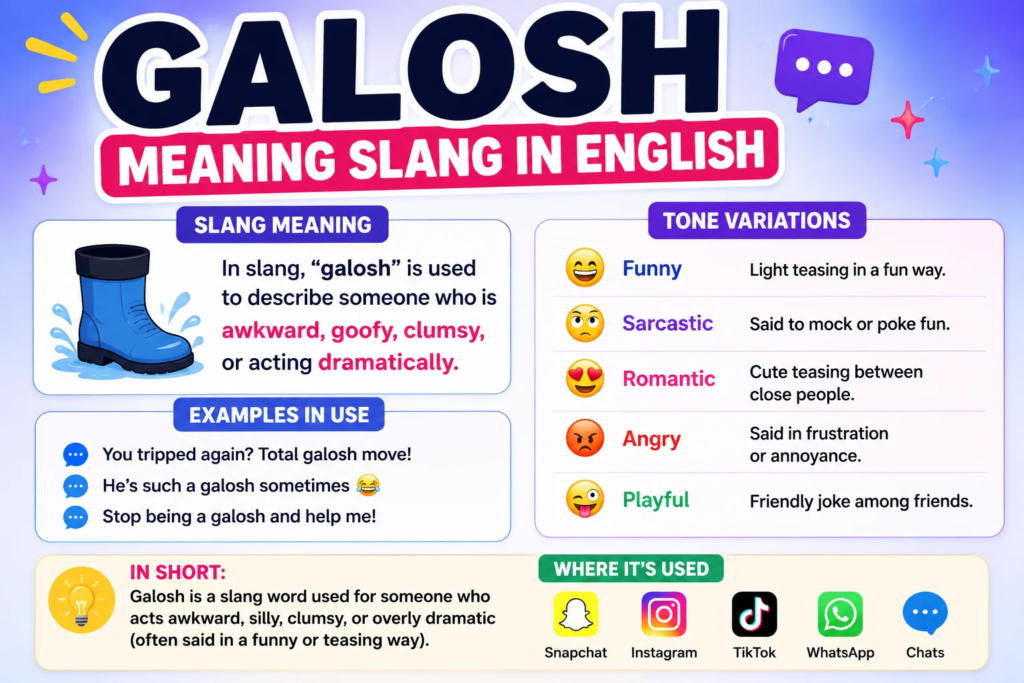
The exact origin is unclear, but galosh spread mainly through UK TikTok and Twitter/X around 2022–2023.
The word itself has an older history — a galosh is literally a rubber overshoe, worn over regular shoes in wet weather. It’s ungainly, unfashionable, and practical to a fault. UK Gen Z repurposed this image. Calling someone a galosh conjures someone clunky, outdated, and weirdly oblivious to how they look.
The shift from a rubber boot to a social insult follows a classic slang pattern. Brits have long used objects to describe people — muppet, wallop, numpty. Galosh fits neatly into that tradition.
It gained momentum in niche UK Discord communities before appearing in TikTok comment sections. By 2024, it started appearing in UK-US crossover content.
Why Is “Galosh” Spelled Different Ways?
You might see galoche, galosh, or occasionally galoche in older British spellings. The French root word (galoche) occasionally surfaces in comment sections. For slang purposes, galosh is the dominant spelling — it’s what you’ll find in UK TikTok captions and Discord messages today.
Timeline:
- 2022: Galosh appears in UK Discord servers as niche Gen Z slang for a clueless person
- 2023: Spreads into TikTok comment sections via British creators clowning on friends
- 2024–2026: Crosses into US TikTok audiences through viral UK content, maintains primary UK identity
What Does Galosh Mean in Text?
In texts and DMs, galosh works as both a noun and a light insult. It lands best in group chats where everyone already knows each other. In a private DM it can feel more pointed — without the group laugh track, it hits differently.
Emojis that typically pair with galosh: 💀 🫠 😭 🙄 — all signals of second-hand embarrassment or disbelief.
Example text exchange:
Tyler: wait i thought the Super Bowl was in February this year??
Marcus: bro it literally was
Tyler: oh. i thought it was March??
Marcus: you are such a galosh 💀
The word signals affectionate disbelief here — Marcus isn’t genuinely angry. He’s clowning Tyler for being hopelessly behind on a basic fact.
For something with a similar vibe but more edge, soak gets used when someone is not just clueless but also annoyingly slow to catch on.
Common Galosh Slang Phrases
| Phrase | Meaning | Where You’ll See It |
|---|---|---|
| “You’re such a galosh” | Direct insult — calling someone clueless | iMessage, Discord group chats |
| “Absolute galosh energy” | Describes a situation or behavior, not just a person | TikTok captions, Twitter/X |
| “Stop being a galosh” | A playful command to get with the program | Casual voice chats, Snapchat |
What Does Galosh Mean on TikTok?
On TikTok, galosh shows up most in comment sections and reaction captions. It rarely appears in voiceovers — it’s more of a comment-section word, dropped as a one-line reaction to cringe or oblivious behavior.
Content where galosh appears most:
- POV videos where someone is clearly missing the point
- Stitch and duet replies mocking out-of-touch takes
- Comment sections under “hot takes” that are actually just outdated opinions
The TikTok meaning mirrors the texting meaning closely. It doesn’t shift much between platforms. UK TikTok uses it more frequently and more fluently. US TikTok is still warming up to it — it reads as an import, not a native term, on the American side.
Galosh in Real Conversations: 5 Examples
Example 1 — Group chat clowning
Cody: guys what’s that new song that’s been everywhere? the one with the beat?
Jess: …that describes every song ever
Cody: 💀 ok i’m a galosh
Cody uses it self-deprecatingly here — owning the moment before anyone else can.
Example 2 — Sarcastic sympathy
Ashley: my coworker asked what Spotify was
Tyler: oh no. a genuine galosh in the wild
Tyler uses galosh to mock someone neither of them knows — it’s ironic distance.
Example 3 — Sincere frustration
Marcus: you didn’t know the meeting got moved?? it was in the group chat
Jess: i don’t check the group chat
Marcus: jess. you are the biggest galosh i know
Sincere here — Marcus is actually annoyed, not just playing around.
Example 4 — Ironic self-awareness
Cody: wait “NPC” is a gaming term?? i thought it was just a tiktok thing
Ashley: i cannot believe you
Cody: fully a galosh. i accept it
Self-aware humor — Cody is in on the joke.
Example 5 — Casual Discord roast
Tyler: just got to the party, where is everyone
Marcus: dude it ended an hour ago
Jess: GALOSH ALERT 🚨💀
Group pile-on energy — Jess is playing to an audience.
Galosh vs. Similar Slang
| Word | Core Meaning | Tone | Best Used When |
|---|---|---|---|
| Galosh | Clueless and unaware, especially socially | Playful, mocking | Someone confidently out of the loop |
| Mid | Mediocre, unremarkable | Dismissive, flat | Something or someone disappointingly average |
| Numpty | Foolish or daft | Warmer, more affectionate | A silly mistake, not malicious ignorance |
| NPC | Someone with no original thoughts or reactions | Cold, dehumanizing | Someone behaving robotically or without awareness |
The word people confuse most with galosh is numpty. Both are British-coded and both label someone as a bit foolish. The difference: numpty implies a one-off dumb moment. Galosh implies a pattern — a consistent, ongoing obliviousness. If someone slips on ice, they’re a numpty. If they didn’t know winter was cold, they’re a galosh.
The Emotional Vibe Behind “Galosh”
Galosh exists because we needed a word for a very specific kind of frustration. Not anger. Not contempt. That particular exasperation when someone is confidently, cheerfully wrong about something everyone else figured out ages ago.
It spread fast online because that feeling is extremely common in group chats and comment sections. The internet creates constant moments where one person is operating on outdated information. Galosh gives the group a shared word for the release valve.
When you call someone a galosh, you’re also signaling something about yourself. You’re claiming membership in the group that does know. It’s a mild form of social positioning — gentle, but real.
What it says about the person being called a galosh is more interesting. It’s rarely a devastating label. People laugh it off. That’s intentional. The word sounds too silly to be truly cruel. The rubber-boot origin keeps it from being a knife — it’s more like getting lightly bonked on the head.
In that way, galosh fills a gap that harsher words can’t. Sometimes you want to flag someone’s cluelessness without jit-level teasing — something lighter, more in-group, less aggressive.
Is “Galosh” Offensive?
No — galosh is not a slur and does not target any specific group. It’s a general insult for clueless behavior, not tied to race, gender, sexuality, or any protected characteristic.
Context does matter, though. In a tight friend group, calling someone a galosh is obviously playful. With a stranger or in a professional setting, it could come across as condescending or needlessly rude.
It is safe to use in the USA and UK without causing cultural offense. It has no hidden double meaning that would make it harmful.
People in formal or professional settings should avoid it. In academic writing, socially unaware or out of touch are the appropriate alternatives.
📌 Quick note for parents and teachers: “Galosh” is a slang term meaning someone is clueless or unaware of current trends or conversations. It is not harmful or targeted — it’s closer to calling someone a “goofball” than using an actual insult. It typically appears in group chats, TikTok comments, and Discord servers among teens and young adults.
Galosh Slang — FAQ
Q: What does galosh mean on TikTok? A: On TikTok, galosh is used in comment sections to call out someone who is obliviously out of the loop. It’s most common on UK TikTok but has spread to US audiences through viral content. It doesn’t shift meaning on the platform — it’s the same clueless-person insult you’d use in a text.
Q: Is galosh a bad word? A: No, galosh is not a bad word. It’s a mild insult with a playful edge. It’s not a slur and doesn’t target any group. That said, using it on someone you don’t know well, or in a tense situation, can feel more cutting than intended.
Q: What’s the difference between galosh and numpty? A: Both are British-coded words for foolishness, but numpty describes a single dumb moment while galosh implies ongoing, habitual cluelessness. Numpty is warmer and more forgiving. Galosh suggests the person has a pattern of being out of touch, not just one slip.
Q: Do Americans and British people use galosh the same way? A: Not quite. In the UK, galosh is used more naturally and fluently — it fits into existing British slang traditions. In the US, it’s still arriving via TikTok imports and reads as a borrowed UK term. Americans who use it tend to be chronically online and familiar with UK slang.
The Bottom Line
Galosh is a distinctly British-born slang term that labels a very specific type of person: confident, cheerful, and completely out of the loop. It’s not cruel. It’s not a slur. It fills a tonal gap between harsher insults and gentler ribbing. The rubber-boot origin gives it built-in comedy. That’s why it stuck. Next time you see someone called a galosh in a comment section, you’ll know exactly what social crime they committed. Have you seen galosh used in a way that surprised you? Drop it in the comments.
Article reviewed for cultural accuracy. US and UK usage verified via native speaker input. Last updated: 2026.

Maggie Wiersma is a USA-based writer with 2 years of experience covering slang meanings, internet culture, and modern language trends. With a background in communication studies, she creates simple and engaging content that helps readers understand today’s most popular slang terms.