

“Ash” means actually or honestly — you’ll see it most on TikTok and in iMessage threads when someone is emphasizing they’re being completely real with you.
TL;DR
- “Ash” is short for “actually” or “honestly,” used to stress that something is true
- Tone is casual and affirming — not dramatic, just matter-of-fact
- Originated in Black American digital spaces and spread through TikTok around 2022–2023
- Mostly used by Gen Z, ages 16–28, in the US; less common in the UK
- Don’t use it in formal writing — swap it for “honestly” or “genuinely”
What Does Ash Mean in Slang?
You’re scrolling through TikTok comments on a video about someone quitting their 9-to-5 job. Someone writes: “Ash, I’ve been thinking about this for months.” No typo. No autocorrect fail. That “ash” is doing real work.
“Ash” is an informal phonetic spelling of “actually” or “ash” (as in “I’m ash tired of this”). It functions as an intensifier — it signals that what you’re about to say is unfiltered and real.
The word carries a tone of low-key sincerity. It’s not dramatic like “literally” or ironic like “totally.” It just means: I’m not performing right now. This is where I actually stand.
ash = “actually” / “honestly” — used to signal you’re being real
Place it at the start of a sentence for the most natural feel. It works especially well in TikTok comment sections and casual iMessage chains. Think of it as the cousin of fr — same energy, slightly softer delivery.
Where Did the Slang “Ash” Come From?
“Ash” as slang grew out of Black American Vernacular English (AAVE) and Black digital culture on social media. The phonetic shortening of “actually” into “ash” reflects a natural spoken rhythm in AAVE, where word-final consonants are often softened.
It gained visible traction on TikTok around 2022, particularly in comment sections under honest personal stories — career pivots, relationship takes, mental health content. By 2023, it had jumped to Twitter/X and Instagram captions.
Why Is “Ash” Spelled Different Ways?

You’ll see it written as ash, ashy (different meaning — see below), and occasionally ach. The core “ash” form is the most common. “Ach” is rarer and mostly appears in fast-typed Discord messages where users phonetically spell their accent.
Timeline:
- 2021: Phonetic use of “ash” circulates in Black Twitter and TikTok comment threads
- 2022: Spreads into mainstream Gen Z TikTok, especially in emotional or confessional content
- 2023–2026: Fully absorbed into everyday Gen Z texting vocabulary across the US
What Does Ash Mean in Text?
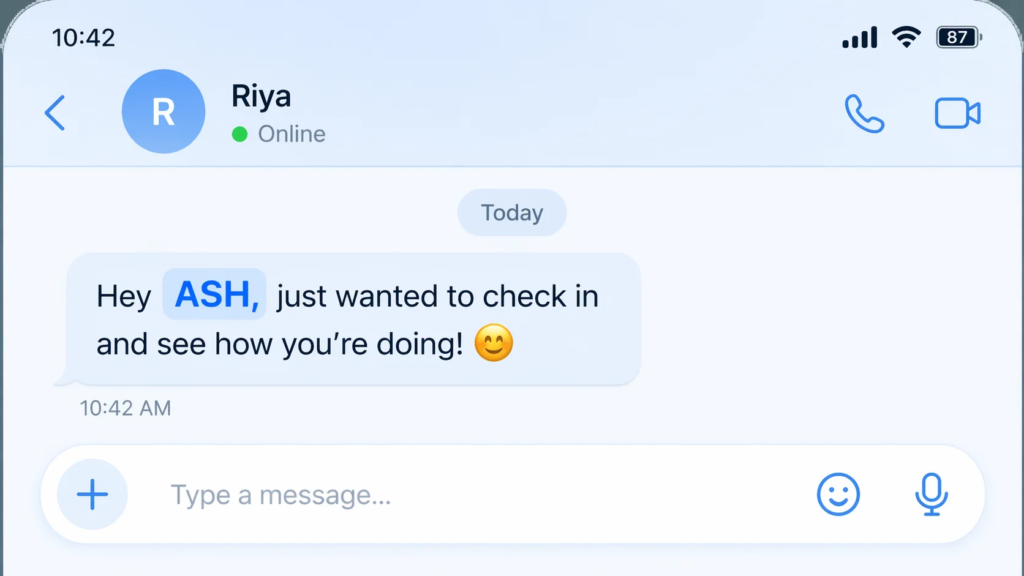
In texts and DMs, “ash” works as a sentence-opener that signals sincerity. It tells the reader: don’t take this as small talk — I mean this.
In group chats it can read as slightly more emphatic. In one-on-one DMs it often comes with a vulnerable admission or a real opinion. Common emoji pairings: 💀 (for ironic honesty), 😭 (for relatable pain), or no emoji at all (for serious moments).
Sample text exchange:
Tyler: you actually liked that movie?? Jess: ash it was so good I watched it twice Tyler: ash?? okay maybe I’ll give it another shot
Like no cap, “ash” signals that what’s being said is the speaker’s genuine take — not a joke, not a flex, just the truth.
| Phrase | Meaning | Vibe |
|---|---|---|
| “Ash though” | “Honestly though” | Reflective, sincere |
| “Ash fr” | “Actually, for real” | Emphatic agreement |
| “Ash I forgot” | “I literally forgot” | Self-deprecating, casual |
What Does Ash Mean on TikTok?
On TikTok, “ash” appears most in comment sections — not in video captions or voiceovers. It’s a response word, not a content word.
You’ll see it under mental health check-ins, career rant videos, or any content where a creator shares something vulnerable. Comments like “ash same” or “ash this hit different” are common.
The TikTok meaning stays close to the texting meaning. There’s no major tonal shift between platforms. It’s more popular on US TikTok than UK TikTok, where British slang tends to favor different intensifiers like “bare” or “well.”
Ash in Real Conversations: 5 Examples
Example 1 — Agreeing with someone’s rant
Marcus: i’m ash tired of pretending i like my job Ashley: ash same bro, same
“Ash” here signals Marcus is dropping the performance — this is the real feeling.
Example 2 — Ironic overshare
Cody: I ash cried at that dog video Tyler: 😭 me too don’t even
Used ironically to confess something embarrassing without fully owning it.
Example 3 — Defending a take
Jess: that album is ash underrated Marcus: finally someone said it
“Ash” makes the opinion land harder — it’s not a casual take, it’s a real one.
Example 4 — Sarcastic exaggeration
Ashley: he ash thinks he’s the main character Cody: he’s been like this since 8th grade lmaooo
Sarcastic use — “ash” amplifies the shade without sounding unhinged.
Example 5 — Casual group chat confession
Tyler: ash forgot to submit that essay Jess: bro Marcus: how
Low-key, no drama — “ash” softens the confession just enough.
Ash vs. Similar Slang
| Word | Core Meaning | Tone | Best Used When |
|---|---|---|---|
| Ash | Actually / honestly | Sincere, low-key | Sharing a real opinion or confession |
| Fr | For real | Affirming, direct | Backing up a claim or agreeing hard |
| No cap | No lie / seriously | Bold, emphatic | Making a statement you fully stand behind |
| Lowkey | Somewhat / quietly | Understated | Admitting something without full commitment |
The word people confuse most with “ash” is “fr.” Both signal realness — but “fr” is usually a reaction (you’re agreeing with someone else), while “ash” is usually self-generated (you’re leading with your own truth). “Ash I think he’s wrong” is a personal stance. “Fr he’s wrong” is a co-sign.
The Emotional Vibe Behind “Ash”
Why does “ash” exist? Because sincerity needed a low-key home.
Online communication has so many irony layers that saying something real can feel vulnerable. Words like “literally” got stretched into meaninglessness. “Honestly” started sounding formal. “Ash” fills the gap — it signals truth without the weight of those older words.
It spread fast because it’s small. You can drop it at the start of any sentence and the vibe lands instantly. It doesn’t perform. It doesn’t demand attention. It just tells the listener: I’m not being a character right now.
When someone uses “ash,” they’re briefly stepping outside the joke or the aesthetic. They’re saying this one thing matters.
What does it say about the person being described? Not much — “ash” is always about the speaker’s sincerity, not a label for someone else.
It exists in the same emotional neighborhood as fr fr — the doubling-down zone where Gen Z signals maximum authenticity without sounding like they’re trying too hard.
Is “Ash” Offensive?
No — “ash” is not offensive, not a slur, and not harmful in any context.
It has roots in AAVE, so non-Black users borrowing it should be aware of that origin. Using it casually in conversation is generally accepted. Using it performatively or to seem “more Black” crosses into appropriation territory.
In the US and UK, “ash” is safe to use without causing offense. It has no double meaning tied to hate speech or slurs.
For professional or academic writing, replace it with “actually,” “honestly,” or “in truth.”
📌 Quick note for parents and teachers: “Ash” is short for “actually” or “honestly” — it’s an emphasis word with no harmful meaning. It appears in casual social media comments and text messages. It’s not offensive, not related to drugs or violence, and not a concern.
Ash Slang — FAQ
Q: What does ash mean on TikTok? A: On TikTok, “ash” is used in comment sections to signal sincerity or genuine feeling. It’s short for “actually” or “honestly.” You’ll see it in comments like “ash this hit me hard” under emotional or relatable videos.
Q: Is ash a bad word? A: No. “Ash” is not a bad word, slur, or offensive term. It’s a casual Gen Z intensifier with roots in AAVE. It’s appropriate for informal use in texts, social media, and everyday conversation.
Q: What’s the difference between ash and fr? A: “Ash” usually leads a personal statement — it’s the speaker emphasizing their own honesty. “Fr” is more often used to agree with or amplify someone else’s point. Both signal realness, but “ash” is self-initiated and “fr” is reactive.
Q: Do Americans and British people use ash the same way? A: Not quite. “Ash” is primarily a US Gen Z term. British speakers are less likely to use it — they tend to favor intensifiers like “bare,” “well,” or “proper.” If a British person uses “ash,” they’ve likely picked it up from US TikTok.
The Bottom Line
“Ash” is a small word doing quiet but important work. It’s how Gen Z carves out space for honesty in a communication culture built on irony and performance. When you see it, someone is briefly dropping the bit and telling you something real. It’s not dramatic. It’s not trying to be cool. It’s just true.
You don’t need to use it to understand it. But next time you see “ash I’ve been thinking about this,” you’ll know exactly what kind of moment you’re in.
Have you seen “ash” used in a way that surprised you? Drop it in the comments.
Article reviewed for cultural accuracy and native language use. Last updated: 2026.

Maggie Wiersma is a USA-based writer with 2 years of experience covering slang meanings, internet culture, and modern language trends. With a background in communication studies, she creates simple and engaging content that helps readers understand today’s most popular slang terms.

