
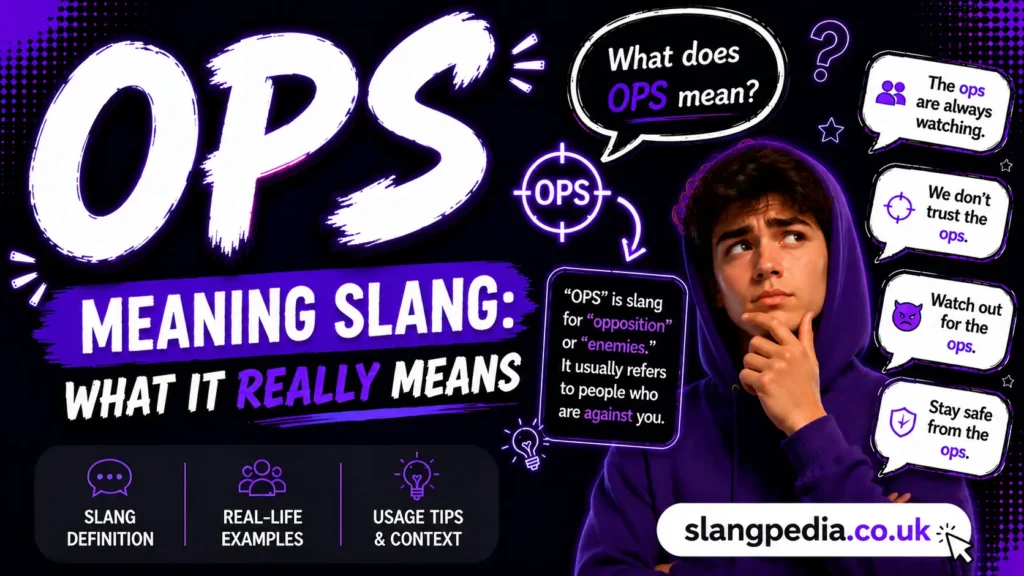
“Ops” means your enemies or rivals — you’ll see it most on TikTok, Twitter, and in hip-hop spaces when someone is calling out who they’re beefing with or who has a problem with them.
TL;DR
- Definition: “Ops” = enemies, opposition, or rivals; usually people you’re beefing with or have beef with you
- Tone: Can be serious, joking, or a mix — depends on context and relationship
- Origin: UK drill and hip-hop culture around 2015–2017; spread globally through TikTok and streaming
- Who uses it: Drill fans, hip-hop heads, Gen Z TikTokers, and gamers; mainstream use now
- Warning: Using it ironically with people who don’t know you can sound aggressive; context matters
What Does “Ops” Mean in Slang?
You’re scrolling through TikTok and see a comment: “Bro really called out his ops in the video but they didn’t even respond.” Or in Discord: “We beating their ops team next match.” That’s “ops” in action — it’s the shorthand for enemies, rivals, or the people you’re actively in beef with.
At its core, ops = your enemies or opposition — usually people you have ongoing conflict with.
The word carries serious weight in hip-hop and drill culture. It’s not just “people you don’t like.” It means people in your circle acknowledge as rivals. But outside of real street beef, Gen Z uses it ironically, casually, or semi-seriously about anyone they’re competing with — in games, in friend groups, even in memes. The tone shifts fast.
You might hear someone say “my ops” jokingly after losing a game, then five seconds later use it dead seriously in a music context. That tonal range is part of why it stuck. It feels genuine without requiring actual danger behind it. Think of how lit operates — it works as sincere slang and as irony at the same time.
Where Did the Slang “Ops” Come From?
Ops started in UK drill and hip-hop culture around 2015–2017. The term comes from street language where “ops” literally meant operational enemies — people actively beefing with you or your crew. Rappers in London, particularly drill artists, used it in lyrics and interview contexts. It was a coded way to talk about real rivals without using personal names.
From there, it spread through:
- 2015–2017: UK drill scene in London; popularized by rappers discussing crew rivalries
- 2018–2020: TikTok, Twitter, and streaming platforms amplify the term; it crosses into American hip-hop and Gen Z slang
- 2021–2026: Mainstream Gen Z adoption; used everywhere from gaming Discord to casual friend groups and memes
The meaning has softened in mainstream use. It started as serious street language and evolved into something Gen Z uses ironically, competitively, and sometimes seriously depending on context.
What Does “Ops” Mean in Text?
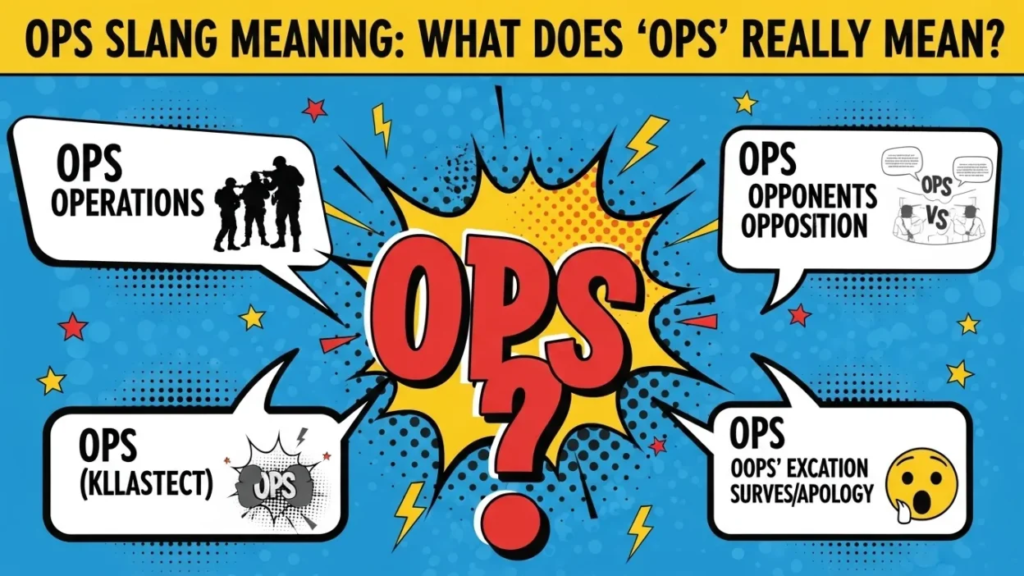
In texts and DMs, ops shifts depending on whether you’re in a private chat or a group. In one-on-one conversations, it usually feels joking or semi-serious — “your ops just texted me lol.” In group chats, it’s more competitive or performative — everyone’s calling out who their “ops” are in the moment.
The tone changes completely based on emoji choice:
- “ops 😭” = joking, laughing at someone
- “ops 🔥” = competitive, hyped up
- “ops 🤔” = suspicious, calling someone out
- No emoji = could go either way; read the whole thread
Real text exchange:
Tyler: who even is this girl talking about us
Jess: probably one of your ops lol
Tyler: bro i dont have ops
Jess: thats what your ops would say 💀
| Phrase | What It Actually Means | Vibe |
|---|---|---|
| “my ops” | Someone I’m beefing with or competing against | Joking or serious |
| “who’s your ops?” | Direct question about who you’re against | Provocative or curious |
| “them ops” | People outside your group; the opposing side | Us vs. them energy |
What Does “Ops” Mean on TikTok?
On TikTok, ops appears in captions, comments, and voiceovers — usually in drill music videos, diss tracks, or competitive content. The platform amplified the term across borders in 2019–2020 when drill clips started going viral. American TikTokers adopted it alongside UK creators.
TikTok’s version is mostly the same as texting, but higher stakes feel — people are performing their beef for an audience. You’ll see it used equally on US and UK TikTok, though the UK version feels closer to the original drill meaning. It shows up on:
- Diss track comments
- Gaming and sports clips
- Meme videos about friend groups
- Reaction videos to drama
The TikTok meaning doesn’t shift much from texting. It’s the same word; the audience just makes it feel bigger.
Ops in Real Conversations: 5 Examples
Example 1 — Joking among friends
Marcus: Y’all see my ops at the coffee shop
Cody: bro that’s your best friend
Marcus: exactly
Marcus is joking with his crew. “Ops” here is self-aware humor — he’s calling someone he doesn’t actually beef with an “ops” for comedic effect.
Example 2 — Gaming rivalry
Ashley: those ops just rushed us
Tyler: i’m coming back for them next round
Ashley and Tyler are gaming. “Ops” here means the other team — it’s competitive but not personal. This is pure gameplay talk.
Example 3 — Actual beef
Jess: why did your ops just follow me
Kai: don’t interact with them fr
Jess is warning Kai. This feels real — Kai actually has beef with this person. The tone is serious, protective.
Example 4 — TikTok drama reaction
Devon: why is she calling him out in the comments
Rae: they’re ops now apparently
Devon: over what 💀
Devon and Rae are gossiping. The “apparently” signals skepticism — they don’t think the beef is real. This is casual friend drama, not serious conflict.
Example 5 — School friend group
Group chat: alex just walked past our table without saying anything
someone: alex made it to ops tier
alex joins chat: y’all are CRAZY
This group is joking. Alex isn’t actually an enemy; they just didn’t acknowledge the friend group. “Ops tier” is self-aware, comedic ranking of how many times someone’s messed up.
Ops vs. Similar Slang
| Word | Core Meaning | Tone | Best Used When |
|---|---|---|---|
| Ops | Enemies, rivals, opposition | Flexible — joking or serious | Calling out who you’re beefing with or competing against |
| Opps | Same as ops; alternate spelling | Same as ops | British or drill context; regional preference |
| Opp | Singular enemy; one rival | Serious when singular | Talking about one specific enemy |
| Chile | Mess or dramatic situation | Lighthearted, gossipy | Reacting to friend drama or chaos; never about actual enemies |
Key difference: “Ops” has actual opposition behind it (real or joking). Chile is pure entertainment — it’s about the drama, not the conflict. If you say someone’s your ops, you’re saying there’s beef. If you say “chile that’s crazy,” you’re just enjoying the mess. Don’t confuse them — context will tell you which one fits.
The Emotional Vibe Behind “Ops”
Ops exists because Gen Z needs shorthand for “people I’m in conflict with.” Before this word, you’d say “enemies” (too serious), “haters” (too victim-oriented), or “people I don’t like” (too vague). Ops hits the middle — it’s specific enough to mean real opposition but flexible enough to be a joke.
The word spread because it sounds hard without being cruel. You can call someone your ops and it reads as competitive, not hateful. That’s valuable in a generation that wants to seem unfazed but also engage in drama.
When someone calls you their ops, it signals: I acknowledge you as opposition. That can feel threatening or thrilling depending on the relationship. When you claim ops, you’re saying: I’ve got rivals, I’m in the game, people know who I am. There’s status in having ops worth naming.
On TikTok and Discord, using “ops” lets you participate in competitive spaces — gaming, music discourse, friend group rankings — without claiming actual real-world conflict. That gap between the word’s origin (real street beef) and its current use (joking, gaming, memeing) is why it works so well.
Is “Ops” Offensive?
No, “ops” is not offensive. It’s not a slur and doesn’t target any specific group. It’s competitive language, not hateful language.
Context does matter. Calling someone your ops when you actually have real beef reads serious and could escalate a conflict. Using it jokingly with strangers who don’t know you might sound aggressive when you mean it as a joke. In professional or academic writing, avoid it entirely — use “rivals,” “competitors,” or “opponents” instead.
Is it safe in the USA and UK? Yes. Both countries use it the same way. There’s no regional offense attached to it.
Who should avoid it? Anyone in actual conflict should be careful — the word has real origins in serious beef. Using it when you mean it casually could be misread as hostile. If you don’t actually know the person, they might not get that you’re joking.
📌 Quick note for parents and teachers: “Ops” means enemies or rivals — mostly used by Gen Z to describe people they’re competing with or joking about conflict with. It’s not harmful slang. You’ll see it on TikTok, in gaming clips, and in friend group chats. It comes from hip-hop and drill culture but is now mainstream and usually ironic or competitive, not violent.
Ops Slang — FAQ
Q: What does ops mean on TikTok?
A: On TikTok, “ops” means enemies or opposition — you’ll see it in drill music videos, diss track comments, and gaming clips. The meaning is the same as in texting: people you’re beefing with or competing against. TikTok’s version just has a bigger audience watching, so it feels more performative.
Q: Is ops a bad word?
A: No. “Ops” is not a slur or profanity. It’s competitive slang, not hateful language. Using it jokingly is normal. Using it when you’re actually in conflict could escalate things, so context matters.
Q: What’s the difference between ops and opps?
A: They mean the same thing — “opps” is just an alternate spelling, more common in UK drill context. Both refer to enemies or rivals. Pick whichever sounds natural to you; people use them interchangeably.
Q: Do Americans and British people use ops the same way?
A: Mostly yes. The UK drill scene created the word, so British usage feels closer to the original meaning. Americans adopted it through TikTok and hip-hop. Both countries use it seriously and jokingly now — the tone and context matter more than where you’re from.
The Bottom Line
Ops is competitive shorthand for enemies or rivals. It works because it’s flexible — you can use it seriously when you’re actually in beef or jokingly when you’re gaming with friends. The word came from UK drill culture but is now global Gen Z slang.
Next time you see someone calling out their ops in a comment or text, you’ll know exactly what they mean. Have you seen “ops” used in a way that surprised you? Drop it in the comments.

Maggie Wiersma is a USA-based writer with 2 years of experience covering slang meanings, internet culture, and modern language trends. With a background in communication studies, she creates simple and engaging content that helps readers understand today’s most popular slang terms.

Pingback: No Cap Meaning Slang: What It Really Means in 2026 - Slang Pedia