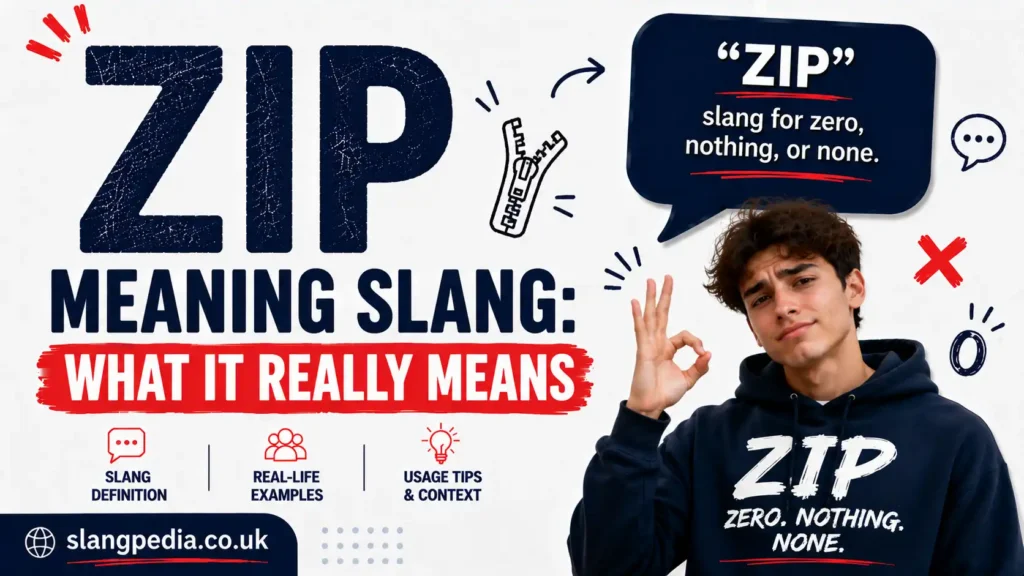
“Zip” means absolutely nothing or zero — you’ll see it most in group chats and Discord when someone dismisses something as worthless or wants others to stay quiet.
TL;DR
- Zip = nothing, zero, or “shut up” — used to dismiss something or demand silence
- Tone: dismissive, sarcastic, or playful — rarely serious or mean-spirited
- Origin: 1990s hip-hop slang — “I got zip” meant having nothing, then spread to internet culture
- Who uses it: Gen Z and younger millennials — mostly in texts, TikTok, and gaming communities
- Usage warning: Context matters — saying “zip it” to a friend is funny; to a stranger can feel aggressive
What Does Zip Mean in Slang?
You’re in a group chat. Someone asks what everyone’s doing this weekend. Your friend Tyler replies: “Man I got zip planned. Absolutely nothing.” Five minutes later, someone’s dominating the conversation. Another person types: “Okay Tyler zip it lmao.” Everyone laughs.
That’s zip in real life.
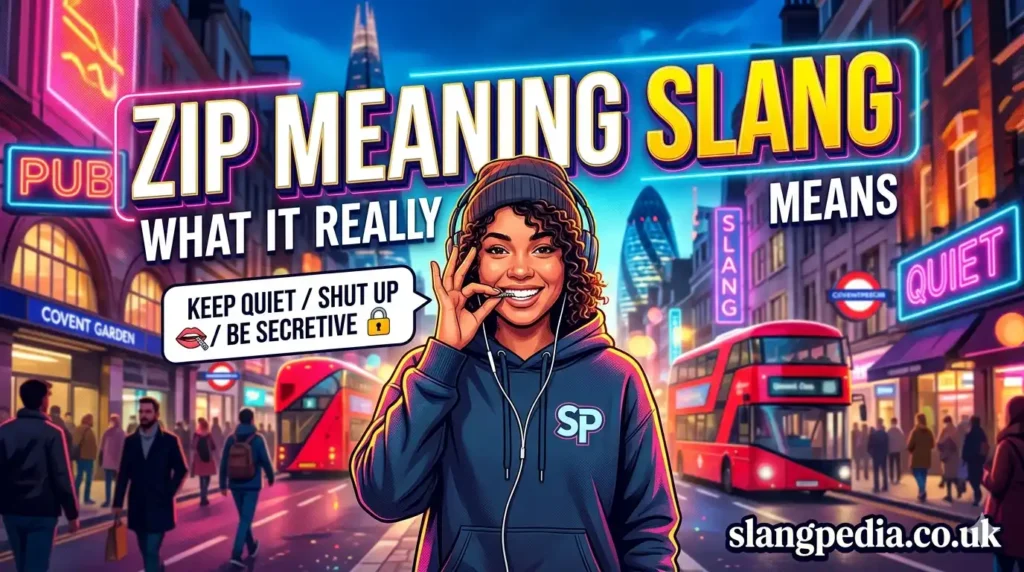
Zip has two main moves. First, it means absolutely nothing — zero plans, zero money, zero progress. If you say “I got zip from that conversation,” you mean you learned nothing. Second, it means be quiet or shut up — the shortened version of “zip your lip.” The tone shifts everything. Said to a friend? It’s playful banter. Said to a stranger? It lands differently.
The word carries a casual, dismissive energy. When someone says they have zip planned, they’re not devastated — they’re being chill about boredom. When they say “zip it,” they’re joking (usually), not actually angry.
Zip = nothing, zero, or a command to stay silent
Most people use it in informal settings: group texts, Discord servers, Reddit comments. It rarely appears in professional writing because it’s slang-coded as young and casual. You won’t hear it in a job interview, but you’ll definitely see it in iMessage between friends.
The word works because it’s short, punchy, and instantly understood. Compare it to bust — which has more baggage — and you see why zip became the go-to nothing word.
Where Did the Slang “Zip” Come From?
Zip emerged from 1990s hip-hop and street culture, where “zip” already had slang meaning — a small amount of drugs (usually cannabis). From there, the word branched into broader use: “I got zip” meant having nothing, period. No money, no plans, no luck.
The term spread through hip-hop lyrics, radio, and eventually MTV. By the 2000s, it had moved into mainstream internet culture. Gen X and millennial kids picked it up from their older cousins and brought it to AOL Instant Messenger and early internet forums.
Timeline
1990s: Hip-hop slang term for “nothing” or “zero amount” — originated in street and drug-related contexts but quickly became general slang.
2000s: Exploded on AIM, early message boards, and MTV — became divorced from its original context and used simply to mean “nothing.”
2020s–2026: TikTok and Gen Z normalized “zip it” as a playful command; the term is now firmly mainstream across US and UK digital culture.
What Does Zip Mean in Text?
In texts and DMs, zip usually shifts depending on who’s receiving it. Between close friends? It’s comedic and light. In a group chat? Still funny, but people read tone differently when they can’t hear your voice.
“Zip it” lands better over text because the emoji helps soften it. A simple “zip it 💀” reads as a joke. Just “zip it” without context might seem rude. Private DMs with someone you know = safer ground. Public group chats = higher stakes.
The word rarely changes core meaning between private and group settings — it still means “nothing” or “shut up” — but how people receive it shifts. Emojis help: 💀 (laughing), 😂 (joking), 🤐 (actually be quiet now).
Real Text Exchange
Jess: what are you doing tonight
Marcus: got zip tbh
Jess: lmaooo same let’s be bored together
Marcus: say less meet at the usual spot
Marcus uses “zip” to signal he has zero plans — the exchange reads casual and friendly because Jess matches his energy.
| Phrase | What It Means | Tone |
|---|---|---|
| “I got zip” | I have nothing planned / I have no money | Casual, sometimes self-deprecating |
| “Zip it” | Be quiet / Stop talking | Playful to borderline annoyed (depends on emoji) |
| “Zero zip” | Absolutely nothing, emphasis | Dramatic, exaggerated |
What Does Zip Mean on TikTok?
On TikTok, zip shows up mostly in captions and comments — rarely in voiceovers. The platform’s fast-paced nature makes the word function differently than in texting.
You’ll see it in response videos: someone shows their weekend plans, another creator comments “zip for me 💀.” It also appears in “day in my life” videos where creators joke about having nothing going on. The TikTok meaning is identical to the texting meaning — nothing or be quiet — but TikTok’s public nature makes “zip it” comments feel more like collective roasting.
US TikTok uses it slightly more than UK TikTok, but both audiences recognize it instantly. The platform amplified the word’s reach because short, punchy slang performs better in comments than long explanations.
Zip in Real Conversations: 5 Examples
Example 1 — Dismissing Nothing
Friend: “Bro what happened with that date?”
Tyler: “Got zip. She ghosted after day one.”
Tyler uses zip to signal complete romantic failure — nothing came of it. The tone is self-aware and humorous, not bitter.
Example 2 — Demanding Silence (Joking)
Group chat
Ashley: “Okay but did anyone actually finish the homework”
Cody: “zip it ashley we don’t talk about homework here”
Jess: “lmaooo cody’s right”
Cody’s using “zip it” as a joke — he’s not actually angry at Ashley, he’s redirecting the conversation away from academic stress.
Example 3 — Sincere Nothingness
Marcus: “I genuinely have zip going on this month. Might finally read that book.”
Friend: “Actually reasonable ngl”
Marcus sounds reflective here, not comedic. He’s making peace with his empty schedule.
Example 4 — Sarcastic Dismissal
Person A: “Just made $50 on this freelance gig”
Person B: “Oh so you got that zip money now huh”
Person B is teasing — using “zip money” sarcastically to mean very little.
Example 5 — Discord Gaming Context
Player 1: “anyone down for a raid tonight”
Player 2: “got zip energy but maybe”
Player 1: “nah zip it i don’t wanna hear the excuses”
Player 2 means no motivation. Player 1 sarcastically tells them to “zip it” — stop pre-emptively backing out.
Zip vs. Similar Slang
| Word | Core Meaning | Tone | Best Used When |
|---|---|---|---|
| Zip | Nothing / zero amount | Casual, dismissive | Talking about plans or possessions; playfully shutting someone down |
| Nada | Nothing (Spanish loanword) | Casual, slightly more dramatic | Similar to zip but sounds cooler or more theatrical |
| Jack | Nothing (as in “jack squat”) | More aggressive, stronger | When you want to emphasize the emptiness more sharply |
| Zilch | Complete nothing | Formal-adjacent, older-sounding | When adults use it; rarely heard in Gen Z speak |
The biggest confusion is between zip and nada — they’re nearly identical in meaning, but “nada” sounds slightly more dramatic or Spanish-influenced. Americans lean “zip”; UK audiences use both equally. Jack hits harder and more aggressively, so people save it for stronger statements.
The Emotional Vibe Behind “Zip”
Zip exists because young people needed a word for voluntary emptiness — the specific feeling of having nothing planned and being chill about it. It’s not sadness. It’s not ambition. It’s just… nothing. And that matters culturally.
The word spread so fast because it’s honest. You can’t be stressed if you have “zip” going on. The word absorbs the pressure people feel about always needing to be busy. Using “zip” is permission to not have your life together right now.
When someone says “I got zip planned,” they’re signaling two things: First, self-awareness (I’m aware I’m bored). Second, acceptance (and that’s okay). The speaker isn’t desperate or depressed — they’re relaxed about their own emptiness. That confidence is why the word became iconic.
Using “zip it” toward someone is different. It’s a soft insult — you’re saying someone should stay quiet because what they’re saying is worthless or funny. But the word’s lightness keeps it from being truly harsh. Compare it to quiet — “be quiet” — and you see how much tone matters. “Zip it” is teasing. “Be quiet” is commanding.
The word fills a gap: we needed slang that was dismissive without being mean, casual without being rude. Zip does that work invisibly.
Is “Zip” Offensive?
No, zip is not offensive in any widespread context.
It’s not a slur. It doesn’t target any group. The only time it edges toward aggressive is when someone uses “zip it” on someone they don’t know well — it can come across as rude or condescending. Context changes everything.
In the US and UK, zip is safe to use among friends without worry. Saying “I got zip” in a job interview is just casually unprofessional, not offensive. Saying “zip it” to your boss would be disrespectful but not discriminatory.
Who should avoid it? Not anyone specifically. Just read the room. Strangers? Keep it out of first conversations. Professional settings? Skip it. Close friends? Go wild.
The formal alternative is “nothing” or “I have no plans.” In academic writing, use “nothing was accomplished” instead of “we got zip done.”
📌 Quick note for parents and teachers: “Zip” means nothing or a command to be quiet. It’s not offensive or harmful — just informal slang. You’ll see it in texts, TikTok comments, and group chats among teens. There’s no need to be concerned when you see it.
Zip Slang — FAQ
Q: What does zip mean on TikTok?
A: Same as texting — nothing or be quiet. You’ll see it in comments (“zip for me”) or captions on videos about having empty schedules. TikTok amplified the word because short, punchy slang performs well in comment sections.
Q: Is zip a bad word?
A: No. It’s slang, not profanity or a slur. Saying “zip it” can feel rude depending on context, but the word itself isn’t inherently offensive or harmful.
Q: What’s the difference between zip and nada?
A: Both mean nothing, but “nada” sounds slightly more theatrical or Spanish-influenced. “Zip” is more neutral and common. Americans tend to prefer “zip”; both US and UK audiences use “nada” equally.
Q: Do Americans and British people use zip the same way?
A: Yes, completely. The meaning is identical across both countries. UK Gen Z use it as frequently as Americans. No regional differences in tone or context.
Q: Why do people say “zip it” instead of just “be quiet”?
A: “Zip it” is slang-coded as playful and lightweight — like zipping your lips closed. “Be quiet” sounds commanding or parental. Zip it softens the instruction into teasing or joking.
The Bottom Line
Zip is the casual nothing word. It means you have zero plans, zero money, zero luck — and you’re fine with that. It’s also the playful command to stop talking. The word works because it’s short, punchy, and carries zero judgment.
You’ll see it everywhere: group chats, TikTok, Discord, Reddit. It’s fully mainstream now, not hidden slang. Understanding it means you’re reading the room correctly when someone dismisses themselves or playfully shuts someone down.
Have you seen “zip” used in a way that surprised you? Drop it in the comments.
Reviewed and verified by native speakers across US and UK Gen Z communities — last updated June 2026.

Maggie Wiersma is a USA-based writer with 2 years of experience covering slang meanings, internet culture, and modern language trends. With a background in communication studies, she creates simple and engaging content that helps readers understand today’s most popular slang terms.